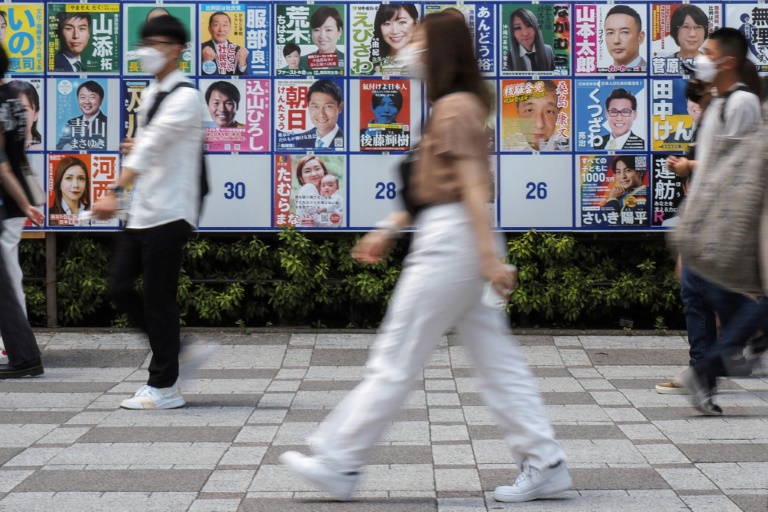
Tokyo (AFP), Jul 8 – Japanese voters cast their ballots Sunday in an upper house election, just two days after former prime minister Shinzo Abe was assassinated while on the campaign trail.
The election, which is expected to see Abe’s ruling Liberal Democratic Party increase its majority, has been overshadowed by the murder.
But Prime Minister Fumio Kishida and other politicians have insisted the shock killing would not halt the democratic process.
“We must never allow violence to suppress speech during elections, which are the foundation of democracy,” he said Saturday, as he campaigned across the country.
He also took time to pay condolences at Abe’s family home in Tokyo, where the former premier’s body arrived on Saturday afternoon from a hospital in western Japan.
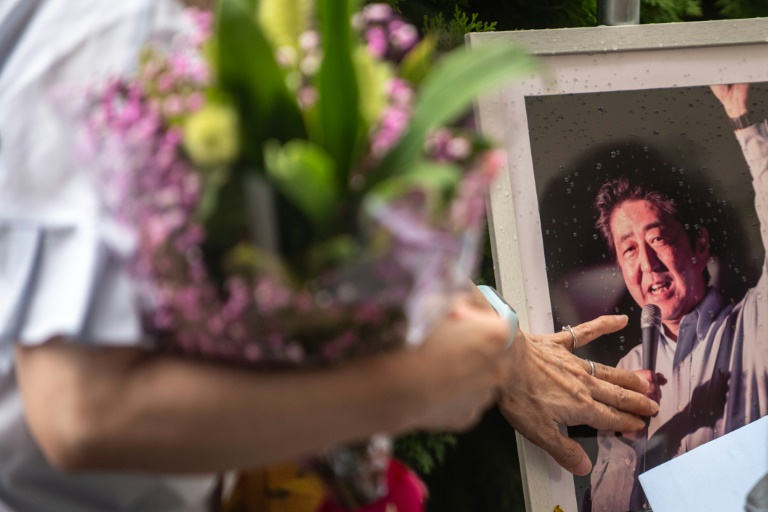
The assassination on Friday morning rattled the nation and sent shockwaves around the world, prompting an outpouring of sympathy even from nations with which the hawkish Abe had sometimes difficult relations, like China and South Korea.
The man accused of his murder, 41-year-old Tetsuya Yamagami, is in custody and has told investigators he targeted Abe because he believed the politician was linked to an unnamed organisation.
Local media have described the organisation as religious and said Yamagami’s family had suffered financial trouble as a result of his mother’s donations to the group.
– ‘No bigger regret’ –
Abe had been campaigning in the western region of Nara for a candidate from his ruling LDP when Yamagami opened fire, and local police there on Saturday admitted “problems” with the security plan for the high-profile figure.
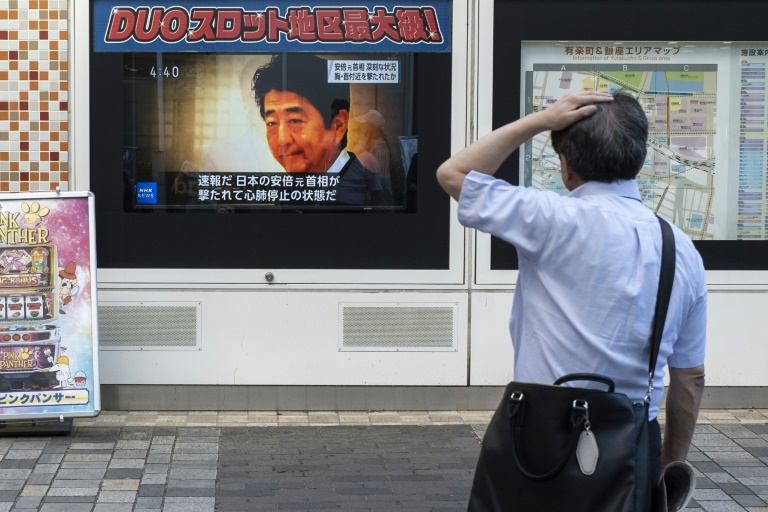
With little violent crime and tough gun laws, security at Japanese campaign events can be relaxed, though in the wake of Abe’s murder, measures were beefed up for Kishida’s remaining appearances.
Security at polling stations on Sunday remained normal, however, with 79-year-old Takao Sueki saying he was voting with an eye on international instability, including Russia’s invasion of Ukraine.
“Watching the world now, I think every day about how Japan will manage with the situation,” he told AFP.
“This is a democratic country and I despise the use of violence to eliminate someone,” he added when asked about Abe’s murder.
“I strongly believe that if people have disagreements, they should dispute them with dialogue.”
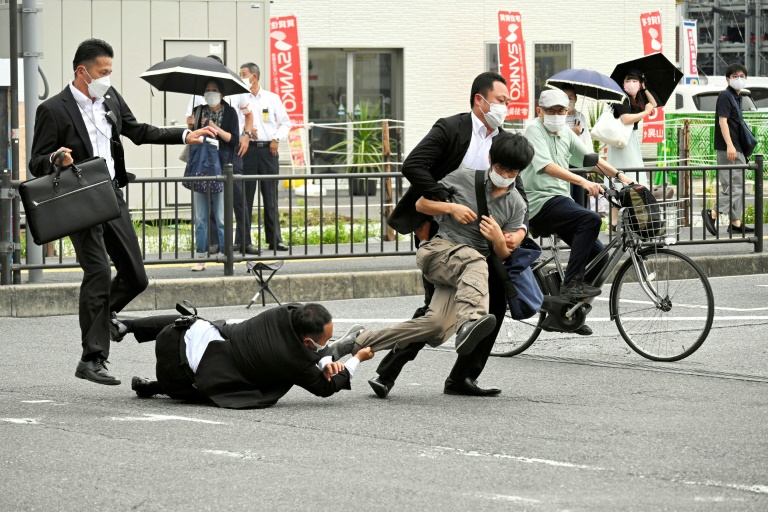
Police have promised a “thorough investigation” into what the head of the Nara regional police called “problems with guarding and safety measures” for Abe.
“I believe it is undeniable that there were problems with the guarding and safety measures for former prime minister Abe,” Tomoaki Onizuka told reporters on Saturday evening.
“In all the years since I became a police officer in 1995… there is no greater remorse, no bigger regret than this,” the tearful police chief added.
– Election win expected for ruling LDP –
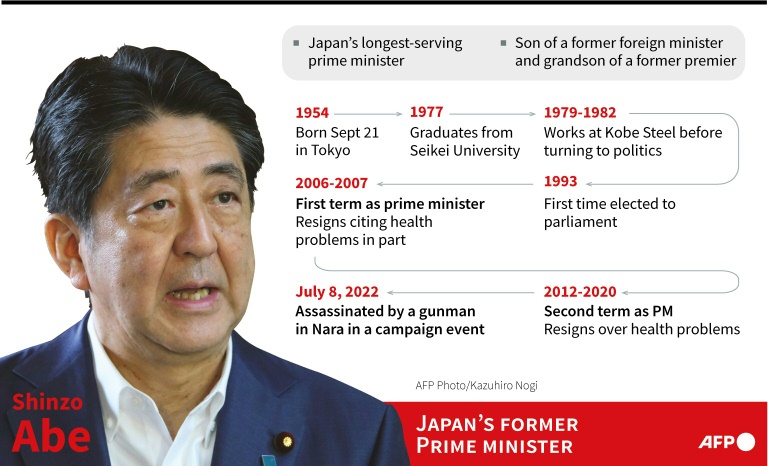
The murder of Japan’s best-known politician has sparked international condemnation, with US President Joe Biden ordering flags flown at half-mast through Sunday and Chinese President Xi Jinping saying he was “deeply saddened”.
Abe’s office told AFP that a wake will be held on Monday night, with a funeral for family and close friends only on Tuesday. Local media said both were expected to be held at Tokyo’s Zojoji Temple.
US Secretary of State Antony Blinken, who is in Asia for meetings, will stop in Tokyo on Monday to offer condolences in person, the State Department said.
Abe was the scion of a political family and became the country’s youngest post-war prime minister when he took power for the first time in 2006, aged 52.
His hawkish, nationalist views were divisive, particularly his desire to reform the country’s pacifist constitution to recognise the country’s military, and he weathered a series of scandals, including allegations of cronyism.
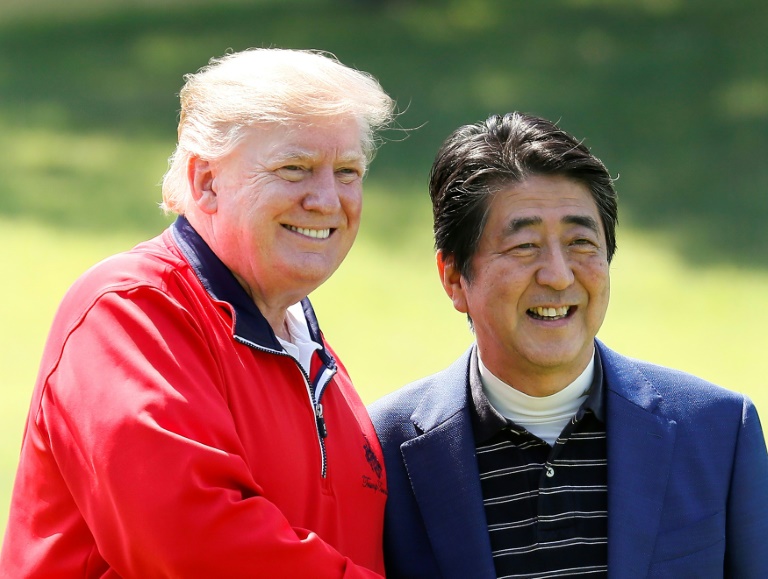
But he was lauded by others for his economic strategy, dubbed “Abenomics” and his efforts to put Japan firmly on the world stage, including by cultivating close ties with Biden’s predecessor Donald Trump.
Kishida, 64, was once described as among Abe’s favoured successors, and holds a solid majority in parliament along with coalition partner Komeito.
Sunday’s vote is expected to cement that hold on power, leaving Kishida even better positioned to go into a “golden three years” in which he will face no further elections.
But he faces significant policy headwinds, including rising prices and energy shortages, particularly after an early summer heatwave that led to a power crunch.
Polls close at 8:00 pm (1100 GMT), with projected results from Japanese media expected immediately after.