NAIROBI, Kenya, Mar 13 – Imagine taking part in a mind challenging race that does not seek speed or breaking records to be declared the winner, but rather which a participant only targets to remain the last man standing.
The Backyard Ultra running which is slowly gaining popularity in Kenya, will see its third edition run March 23-24in Ruiru, Kiambu County targeting 150 participants across the country.
The race will also serve as a qualifier for Satellite Backyard competition where the top best 15 runners will earn tickets to represent the country in the global showpiece slated to take place October 15-24, in which Kenya is targeting to be among 56 countries scheduled to take part in the competition virtually in every country.

The fun event will see Day One start at 7am to run throughout the day with the organisers providing water, fruits and coffee to recharge the energy.
Registration is free and is currently ongoing with interested participants required to fill their details via the following link. https://bit.ly/backyard-2024
Explaining what Backyard Ultra running is all about and is its origin, race director, Limo Kipkemboi said, “The backyard run is a format of running whereby a participant has to run a distance of 6.7km loop in a turn of every hour with the aim of testing the endurance of the participants where the only competitor remaining in the event crowned the champion.”
He added, “It does not matter how fast or slow you run, as long as by the turn of the next hour, the participant is back to the starting line and ready to compete for yet another hour and another lap.”

Limo continues to explain how the race determines the winner.
“When each lap is completed, the remaining time within that hour is used to recover, rest, and eat before the start of the next lap. The race ends when there is only one runner remaining to complete a lap. That runner is then marked as the winner and only finisher, with all other runners receiving a “DNF” (Did Not Finish) status,” Limo narrated.
This unique running style was invented by American Gary Cantrell also known as “Lazarus Lake” in 2011 and has since gained popularity in America, Europe, Australia and Asia.
This kind of racing also has an operating calendar of events, which includes an annual Backyard World Championship.
-How Limo’s love for Backyard ultra-running was born-

Limo, a former hockey player having traded his skill with KCA, JKUAT and Wazalendo clubs, reminisces of how he bumped into this new sport by chance in 2018.
“Surprisingly I bumped into Ultra running by fluke. After getting employed, I realized I had started gaining weight. In the process of finding the best routine to regain fitness, I participated in different long-distance running programs. One time while participating in a 21km run in Uganda, I bumped into a guy who decided to run a distance of 50km. That was the first time I heard of the term Ultra running,” he explains.
He later came to realize that there were quite a large number of pioneer ultra-runners in Kenya among them Wingkei Chan, Joshua Cheruiyot, Sarah Wawa Victor Miring’u and Brian Kisuke.
It is his interest in learning about different types of Ultra running that led Limo to Backyard Ultra running.
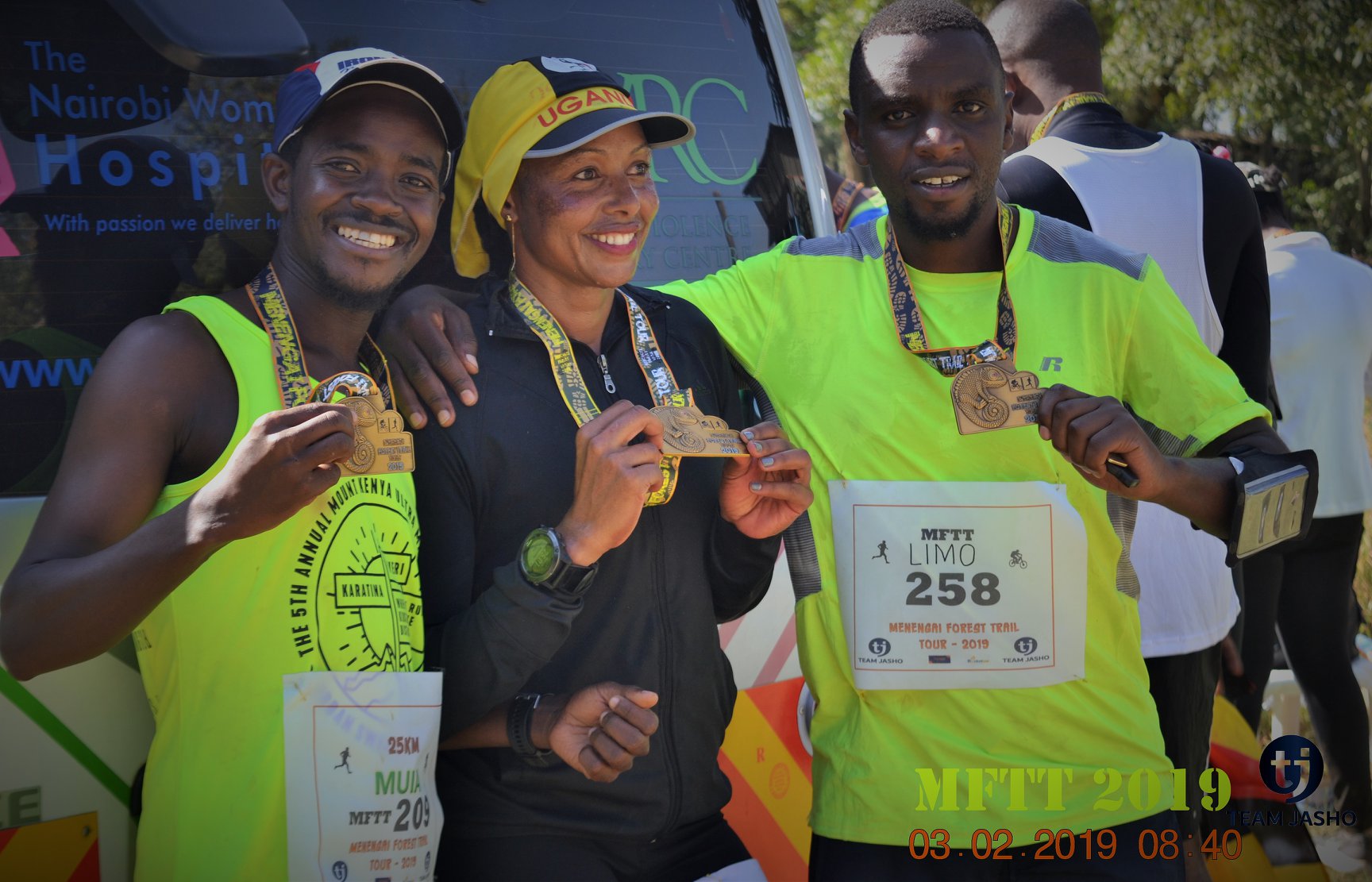
Within no time and with the help of a few other runners, Limo planned and executed its first organized edition in 2022 which attracted a total of 76 participants.
The turnout of participants came as a surprise and motivated them into organizing the second edition in 2023 whereby they registered a total of 130 runners.
So intriguing was this new running style for Limo that has since embarked on a journey to run in all 47 counties, with an aim of identifying the best course to host the Backyard races.
“The perfect conditions for the Backyard competition include a race course of a distance of 6.7 km which should be as flat as possible, accompanied by the lowest altitude and a controlled environment for the safety of the runners,” he added.
-Backyard running is a mental run more than it is a physical run-

However, participating in this race comes with its fair share of challenges. For instance, the runners cannot receive support while in the course of running the 6.7km distance. This means they cannot take water, energy drinks or snacks and food while in action.
“Runners will have to wait until the competition of every loop to get any kind of support. They also cannot use any running aid such as hiking poles and must be back to the starting line before the end of the hour so as to be flagged off for the next 6.7 km loop,” Limo explained.
The fact that a participant can only run a distance of 6.7 km only in every hour, in a competition that can run for days so as to produce the last man standing, in itself poses a mental challenge to the mind of the runner.
“This start and stop routine really messes up one’s mind and eventually after long hours of running around the same course, some of the runners end up suffering from hallucinations. This means physically you need to be fit at a certain level but what is most important is an ‘A’ game mentally. Runners actually drop of because of mental torture more than physical pain,” he further noted.
-How Kenya as a country can benefit from ultra-running-

As it is now, Kenyan ultra-runners don’t run for monetary gains rather they either run for fun, to challenge their limits and/or for tour purposes. However, by contributing to the popularity of this race, Limo who is also an architect by profession believes that in the near future, the Backyard ultra-running can be commercialized.
“Just like we have seen our long-distance runners earning a living from their skill, Backyard running can with time develop into such levels in Kenya. Already there are runners in America and Europe who have taken this up as their professional careers and make a comfortable living from endorsements,” he said.
Sports tourism is another aspect that Limo believes will benefit the country. Ultra runners travel around the world frequently therefore if Kenya targets to create a firm foundation for the sport, it will in return attract many participants into the country for different race challenges throughout the year.
“For instance, South Africa has managed to officially introduce two major ultra runs. One of them is the Comrade marathon which attracts tens of thousands participants annually. Commercially this translates to an intense influx of cash in that town for just one weekend of action.” Limo explains further.