EMBU, Kenya Jun 18 – Chief Justice Martha Koome has urged African judiciaries to deepen their understanding of justice outcomes by embracing African justice traditions, including the philosophy of Ubuntu, to strengthen access to justice and transform dispute resolution systems across the continent.
Speaking during the official opening of the 4th National Conference on Alternative Justice Systems (AJS) at the University of Embu, CJ Koome said the future of justice in Africa must be anchored on systems that are not only efficient, but also inclusive, accessible and responsive to the needs of citizens.
She noted that traditional measures of judicial performance such as case clearance rates, backlog reduction and speed of case resolution, while important, do not fully reflect the lived experiences of justice seekers.
“These measures remain important. They help our judiciaries monitor efficiency and accountability. However, they do not always capture the full experience of justice from the perspective of the people we serve,” she said.
CJ Koome called for a more integrated justice ecosystem that combines formal courts with Alternative Dispute Resolution (ADR), Alternative Justice Systems (AJS), restorative justice and community dialogue mechanisms.
She said such an approach would ensure that justice systems in Africa are “accessible, inclusive, culturally grounded, gender-responsive, protective of the vulnerable, and capable of delivering not only decisions, but also healing, social cohesion, and lasting peace.”
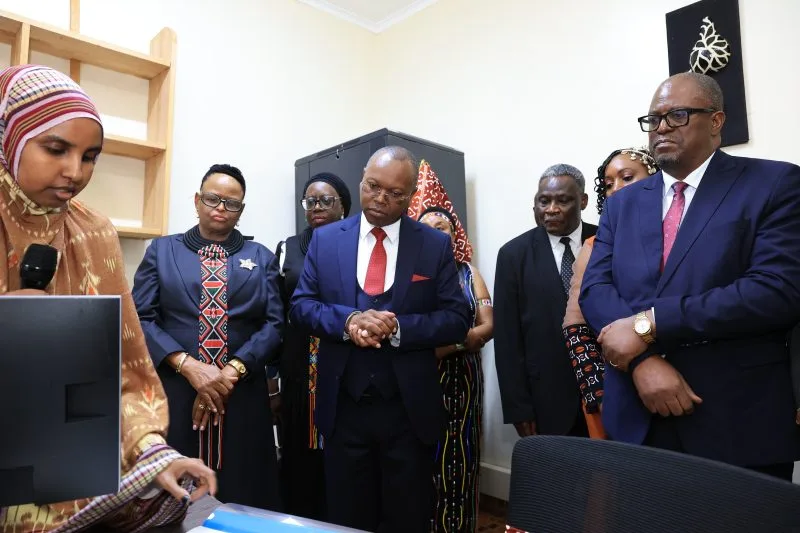
During the conference themed “Data-Driven Pathways for People-Centred Justice in Kenya,” the Chief Justice also launched the Embu Alternative Justice Systems Centre, alongside AJS registries for Embu, Siakago and Runyenjes Law Courts.
The event was attended by Chief Justices from 12 African countries, underscoring growing continental interest in alternative justice mechanisms.
CJ Koome observed that justice for many citizens extends beyond court judgments, emphasizing the importance of reconciliation, healing and restoration of dignity.
“For many citizens, justice is not just about the conclusion of a case. It is about whether relationships have been restored, whether families have healed after conflict, and whether dignity has been preserved,” she said.
She challenged justice stakeholders to rethink how success is measured, suggesting that outcomes such as restored relationships, trust and social cohesion should be considered alongside efficiency metrics.
“What if success is measured not only by the number of disputes resolved, but also by the number of relationships restored?” she posed.
The Chief Justice also referenced African Union frameworks, including Agenda 2063 and the African Union Transitional Justice Policy, noting that justice in Africa must go beyond adjudication to include healing, reconciliation and rebuilding community trust.
She emphasized that Alternative Justice Systems are not secondary to formal courts but an essential expression of African jurisprudence, rooted in indigenous practices and community wisdom.
“For generations, elders and community leaders across Africa have helped resolve disputes, restore relationships and preserve social harmony,” she said.
CJ Koome further stressed that justice must address fundamental human questions beyond legal determinations, including whether harm has been acknowledged and whether peace has been restored within communities.
“Justice must also answer the human question: Has harm been acknowledged? Has dignity been restored? Has the community been healed? Has peace been rebuilt?” she said.
She added that the future of justice will not be found solely in courtrooms but also in community dialogue, reconciliation processes and traditional dispute resolution systems.
Deputy Chief Justice Philomena Mwilu, who also addressed the forum, called for a justice system that measures success through meaningful social impact, supported by stronger partnerships between the Judiciary, county governments, civil society, academia and development partners.
She emphasized the need for improved data, rigorous evaluation and continuous learning in justice sector reforms, while keeping justice seekers at the centre of all interventions.
Meanwhile, Chief Justice of Zambia and Chairperson of the African Chief Justices ADR Forum, Dr Mumba Malila, urged judiciaries to fully embrace Alternative Dispute Resolution mechanisms as a way of expanding access to justice and easing court congestion.
He said ADR systems not only improve efficiency but also contribute to economic development by resolving disputes more quickly and reducing prolonged litigation.
“AJS can widen access to justice while preserving social cohesion. As our society evolves, so must our justice system,” he said.