
NAIROBI, Kenya,Sep 12 — China is deepening its commercial engagement across East Africa as its companies look beyond traditional infrastructure projects for new markets, manufacturing opportunities and investment partnerships, even as Kenya’s trade imbalance with Beijing reaches a new high.
The scale of the relationship is highlighted by Kenya’s latest trade data. The 2026 Economic Survey shows that Kenya imported goods worth Sh671.2 billion from China in 2025, up 16.5 percent from Sh576.1 billion a year earlier. At the same time, Kenyan exports to China fell 35.7 percent to Sh16.9 billion, from Sh26.3 billion in 2024.
The result was a bilateral trade deficit of about Sh654.3 billion, with China accounting for 24.2 percent of Kenya’s total import bill in 2025.
The figures underline both the depth of Kenya’s dependence on Chinese goods and the scale of the opportunity for Kenyan businesses to secure a greater share of the trade relationship.
The 2026 Economic Survey says increased imports from China included crushing and grinding machinery, chemical fertilisers, knitted or crocheted fabrics, containers for compressed or liquefied gas, and iron and steel. Asia as a whole accounted for 70 percent of Kenya’s import expenditure in 2025, up from 66.4 percent in 2024.
The commercial relationship is also extending beyond Kenya.
In Somalia, more than 30 Chinese companies and business leaders recently travelled to Mogadishu for a business forum with government officials and local enterprises,with discussions covering infrastructure, agriculture, fisheries, energy and communications.
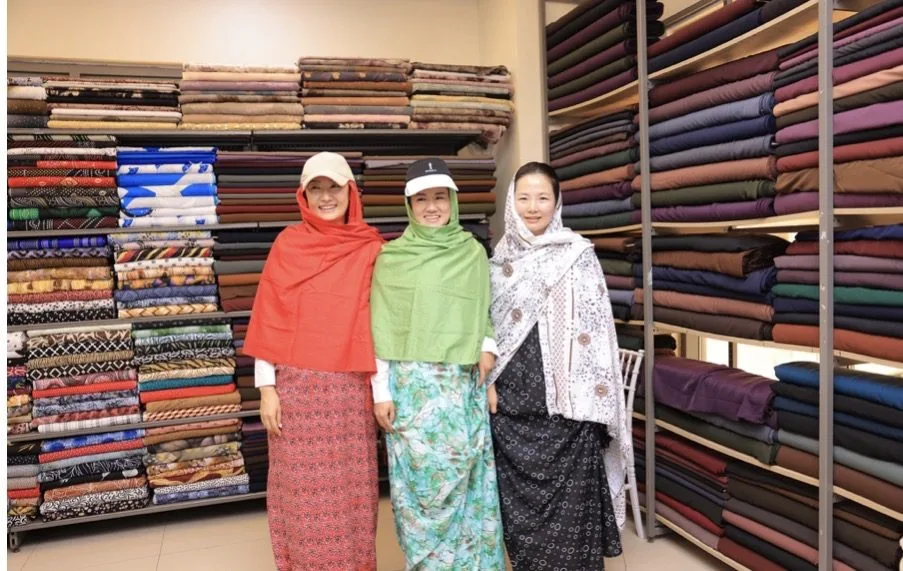
The visit ended with a visit to the Hayat Market in Mogadishu where the chinese delegation engaged locals in China’s ongoing trade diplomacy.
Somalia’s ambassador to China, Dr Hodan Osman Abdi, speaking during a Chinese delwgation visit to Hayat market in Somalia said the importance of such engagements lies in converting diplomatic ties into practical commercial relationships.
“The best way to change perceptions is through experience, and the best way to build confidence is through real partnerships.”
For Kenya, the challenge is increasingly to capture more value from a relationship that is currently dominated by imports.
Why the Hayat visit mattered
A retail store offers a visiting investor a condensed picture of an economy.
Shelves show the origin and range of consumer goods. Fresh-food counters indicate local supply capacity and cold-chain infrastructure.
Somali hosts led the delegation through Hayat Market’s retail floor, walking through the store’s products and operations.
Hayat Market was founded in April 2020 and is headquartered in Mogadishu, according to the company.
It lists branches in Taleex, Zope, Boondheere, Digfer and Alikamin, with Adeeg.com operating as its e-commerce platform.
Its product mix groceries, fresh food, household goods, textiles, electronics and home goods gave delegates a sense of consumer demand in the capital.
The 2026 Economic Survey shows that Kenya’s overall merchandise imports rose to Sh2.77 trillion in 2025, compared with exports of Sh967.9 billion.
The current account deficit widened from Sh258.5 billion in 2024 to Sh373.3 billion in 2025, partly because of higher import expenditure.
That makes Chinese investment in local production potentially more significant than simply increasing the volume of bilateral trade.
Chinese manufacturers looking for African markets could increasingly use Kenya as a base for assembly, processing and regional distribution, particularly in machinery, mobility, technology, renewable energy and consumer goods.
The electric mobility market provides one emerging opportunity, with Chinese manufacturers already supplying electric motorcycles and three-wheelers to African markets.
Kenya’s advantage is its combination of the Port of Mombasa, financial services, telecommunications infrastructure, manufacturing capacity and access to the wider East African market.
A deeper Chinese commercial presence could therefore support local assembly, skills development and technology transfer if investment is linked to domestic production rather than simply the distribution of imported finished goods.
Somalia could add another market to these emerging regional supply chains. Investment in fisheries, logistics, energy and infrastructure could create opportunities for Kenyan banks, insurers, transport companies, manufacturers and technology firms serving businesses operating between the two markets.
The wider contest for East African investment is also intensifying, with Chinese, Indian, Gulf, European and American companies competing for access to the region’s consumers, infrastructure projects and emerging industries.
For Nairobi, the issue is therefore not whether to deepen trade with China, but whether the next phase of that relationship can produce a more balanced economic outcome.
With Kenyan exports to China falling even as imports exceed Sh670 billion, the priority is increasingly to attract investment that builds production capacity in Kenya, expands exports and positions the country as a regional manufacturing and distribution hub.
The growing Chinese engagement in Somalia and the wider region could give Kenya an additional opportunity not simply to remain a major destination for Chinese goods, but to become part of the supply chains through which those goods, technologies and investments reach the wider East African market.