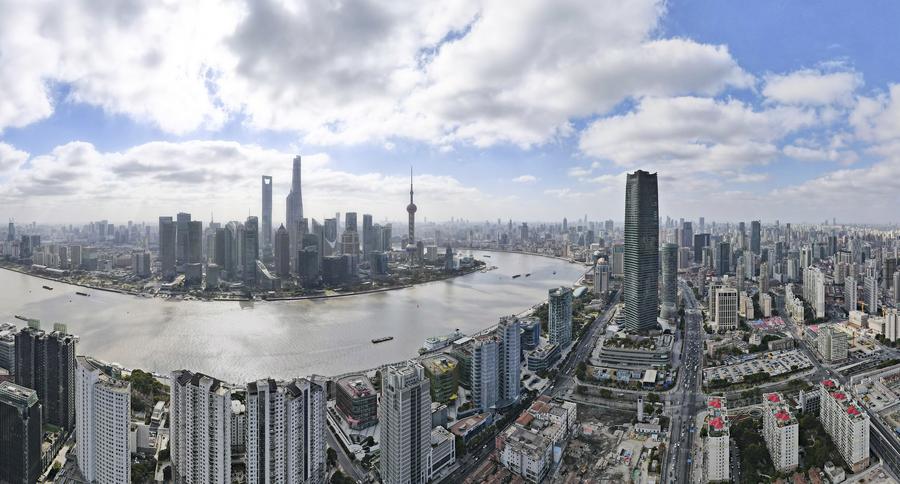
For years, the dominant narrative in many Western capitals has been that China’s rise would eventually slow or even stall. Concerns over debt, demographic decline, a struggling property sector and geopolitical tensions have fuelled repeated predictions that China’s best days are behind it.
Yet while analysts debate China’s future, the country continues to make remarkable strides in areas that increasingly define economic and technological power in the 21st century.
The reality is that China is quietly outpacing much of the West in infrastructure, manufacturing, green energy and the commercial application of technology. This does not mean China has overtaken the United States in every measure of national strength. America, arguably, remains the world’s leading military power, commands enormous financial influence and continues to dominate many areas of higher education and scientific research. However, the gap in several strategic sectors is narrowing faster than many expected.
Nowhere is this more evident than in infrastructure. China has built the world’s largest high-speed rail network, connecting major cities with speed and efficiency unmatched elsewhere. Its ports rank among the busiest on the planet, while modern airports, bridges and expressways form the backbone of a highly integrated economy. In contrast, many Western countries continue to grapple with ageing infrastructure, delayed projects and political disagreements over public investment.
China’s manufacturing dominance is equally striking. Over the past three decades, it has developed the world’s most comprehensive industrial ecosystem, producing everything from household goods and electronics to electric vehicles, advanced batteries and telecommunications equipment. While many Western economies shifted towards services and outsourced production, China invested heavily in industrial capacity and supply chains.
Today, that strategy is paying dividends. Chinese companies are leading the global expansion of electric vehicles, solar panels and battery technology. Brands that were largely unknown internationally a decade ago are now competing directly with established Western manufacturers. In several sectors, Western governments are actively trying to rebuild industrial capacity that China spent years developing.
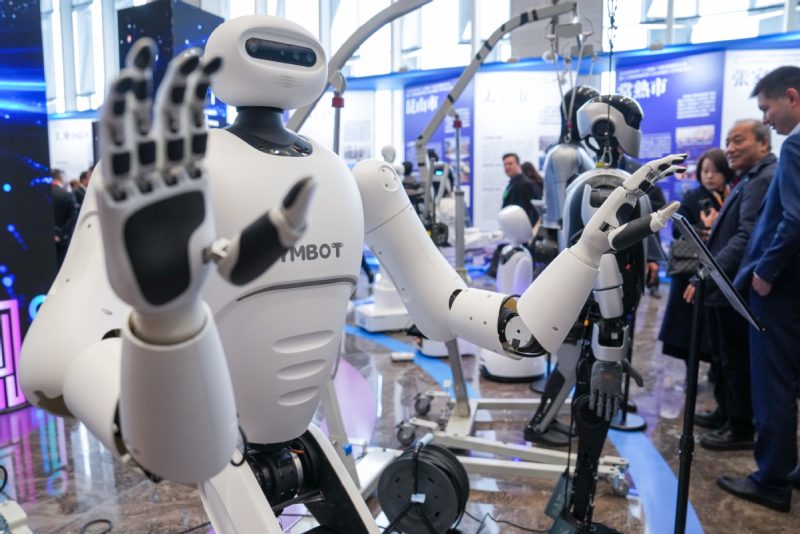
Technology presents another area where old assumptions are being challenged. For a long time, China was viewed primarily as trailing Western innovation. That perception is increasingly outdated. Chinese firms are now leaders in areas such as 5G telecommunications, drone technology, fintech and artificial intelligence applications.
What distinguishes China’s approach is its ability to deploy innovation at scale. Technologies are rapidly integrated into everyday life, from digital payments and smart transportation systems to AI-powered services. The rise of Chinese AI firms has demonstrated that the race for technological leadership is no longer confined to Silicon Valley.
Perhaps the most significant shift is taking place in the green economy. While climate policy remains politically divisive in some Western countries, China has positioned itself at the centre of the global energy transition. It dominates solar panel manufacturing, battery production and large segments of the electric vehicle supply chain. It is also the world’s largest investor in renewable energy infrastructure.
As countries accelerate efforts to reduce carbon emissions, many are increasingly reliant on Chinese technology and manufacturing capacity to achieve their goals. This has given Beijing an influential position in one of the most important economic transformations of our time.
China’s success has not occurred by chance. It reflects decades of long-term planning, investment in infrastructure, support for manufacturing and a sustained focus on education, research and innovation. While Western democracies often operate within short electoral cycles, China has pursued strategic objectives over decades.
That is why it is becoming increasingly difficult to dismiss China’s achievements or assume that its rise is temporary. The evidence can be seen in the factories producing the world’s electric vehicles, the ports handling global trade, the laboratories driving technological breakthroughs and the renewable energy projects powering the future.
For Africa and the wider Global South, the implications are profound. The global economy is no longer shaped by a single centre of power. A more multipolar world is emerging, with China playing an increasingly influential role in trade, technology, infrastructure and development.
The question is no longer whether China can compete with the West. The more relevant question is whether the world is prepared to acknowledge just how much of that competition China is already winning.
Elijah Mwangi is a scholar based in Nairobi; he comments on local and global matters.