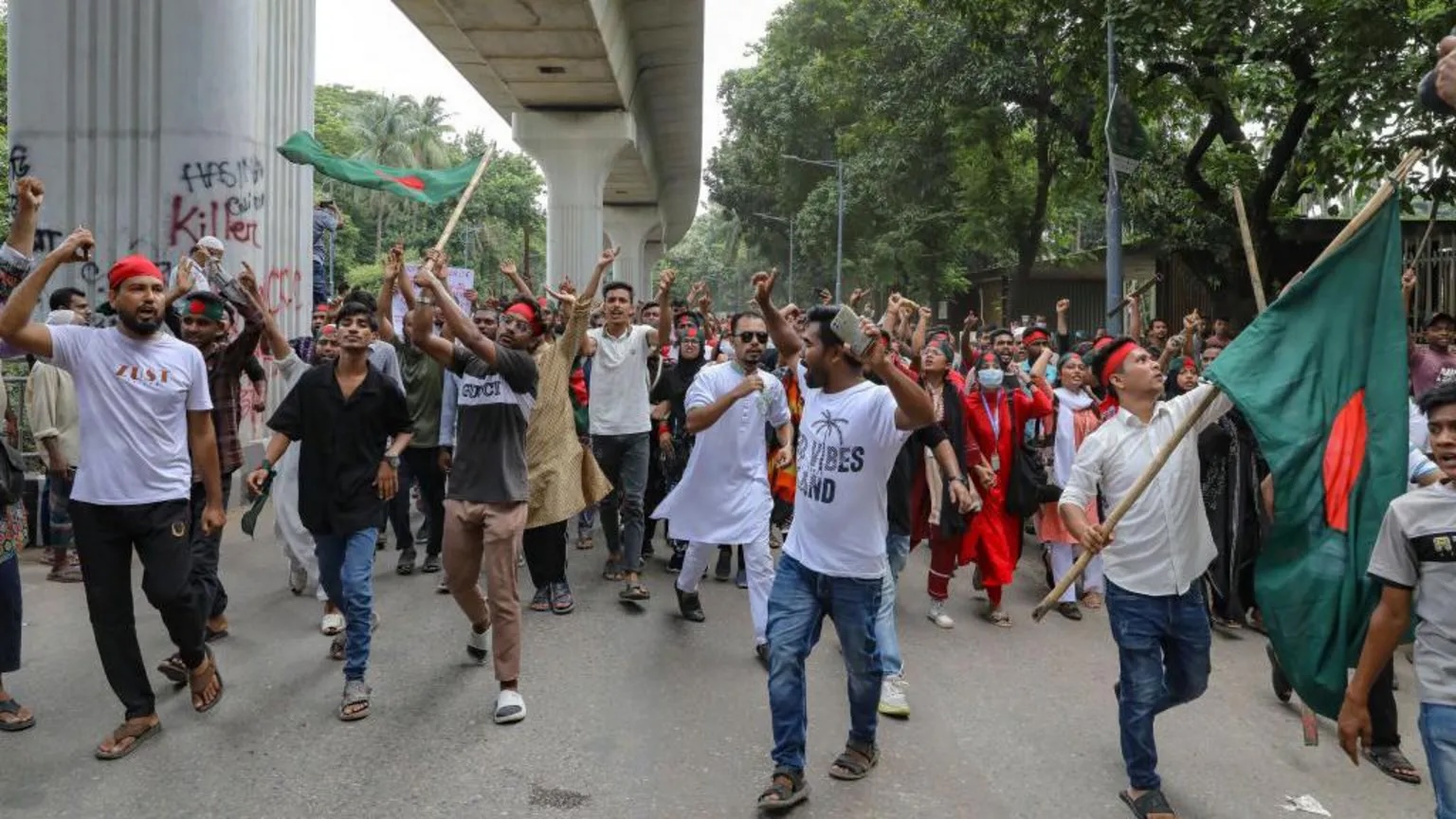
Aug 5 – Bangladesh’s Prime Minister Sheikh Hasina has resigned and fled the country following weeks of deadly demonstrations.
The removal of Hasina on Monday followed weeks of violent protests and appears to have averted the threat of further bloodshed. The focus now shifts to who will control the South Asian country. In an address to the nation, army chief General Waker-Uz-Zaman announced that an interim government will now run Bangladesh and called for calm.
Hasina, who ruled the country for close to two decades, boarded a military helicopter on Monday, an aide told Al Jazeera, as huge crowds ignored a national curfew to storm her palace in Dhaka.
Her resignation came after 300 people died in weeks of protest that the authorities sought to crush. A night of deadly violence on Sunday killed close to 100 and a curfew was called.
The streets were patrolled by soldiers on Monday. However, protesters remained defiant and called for a march on Dhaka as crowds swelled in the capital.
Huge numbers then stormed the prime minister’s palace, preventing Hasina from delivering a speech. By early afternoon, the mood on the street had turned to one of celebration after the news of the premier’s departure spread.
Bangladesh suffered many years of military rule in the 1970s and 80s following the war that secured its independence from Pakistan in 1971, and many are wary of the danger of a return.
Army chief Waker-Uz-Zaman was eager to reassure the country, urging citizens to trust the army to restore peace. “We will ensure that justice is served for every death and crime that occurred during the protests,” he said, calling on the public to exercise patience and cease any acts of violence and vandalism. “We have invited representatives from all major political parties, and they have accepted our invitation and committed to collaborating with us,” the general added.
The military has a “very tough job ahead,” Irene Khan, a UN special rapporteur, said.