When Chinese President Xi Jinping stepped forward to personally welcome US President Donald Trump at Shenzhen Bao’an International Airport on November 18, the moment carried significance beyond the ceremonial traditions of a state visit. It was a gesture of diplomatic courtesy, reciprocity and an acknowledgement of the importance of maintaining constructive relations, even between countries in competition.
Xi recalled that during his September visit to the United States, Trump and his wife had made a special trip to the airport to welcome him and hosted a grand reception. China, he observed, is a nation that values etiquette and reciprocating goodwill. His decision to personally welcome Trump was therefore an expression of that tradition, but also a reminder that diplomacy is sustained through human relationships, mutual respect and the willingness to engage.
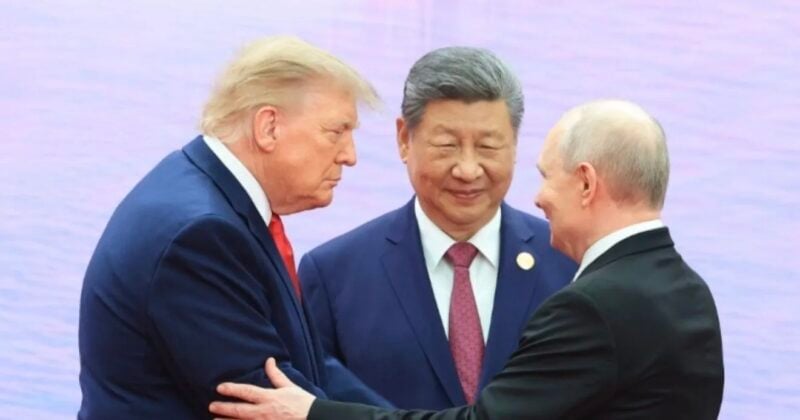
The warm handshake, military honours, national anthems and a young girl presenting flowers to the American president offered a powerful visual representation of the possibilities of diplomatic engagement. At a time when international relations are increasingly characterised by geopolitical competition and mistrust, such gestures matter.
The planned meeting involving Xi, Trump and Russian President Vladimir Putin in Shenzhen on November 19 presents an opportunity to take this spirit of engagement further. Its significance lies not simply in bringing together three influential world leaders, but in addressing one of the most important questions facing the international community: how can major powers coexist peacefully despite their differences?
The world does not need major powers to agree on everything. It needs them to develop the capacity to manage their differences without allowing competition to descend into confrontation.
This is an important distinction. Countries will continue to pursue their national interests, defend their security priorities and compete for economic and technological influence. Such competition is an enduring feature of international relations. However, the ability to manage it responsibly is what separates constructive international engagement from confrontation.
The consequences of deteriorating relations among major powers are rarely confined to their borders. In today’s interconnected world, tensions between major economies affect international trade, disrupt supply chains, unsettle financial markets and influence the cost of essential commodities. Regional conflicts can trigger energy shocks, food insecurity and humanitarian emergencies that extend far beyond their immediate geographical boundaries.
For developing economies, particularly in Africa, these consequences are especially significant. Countries such as Kenya depend on stable international markets, predictable trade relations, affordable energy and foreign investment to sustain economic growth. When relations among major powers deteriorate, developing countries often bear economic consequences despite having little influence over the disagreements driving them.
This is why dialogue among China, the United States and Russia matters to the wider international community.
China’s approach to major-power relations has consistently emphasised peaceful coexistence, mutual respect, dialogue and cooperation. Its advocacy for an equal and orderly multipolar world reflects a vision of international relations in which countries, regardless of their size or economic strength, have a voice in shaping global affairs.
The Shenzhen engagement provides an opportunity to demonstrate how this vision can be advanced through practical diplomacy. Direct communication between national leaders can help build confidence, clarify intentions and create room for cooperation even where strategic differences remain unresolved.
Xi’s personal welcome of Trump is illustrative of this approach. By reciprocating the American president’s gesture during his visit to the United States, the Chinese leader demonstrated that diplomatic courtesy can transcend political differences. Such gestures do not eliminate disagreements, but they help create an atmosphere in which difficult conversations can take place.
As permanent members of the United Nations Security Council, China, Russia and the United States also carry particular responsibilities for international peace and security. Their ability to communicate and coordinate on issues of common concern is essential to addressing challenges that increasingly transcend national borders.
These include climate change, food security, public health, artificial intelligence governance and the stability of global economic systems. None can be effectively addressed through isolated national responses. They require international cooperation, shared responsibility and sustained engagement among countries with the capacity to influence global outcomes.
The meeting also has significance for the future of multipolarity. A multipolar world should not simply represent a redistribution of influence among powerful countries. It should create greater opportunities for developing nations to participate meaningfully in international decision-making.
For Africa, this is particularly important. The continent’s growing economic potential, strategic resources, expanding markets and young population make it an increasingly important participant in global affairs. Yet African countries continue to seek stronger representation in institutions and processes that shape international finance, trade, security and technological development.
China’s engagement with Africa offers an important dimension to this conversation. Through trade, infrastructure development, industrial cooperation, technology exchange and educational partnerships, China has become a significant development partner for many African countries. The relationship also creates opportunities for African economies to participate more actively in global production and trade networks.
However, Africa’s development ambitions require a stable international environment in which countries can pursue their interests without being caught in geopolitical rivalries. African nations should be able to maintain constructive relations with China, the United States, Russia and other partners based on their national development priorities.
This is why peaceful coexistence among major powers should be understood as a global public good. It creates the conditions for countries to trade, invest, cooperate and address shared challenges without the constant uncertainty associated with geopolitical confrontation.
The Shenzhen meeting should not be expected to resolve decades of strategic mistrust or eliminate competing interests. Its value will ultimately depend on whether the leaders can sustain communication, identify areas of common ground and establish a more predictable framework for managing their differences.
The significance of diplomacy is not measured by the absence of disagreement, but by the ability to prevent disagreement from becoming conflict.
As Xi, Trump and Putin engage, the international community will be watching not only for immediate outcomes but also for signals about the future direction of major-power relations. A willingness to listen, respect differences and pursue practical cooperation would send an important message to a world seeking greater stability.
The image of Xi personally welcoming Trump in Shenzhen offers a fitting starting point for that conversation. It reminds us that international relations, despite their complexity, are ultimately shaped by people, their decisions and their willingness to recognise shared interests.
The world does not need its major powers to think alike. It needs them to understand that their futures are interconnected and that the pursuit of national interests must coexist with a sense of international responsibility.
If the Shenzhen engagement advances that understanding, it will have contributed something valuable to the search for a more peaceful, inclusive and stable international order.