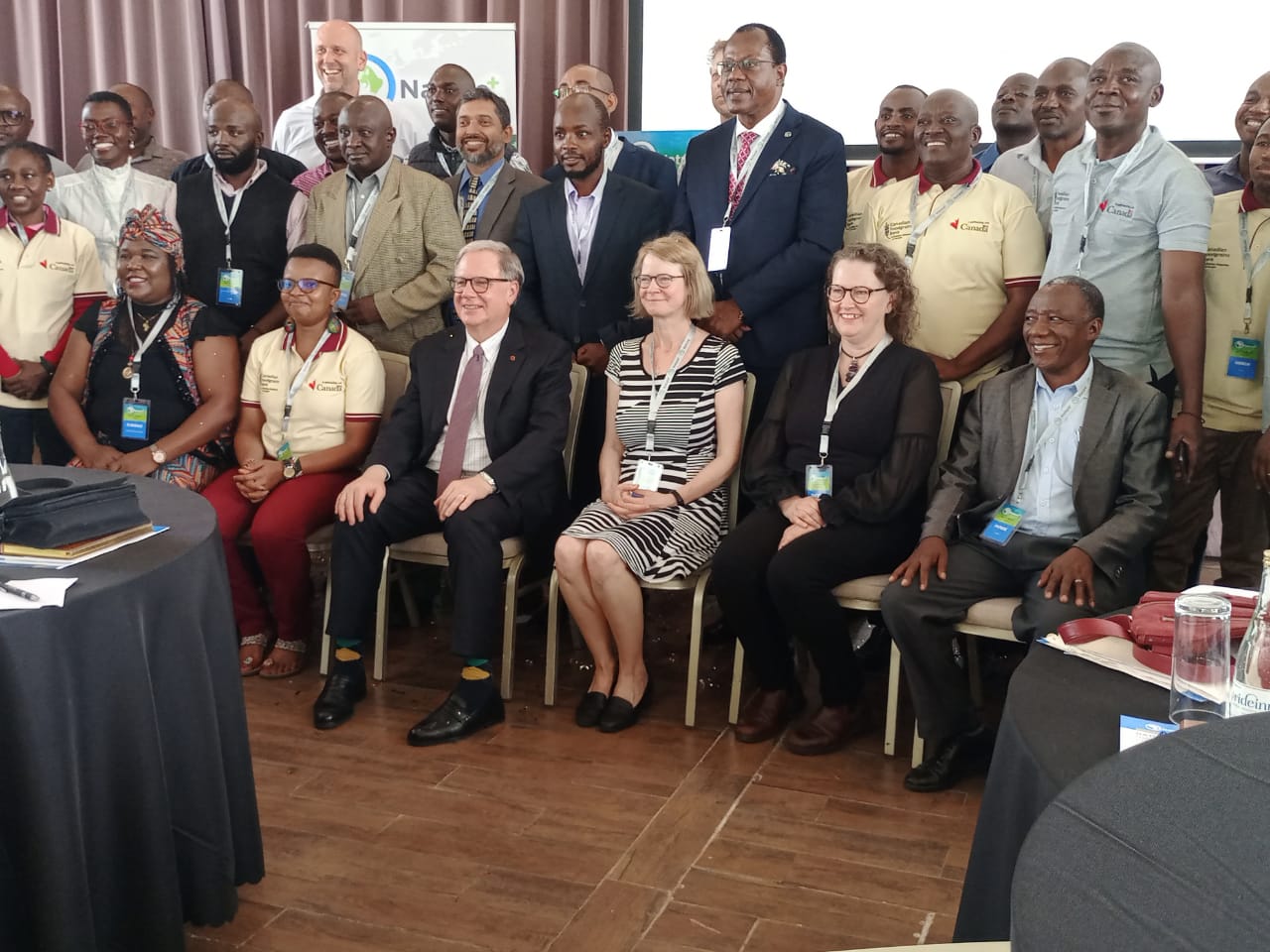
NAIROBI, Kenya, April World Renew Kenya, a faith-based humanitarian organization, has rolled out the Nature Positive Food Systems for Climate Change Adaptation (Nature Plus) project in Kenya.
The 8.5 million Canadian dollars-worth project funded by the Canadian government through Foodgrains Bank is seeking to address adverse climate change challenges facing locals around the Athi River in Kitui and Makueni counties.
The 3-year program implemented by the National Council of Churches (NCCK), Fadhili Trust, ADRA Kenya, and Utooni Development Organization (UDO) is set to benefit 30,000 locals from the two targeted counties.
The Beriso Nature Plus Africa lead said the project focuses on nature-based solutions (NBS) and landscape-level restoration that will help restore destroyed landscapes in the regions and reduce community vulnerability to climate change.
“We will be working with the communities through assisted natural regeneration and enrichment planting such as incorporating fruit trees, Indigenous trees, landscape rehabilitation through planting trees , fodder crops into farmers fields and household areas to enhance their well being,” said Beriso Nature plus Africa lead manager.
He noted that the Athi River, being part of the Semi-Afro-Mountain region in Africa, has landscapes internationally recognized as biodiversity hotspot areas that have been threatened by climate change, hence the need to rehabilitate the contiguous areas.
The project will also benefit farmers with various farm level water harvest technologies and small-scale community water dams.
“Impacts of climate change challenges including drought, floods and pests and diseases that have come up pose a risk to the communities within the two counties. We thank the Canadian government for offering financial support for the project to address these challenges,” he added.
According to Canadian Foodgrains Bank International Program Director Barbara Macdonald, the project will also be rolled out in neighboring countries, including Ethiopia, Zimbabwe, and Mozambique, which are also identified as biodiversity hotspot areas.
Increased tree logging and burning of charcoal witnessed in the two counties in the recent past has adversely affected environment preservation initiatives aimed at combating climate change.