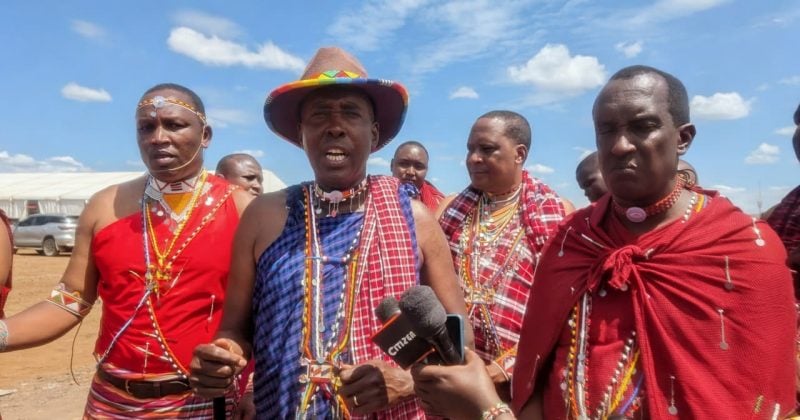
NAIROBI, Kenya, Nov 6 – The spirit of Maasai unity, heritage and pride came alive this week as the three governors of the Maa-speaking counties, Joseph Ole Lenku (Kajiado), Patrick Ole Ntutu (Narok) and Jonathan Lati Lelelit (Samburu) joined hands to power the Maa Cultural and Tourism Festival, now in its third edition.
The week-long event, running from November 4 to 9 at Amboseli National Park, celebrates the resilience and identity of the Maasai people across Kenya and Tanzania.
It brings together communities to showcase the rich culture that is an attraction to tourism one of the biggest Gross domestic product ( GDP) contributors. From traditional dances, music, storytelling, cuisine and crafts, all while strengthening cultural preservation and tourism-driven growth.
The festival is rotational, hosted each year by a different county under the Maa Economic Bloc (MAAEB).
Narok County hosted the inaugural edition in 2023, Samburu County in 2024 and this year’s edition is taking place in Kajiado County, home to Amboseli, the park that symbolizes a major milestone in local governance and conservation.
Host Governor Joseph Ole Lenku expressed pride in hosting this year’s festival, terming it a historic moment for the region.
“We congregate in Kajiado, Amboseli National Park this time to celebrate the third edition of the Maa culture. We are calling this a double celebration because we are celebrating the return of Amboseli,” said Lenku.
The “return” he referred to marks a significant moment: the official handover of Amboseli National Park from the Kenya Wildlife Service (KWS) to the Kajiado County Government, an event scheduled during the festival week and presided over by President William Ruto.
On his part, Narok Governor Patrick Ole Ntutu welcomed Kenyans to join in the celebrations, describing the event as a unifying platform for all Maa communities and a boost to local economies.
“We welcome all Kenyans to Amboseli National Reserve for the celebration of the Maa culture and the Maa Festival,” said Ntutu.
He emphasized the financial impact of devolution in tourism, particularly with park revenues now directed to county governments.
“On the 8th, we will witness the President handing over Amboseli National Park to the County Government. What does that mean? It means that the local revenue that used to go to KWS will now go to Kajiado County Government. That is approximately over Ksh 1.5 billion a year. In Narok, we get around Ksh 3 billion; in Samburu, we also get around Ksh 1.5 billion. That to county governments means a lot because in terms of our bursaries, in terms of development, it will go a long way in enhancing what we are trying to do,” Ntutu explained.
Speaking on conservation, Samburu Governor Jonathan Lati Lelelit injected humour and depth into the proceedings, reminding the gathering of the sacred bond between land and people.
“In our culture, it is said that there are two things that can never leave you for the rest of your life, the land, which we call the soil and your children. Your wife can unfortunately leave you, but your children will never leave you. Your land will never leave you,” said Lelelit.
He lightened the moment with a playful directive to journalists and visitors attending the festival:
“I want to make an announcement here. From tomorrow (Thursday), nobody, including you people of the press, will be allowed here without wearing the Maasai attire. This is a cultural week, so tomorrow, if you want to report news here, you must be dressed like all of us, properly,” he said amid laughter from the crowd.
Lelelit also called for the creation of a Maasai Cultural Fund to ensure the long-term preservation of Maasai traditions and to reward the community’s contribution to Kenya’s tourism industry.
“In this country, we have something called the Tourism Fund, which is very good as it assists our tourism to grow. We want to say that because the Maasai culture has been the culture of this country, we want to pronounce tomorrow (Thursday) that we want a Maasai Cultural Fund for the posterity of our culture.”
“Because we bring a lot of tourism to this country through this culture, this culture must stay, this culture must live, this culture must be forever. And it can only be sustained if we have a special way through our taxes to fund the sustenance of this culture,” he concluded.
As the festivities began, Governor Lenku concluded with a powerful reflection on the spiritual and cultural significance of Amboseli to the Maasai people.
“This is our land. You know, even sometimes in Parliament and national celebrations, a Maasai prayer is said, you will always call a Maasai man to come and bless the gathering. So today we blessed this ground. Today, we gave thanks to God for giving us Amboseli back. Today, we sanctified the soil; today, we invited divine presence to our new course,” Lenku said.
Beyond music and colour, the Maa Cultural and Tourism Festival represents a growing regional movement where culture, wildlife conservation, and sustainability meet economic empowerment.
The three governors’ collaboration symbolizes a united front in promoting sustainable tourism, protecting heritage, and advancing devolution through culture-based development.