NAIROBI, Kenya Oct 8 – Nairobi Senator Edwin Sifuna has sought answers over plans to bury 443 unclaimed Shakahola remains, raising concern that families could lose the opportunity to identify their loved ones if the interment proceeds before all forensic and tracing efforts are exhausted.
Sifuna has asked the Senate Standing Committee on Justice, Legal Affairs and Human Rights to establish the status of DNA profiling and other forensic examinations on the remains and whether families of missing persons have been adequately involved in the identification process.
He is also seeking assurances that all reasonable efforts to identify the victims and reunite them with their families will be completed before the remains are buried.
The senator’s intervention comes after the Kilifi County Government announced in September that it was preparing to inter the 443 unclaimed remains by December 2026, subject to the completion of legal requirements.
During a joint oversight visit to Malindi Sub-County Hospital by the Senate County Public Investments and Special Funds Committee and the Senate Health Committee, Kilifi County Executive Committee Member for Health Peter Mwarogo said the Directorate of Criminal Investigations had completed its investigations on the remains and given the county the green light to begin the burial process.
“DCI has completed its investigations and given us the go-ahead to start the interment process,” Mwarogo said.
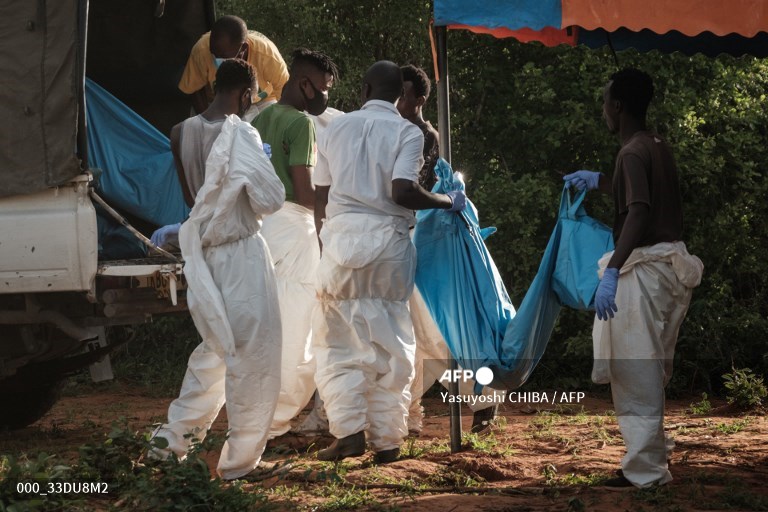
The county said it was holding 443 bodies and remains recovered during the Shakahola exhumation exercise, including complete bodies and body parts.
Of the 443 remains, only 14 had been identified by relatives at the time, leaving hundreds still unclaimed.
Mwarogo said the county had identified land near Shakahola where the remains would be buried, but the process would first have to comply with the legal requirements governing unclaimed bodies.
The county had issued a Gazette notice giving relatives 21 days to come forward and claim the remains. After the notice period, officials said they would approach the court for authority to proceed with the interment.
“We will go to court after the 21 days to seek orders to dispose of the bodies,” Mwarogo said.
He said the county intended to bury the remains in a manner that would preserve the possibility of future identification.
“We have to inter them in a way that allows identification if someone comes later,” he said.
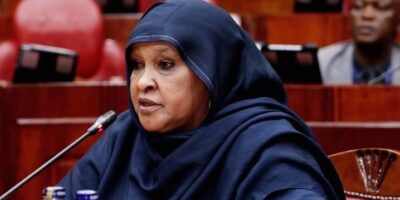
The proposed burial, however, raised concerns among senators who questioned whether a Gazette notice would be enough to reach families still searching for missing relatives.
Elgeyo-Marakwet Senator William Kisang questioned what additional measures were being taken to reach families who may not see government notices.
“Nobody reads the Gazette notice. What measures are you taking to reach families still looking for their loved ones?” Kisang asked.
Nominated Senator Fatuma Shakila similarly called for a wider public awareness campaign through television, radio, newspapers and social media.
The concerns are now at the centre of Sifuna’s request for a Senate statement.
The Nairobi senator wants the Justice, Legal Affairs and Human Rights Committee to explain the current status of the identification and forensic examination of the 443 remains.
He also wants the committee to establish whether families have been given sufficient time and support to identify and claim their relatives and whether any remains could still be required as evidence in ongoing criminal investigations.
Sifuna is further seeking an update on recovery operations at the wider Shakahola complex and whether authorities have established if additional human remains could still be present at the site.
His intervention comes against the backdrop of the continuing criminal cases arising from the Shakahola deaths, which began in 2023 after authorities uncovered mass graves linked to followers of controversial preacher Paul Nthenge Mackenzie.
The Senate’s 2023 Ad Hoc Committee on Shakahola recorded that 428 bodies had been exhumed and recovered by October 13, 2023, while one suspect had died in custody, bringing the committee’s recorded death toll at the time to 429.
The committee warned that the number could increase as exhumation operations continued.
The scale of the tragedy has since complicated the identification process, with authorities relying on DNA profiling, post-mortem examinations and other forensic techniques to establish the identities and causes of death.
Some remains are also incomplete.
Mwarogo said some of the material recovered from the graves consisted of body parts because of the condition in which they were found.
“Some are full bodies, while others are body parts,” he said.
The prolonged storage of the remains has also put pressure on the county’s mortuary facilities and resources. Kilifi authorities have previously raised concerns over the space occupied by the Shakahola remains and the cost of maintaining refrigerated storage facilities.
The investigations have also expanded beyond the original Shakahola forest site, with authorities pursuing cases linked to deaths and alleged graves at Kwa Binzaro in Kilifi.
Meanwhile, the main criminal proceedings against Mackenzie and his co-accused continue, with prosecutors presenting forensic, DNA and witness evidence in cases arising from the deaths.
Sifuna wants the Senate committee to ensure that the planned interment does not compromise these investigations or prematurely end efforts to establish the identities of the victims.
He is also seeking assurances that relatives will be given a reasonable opportunity to identify and claim their loved ones before the remains are permanently interred.
The senator’s move places fresh scrutiny on the planned December burial and the question of how authorities can balance the need to give the remains a dignified resting place with the families’ right to know what happened to their missing relatives.
For the families still searching for loved ones, the proposed burial could represent a final opportunity to secure answers provided identification and tracing efforts are given sufficient time before the remains are laid to rest.