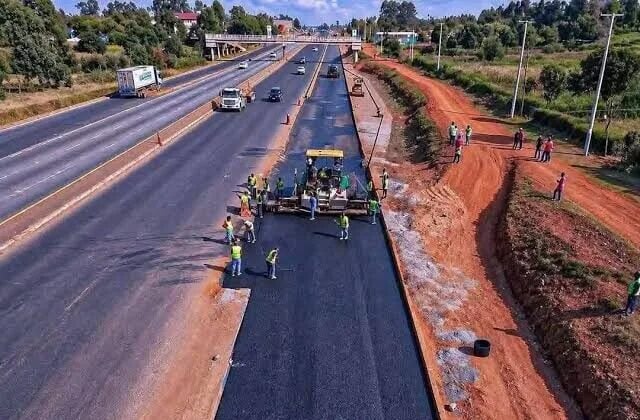
NAIROBI, Kenya, Nov 12 – President William Ruto has explained how negotiations with France helped the Government exit a stalled road construction contract, avoiding a potentially costly legal battle over the Rironi–Mau Summit highway.
The President said the agreement, awarded to a French company in 2020, had failed to deliver a single kilometre of road in six years, with the dispute eventually escalating into court proceedings.
He said the Government faced the prospect of paying between $200million and $300 million in a protracted legal dispute without securing the construction of the road.
Rather than allow the matter to drag through the courts, President Ruto said he reached out to French President Emmanuel Macron to facilitate a negotiated settlement.
The Government subsequently agreed to pay $50 million (approximately Sh6.4 billion) to exit the contract, which the President said was a more economical option than pursuing the litigation.
“I could clearly see that the matter in court would cost us more money than the negotiation we had. We decided to pay $50 million and exit the contract rather than continue with a suit that could cost us possibly between $200 million and $300 million and then no road would be built,” he said.
The settlement cleared the way for a new construction arrangement valued at Sh191 billion, compared with the previous Sh249 billion contract.
Beyond the lower cost, the revised project provides for a longer 210-kilometre dual carriageway, against 175 kilometres under the earlier agreement, as well as a six-lane section between Naivasha and Nakuru.
President Ruto said construction had commenced and reached 40 per cent completion, signalling progress towards delivering a project that had remained stalled for years.
He made the remarks during the Kenya Comprehensive School Heads Association Annual General Meeting and Conference in Nyali, Mombasa County decision to negotiate an exit was informed by the need to protect public resources and unlock the delivery of critical infrastructure.
The settlement, he maintained, allowed the Government to move beyond a contractual dispute and pursue a new arrangement with improved project scope and lower costs.