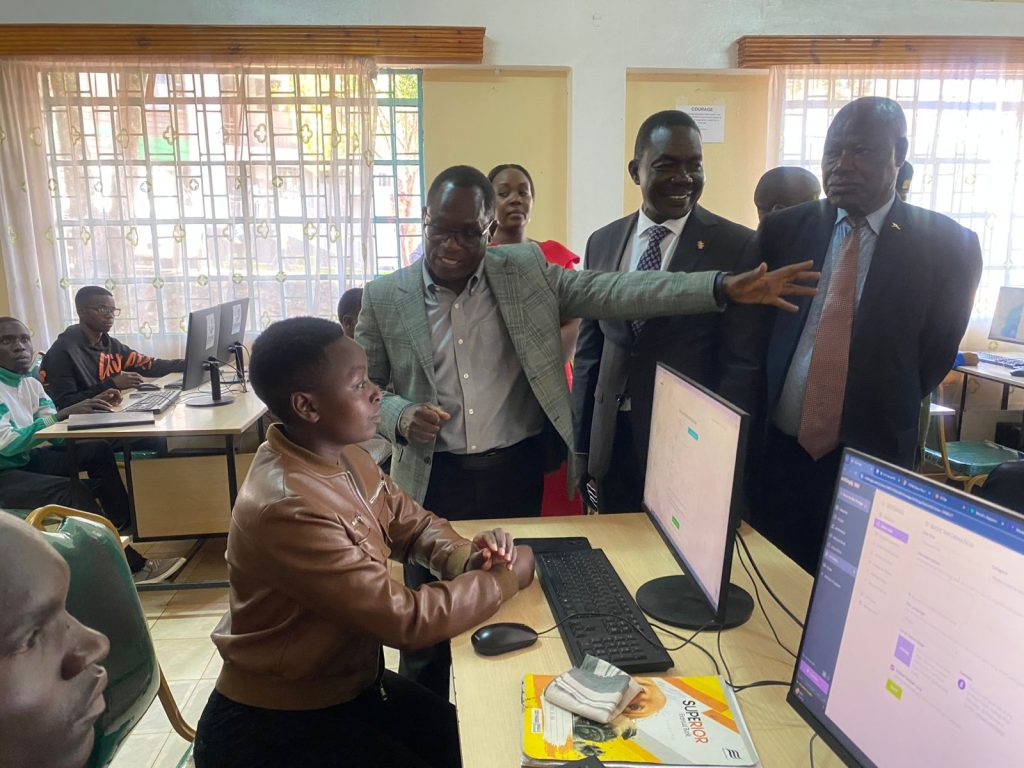
KISII, Kenya, Jan 30 – The government is accelerating efforts to position Kenya at the forefront of Africa’s digital economy, creating opportunities for youth to access digital tools, earn online, and build sustainable careers.
Speaking at Kisii Polytechnic, State Department for Broadcasting and Telecommunications PS Stephen Isaboke highlighted the government’s push to grow the digital economy, one of the five pillars of the Kenya Kwanza administration.
“The state plans to roll out 100,000 km of fibre optic cable nationwide, establish 1,450 digital hubs at ward level, and provide 25,000 free public Wi-Fi hotspots,” PS Isaboke said.
Kisii County is already benefiting, with 47 digital hubs operational or under construction. Once fully equipped with computers, these hubs will support digital skills training, online work, and access to global marketplaces.
“The digital superhighway and creative economy are no longer just a vision. The Jitume Center at Kisii Polytechnic, with 100 computers, is proof that this transformation is happening,” he added.
PS Isaboke revealed that over 300,000 digital jobs have been created nationwide, ranging from call centre services to freelance online work, enabling youth to earn livelihoods globally, leveraging Kenya’s strong English proficiency.
He emphasized that digital work is becoming a viable alternative to traditional employment.
Beyond digital expansion, PS Isaboke noted the government’s investment in major infrastructure and social projects in Kisii, including Sh7 billion for construction and rehabilitation of 270 km of roads, development of Nyambera Market, upgrading Gusii Stadium as a national project, construction of affordable housing units and a cancer centre and ongoing university expansion projects.
“All these commitments are planned, budgeted, and implemented through proper procurement processes. They are not statements made in isolation,” he said.
PS Isaboke also pointed to the expansion of universal healthcare under the Social Health Authority, which has registered 29 million Kenyans, significantly improving access compared to the former NHIF system.
“These projects are meant to change lives by addressing basic needs, jobs, healthcare, infrastructure, and dignity for our people. That is what development is about,” he concluded.