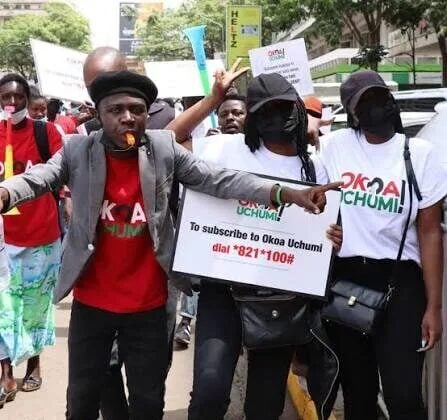
NAIROBI, Kenya, Nov 6 – Okoa Uchumi has renewed pressure on the government to release the International Monetary Fund (IMF) Governance and Anti-Corruption Diagnostic Report, accusing the Executive of withholding a critical assessment of corruption and weaknesses in the management of public resources.
The campaign wants the final report made public immediately and formally tabled in Parliament so lawmakers and Kenyans can scrutinise its findings and recommendations.
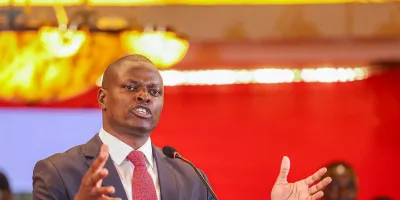
In a statement, Okoa Uchumi said the matter had returned to the parliamentary floor after Geoffrey Wandeto sought answers from the Departmental Committee on Finance and National Planning over the status of the document.
The campaign said Parliament expects a response within two weeks, but the Executive had yet to provide a timeline for its release.
According to Okoa Uchumi, the government requested the diagnostic in September 2024, with the first report submitted in December 2025 before undergoing a review process. The final report was subsequently received by the government in June 2026.
The demand for its publication comes days after the World Bank warned that corruption and governance weaknesses were undermining Kenya’s economic growth, investment and job creation.
At the launch of its 34th Kenya Economic Update on November 4, the World Bank said addressing governance constraints could lift Kenya’s Gross Domestic Product by up to 20 per cent by 2035, while supporting millions of additional and better-quality jobs.
The report estimated that corruption and collusion affecting public spending and revenue collection account for up to two percentage points of GDP in annual fiscal deficits, increasing the government’s borrowing needs and limiting resources available for development.
It also found that 39 per cent of firms identify corruption as a major constraint to doing business, with medium-sized enterprises particularly affected by demands for bribes. The bank warned that governance weaknesses were also increasing the cost of essential services and inputs, including electricity, logistics and land.
Okoa Uchumi said the World Bank’s findings reinforced the need to disclose the separate IMF diagnostic, arguing that Kenyans should have access to an assessment examining systemic governance weaknesses, corruption vulnerabilities and institutional failures affecting public resource management.
“The findings and recommendations are therefore not the private property of the Executive. They are of immense public interest,” the campaign said.
The IMF diagnostic was commissioned following public discontent over the cost of living, taxation and accountability in the use of public funds, which came to the fore during the 2024 Gen Z-led protests against the Finance Bill.
The IMF’s publicly announced process included a scoping mission in March 2025 and a technical assistance mission from June 16 to June 30, 2025. The team, which included World Bank staff, consulted government officials, Parliament, anti-corruption and oversight institutions, civil society organisations, private sector representatives and development partners.
The assessment examined governance and corruption risks in key areas of state operations, including public financial management, procurement, expenditure policy, taxation, revenue administration, market regulation, the rule of law, Central Bank governance and financial sector oversight.
The IMF said the exercise was intended to identify governance weaknesses and corruption vulnerabilities with significant macroeconomic implications and develop a prioritised reform plan.
In June 2026, the Fund confirmed that it had shared a draft governance assessment with the Kenyan government and was awaiting feedback. It also said publication of the assessment was subject to the government’s consent.
Okoa Uchumi, however, questioned why a report prepared following extensive consultations and using public resources should remain inaccessible to citizens.
“We, the people of Kenya, cannot continue financing diagnostics, commission investigations and hold public consultations only for findings and recommendations to be hidden from citizens,” the statement said.
The campaign is demanding the immediate release of the final report, its formal tabling before Parliament and a clear government roadmap outlining how its recommendations will be implemented, including timelines.
It argued that withholding the findings would deny citizens and their elected representatives an opportunity to interrogate governance failures and assess the proposed reforms.
The campaign also warned against a situation in which public resources are spent on investigations, diagnostics and consultations whose findings are subsequently concealed from the people expected to benefit from the recommendations.
“The 2024 protest by Kenyans that motivated this diagnostic must not be rewarded with findings shrouded in secrecy,” Okoa Uchumi said.
It added that the generation which took to the streets demanding accountability during the 2024 Finance Bill protests deserved to know how public resources were being managed.
“Kenya’s future must not be built behind closed doors,” the campaign said, urging the government to release the report and allow Kenyans to hold public institutions accountable.
“Release the report to citizens. Table it in parliament let Kenyans hold power to account.”