NAIROBI, Oct. 3 (Xinhua) — The Judiciary of Kenya on Tuesday called on African countries to come up with new strategies to combat transnational organized crimes that are currently negatively impacting the society.
Chief Justice Martha Koome said strong enforcement of laws and the adoption of new strategies are crucial in combating the fast-evolving transnational organized crimes and illicit financial flows, and called for the need to continuously evolve, learn, and train the judiciary to deal with the changing face of crime.
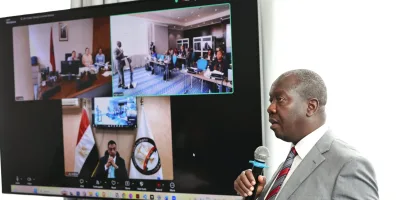
“These illicit profits fuel corruption, undermine governance, erode the rule of law, and threaten the stability of states and regions,” Koome told the judiciary training institutes, judges, and judicial officers from 21 African countries attending a three-day regional forum in the Kenyan coastal city of Mombasa.
The conference dubbed “Judicial Dialogue” discusses experiences, challenges, and potential solutions in the adjudication of different forms of transnational organized crime and illicit financial flows.
Koome noted that transnational organized crimes and illicit financial flows are not just legal issues but also pose inherent threats to the social fabric, economies, and governance structures, which threaten the shared vision of a prosperous, secure and peaceful Africa.
Given the transnational nature of these crimes, the courts have a duty to facilitate international cooperation through mechanisms like extradition and mutual legal assistance, Koome said, adding that human trafficking, narcotics trade, illegal arms dealing, cybercrime, wildlife poaching, counterfeiting, and the alarming growth of illicit financial flows have cast a shadow over development aspirations.
The Kenyan chief justice expressed concern that the most vulnerable in societies bear the brunt of these crimes, citing from children ensnared in human trafficking rings to communities wrecked by drug epidemics.
Chief Justice of the Federal Supreme Court of Ethiopia Tewodros Kebede noted the need to develop indigenous jurisprudence on transnational organized crime and illicit financial flows, adding that there is a need to lead regional and continental cooperation of judiciaries with a view to ensuring that the rule of law and justice prevail throughout Africa.