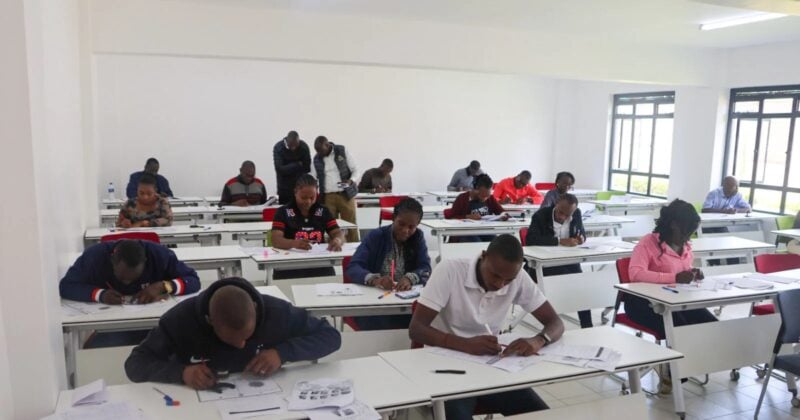
NAIROBI, Kenya, Nov 28 – The Directorate of Criminal Investigations (DCI) has subjected 50 fingerprint officers from the agency and the Kenya Defence Forces (KDF) to specialised examinations aimed at strengthening the reliability of forensic evidence used in criminal investigations and court proceedings.
The two-day forensic fingerprint examinations, concluded at the National Criminal Investigations Academy (NCIA) on Friday, assessed the officers’ technical knowledge, practical abilities and professional judgement in examining and analysing fingerprint evidence.
The exercise brought together fingerprint officers from the DCI and KDF, in a joint effort to reinforce professional standards and improve the accuracy of forensic identification services.
“The examinations, which comprised Papers B and C, assessed the officers’ technical knowledge, practical skills, professional judgement and competence in fingerprint examination and analysis, in line with established forensic standards and procedures,” DCI said.
While Paper B assessed advanced theoretical knowledge and specialised competencies, Paper C focused on practical skills, requiring candidates to examine, analyse, compare and evaluate fingerprint samples.
Officers were also required to identify ridge characteristics, examine disputed fingerprints appearing on documents and apply established procedures to arrive at reliable findings.
The examinations are part of quality assurance measures intended to promote consistency, accuracy and integrity in forensic analysis, while improving the quality of expert reports and testimony presented in court.
Fingerprint evidence plays an important role in criminal investigations by helping investigators establish the identity of individuals, connect suspects to crime scenes and provide scientific evidence that can support criminal proceedings.
The DCI said testing forensic examiners against recognised standards would help build a skilled workforce and safeguard the credibility of forensic evidence in the administration of justice.
The exercise comes amid the growing importance of scientific evidence in criminal investigations, where the accuracy of forensic analysis can influence the direction of investigations and the strength of evidence presented before courts.