MACHAKOS, Kenya, Jan 24 – The State Department for East African Community, Ministry of East African Community, and Regional Development has embarked on a transformative agenda of engaging cross-border women traders in border counties to build their capacity and benefit from gains of the EAC integration process.
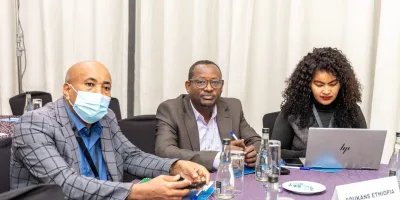
The Principal Secretary State Department for East African Community, Dr. Kevit Desai made the remarks in Machakos County during a two days stakeholder’s workshop on the findings of a study on increasing salience and Strategic Engagement for women’s economic empowerment.
Desai said as the EAC they have continued to train and capacity build women traders on the EAC trade rules, regulations, and procedures.
“It is Imperative that women cross-border traders are continuously trained and informed of the contemporary trends in international and regional trade to enable them to re-engineer their processes,” said Desai.
He said that the Ministry of EAC and Regional Development is focused on ensuring that women traders in all border counties benefit from the East African community liberated trade regime, which caters to small scale low-value cross-border traders.
Desai added that 16 Million traders in the EAC region where the majority are women are dealing with primary agricultural commodities.
He said that the development program for women cross-border traders is motivated by the big 4 agenda which seeks to accelerate the economic progress of the country.
“Studies have shown that there are about 16 million traders in the EAC of which 70 percent are women dealing with primary agricultural commodities. The development program for women cross-border traders is motivated by the big 4 agenda which seeks to accelerate the economic progress of the country through manufacturing, universal health care, and affordable housing,” added Desai.
However, he said that during the two conferences that took place in Kigali Rwanda in 2011 and Nairobi in 2015, women complained that they struggle to find information regarding the goods and services allowed for trade-in each partner state.
The women also complained of the standards and authorization certifications required, the taxes and tariffs applicable in each country, import and export law in each country, and trade processes and control among other details that are important for successful trade within the region.
He pointed out that in response to the cross border women’s complaints, Kenya in partnership with the International Labor Organization (ILO), initiated the process of developing a simplified guide to EAC trade rules, regulations, and procedures for cross border women traders and other service providers to assist traders to get all the relevant cross border trade information.
Desai noted that it is the Ministry’s responsibility to bring all stakeholders on board, as Kenya modernizes its borders and adopts the one-stop border post (OSBP) concept.
“As Kenya modernizes its borders and adopt one-stop border post concept, it is the responsibility of our ministry to bring all stakeholders on board,” noted the PS.
The PS said women traders are expected to conduct peer-to-peer grassroots training to ensure those who did not get an opportunity to attend the workshop can benefit.
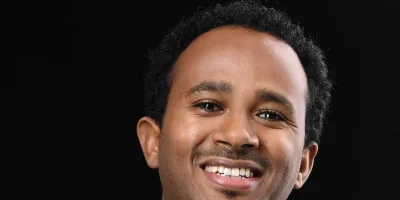
On his part, Masheti Masinjila, the Executive Director for Collaborative Centre for Gender and Development, stated that they plan to release the findings of the study on increasing salience and strategic engagement for Women Economic Empowerment (WEE), Women Empowerment Collectives (WEC) and Gender Integration.
Masinjila said the study will emphasize on women and the obstacles they encounter in business in order to guarantee that effective strategies for tackling the problems are adopted.
“The study also analyzes what women are accomplishing in business and the obstacles they encounter. This will allow us to debate measures to better the status of women in business,” Masinjila remarked.
Masinjila added that the project also aims to improve conversation and understanding among all stakeholders around women’s economic empowerment.
“As we speak, important development partners are exchanging information about the prospects available to women, particularly those in lower businesses who require associations in order to learn more about business,” added Masinjila.