NAIROBI, Kenya, Feb 7 — When Russia invaded Ukraine in February 2022 in an escalation of a nearly decade-long war dating back to 2014, the world was astonished.
Months following the invasion saw world leaders mobilize efforts to stop the Russian incursion which had by February 2023 resulted in USD350 billion cumulative property damage. Over 140,000 budlings mostly in Ukraine’s capital Kyiv had been flattened.
Yet faced with the apparent injustice and violation of territorial integrity, Ukraine has had to cope with dozens of nations expressing neutrality.
In March 2022, African nations came under fire for failing to out rightly back the United Nations resolution calling for Russia to stop its so-called special military operations in Ukraine.
The move was part of a concerted effort by international communities to pressure Russia President Vladimir Putin and his allies to end the full-scale invasion of Ukraine.
However, their efforts failed and Putin, who is currently serving his fourth term in office as the Head of State, had his way.
Of the 54 African member states, Eritrea voted against the resolution, 16 African countries including South Africa abstained (opting to remain neutral), while nine other countries did not vote at all.
Kenya, which was a member of the United Nations Security Council (UNSC) at the time, abstained from the vote attracting condemnation for failing to lead the way in the crucial vote that could have potentially forced Russia to halt the war.
While Ukraine’s President Volodymyr Zelensky continues to push for more global support, Ukrainian celebrities are using their influence and popularity to rally the world against Russia’s invasion of the Eastern European nation.
Truthful, not neutral.
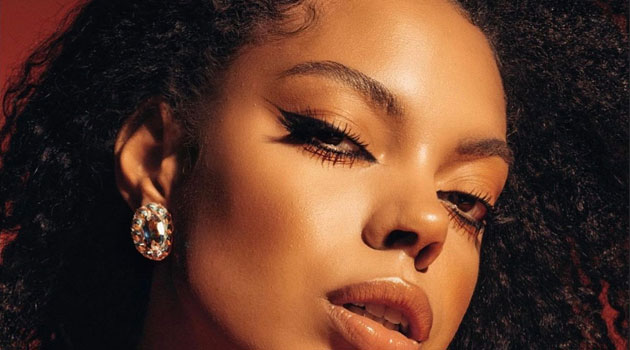
Adelina Deli, a popular African-Ukrainian choreographer, is among a crop of influential Ukrainians who are calling on Africans to take a strong stand against the war that has persisted for more than a year.
Born in Ukraine’s capital Kyiv, to a Ukrainian mother from Zhytomyr and grandparents from the Donetsk region in Eastern Ukraine (now occupied by Russia since 2014), Deli, whose father is of Congolese origin, warns that the neutral stance of many African nations could be detrimental to their future.
“Those who invade feed on neutrality – oppressors only become stronger if more countries claim neutrality in the face of injustice, instead of supporting the country fighting for its independence. No one person’s suffering is more or less worthy than another’s,” Deli says.
For Deli, the consequences of the war hits close to home, having lost close relatives when a barrage of rockets began descending from the skies as Russian forces intensified its offensive against the Ukrainian military.
Her husband lost his little brother and grandmother who died when they tried to escape the shelling.
“It was March, the Dnieper River was very cold, the boat capsized and they died. Nothing can take away this pain. The pain for innocent adults and especially children,” Deli says, noting that the war has brought nothing but suffering to the people around her.
Russia blockade
The performer who contested in two seasons of Ukrainian “Dancing with the Stars”, questions why African countries who have equally lived through successive conflicts and even now struggling to survive as a result of disruption of grain supply networks because of Russia’s blockade of the Black Sea, are hesitant to condemn Russia.
She argues that the silence of the majority of African states in times of conflicts such as these empowers the oppressor to continue advancing their selfish agenda.
“Why would Africans turn a blind eye to Ukraine which has always contributed to the maintenance of peace on the African continent?” she asks.
“In situations like Russian invasion of Ukraine even being neutral could be dangerous, because it feeds the oppressor and breaches global security,” she adds.
Ruined livelihoods
Deli, who has spent the last five years touring the world with leading Ukrainian female singer Nastia Kamenskykh, says the war has ruined her life.
She goes on to say that, the violence has affected every aspect of Ukrainian society, leaving no one unscathed.
According to Deli, her workload has been by reduced 90 per cent “because the war has affected every sector of the country, including culture.”
“Many artists have gone to fight in the frontlines. Some have died, while others turned their efforts to charity. In times of war, culture also becomes part of the resistance,” she says.
Deli recalls how the start of the war reunited her with her family, including her father who reached out to her for the first time in 20 years to offer his support
As part of her contribution to her country, Deli held charity concerts in Spain with Nastia Kamenskykh to gather donations for drones for the Ukrainian Armed Forces.
Charity events
She adds that she plans to promote and participate in even more charity events in the future in support of her country.
The entertainer attributes much of her own talent to her African heritage.
Deli feels that there is an opportunity to build closer creative ties between Africa and Ukraine, through an exchange of talent and cultural experiences.
She adds that African creatives can utilize the power of art and culture to advocate for a more secure world
“It would be great to build bridges and work there; it would be a very cool experience for me,” she says.
Just like Africans, Deli argues that Ukrainians are very talented and creative musicians and could work together to build relations.
“Afro-Ukrainians could bring to Africa, the Ukrainian culture and vice versa. The result would be an exchange of talent and a solid basis for future cooperation,” she says.
Deli believes that her journey in the creative world is a testament to the fact that Ukraine accepts everyone.
“War is above any personal conflict and different outlooks on life. Suffering the state of war unites people, of all races and nationalities. War is pure evil that must be defeated by good,” she says.
Nondiscrimination
While reflecting on her upbringing in Ukraine, Deli emphasizes that she never experienced discrimination as a black-skinned individual. In fact, she feels that her roots have helped shape who she is today.
“My roots have actually helped me become who I am today,” Deli said as she dismissed earlier claims of discrimination against Africans in Ukraine during the early stages of the war.
According to Deli, Ukraine is a country that welcomes all, including talented individuals.
Her own journey in the world of art serves as proof that the country is accepting of all
“Ukrainians are not just white-skinned; they are people of any skin colour. In fact, people here speak different languages and have different faith and political beliefs, but that does not stop us from forming meaningful relationships with each other.
Deli is eager to establish stronger creative links with Africa, recognizing the role that art and culture can play in promoting a more secure world.
“Building bridges and working there would be an incredible experience for me,” she says