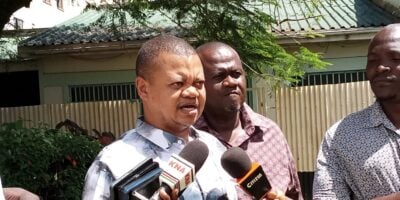
NAIROBI, Kenya, Nov 13 – Communities in Makueni and Kitui counties have called on politicians and other individuals opposed to the construction of the Thwake Multipurpose Dam to stop what they describe as attempts to derail a transformative regional development project.
Residents say the long-awaited infrastructure could finally unlock the agricultural and economic potential of Kenya’s Lower Eastern region, where unreliable rainfall and inadequate water infrastructure have constrained livelihoods for generations.
The calls for restraint come amid renewed controversy over compensation claims by some households alleging that construction-related blasting damaged their homes, with cracks reported on walls, windows and foundations, alongside complaints about dust, noise and ground vibrations.
However, most residents have defended the project, insisting that affected households were assessed and compensated and that isolated grievances should not be used to undermine an investment expected to benefit millions of people.
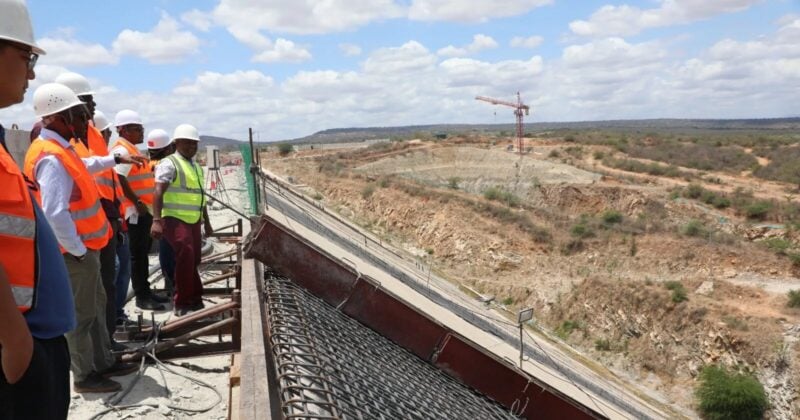
On Tuesday, Principal Secretary for Water and Sanitation Julius Korir told the National Assembly Departmental Committee on Blue Economy, Water and Irrigation that construction of the dam had reached 94.2 per cent.
The remaining works are being accelerated to allow water impoundment to begin in April 2027.
The latest progress marks an important milestone for a project that has experienced years of delays, funding constraints and changes to its implementation schedule.
Martin Kimeu, a resident of Wote, said the dam represents a major opportunity to reverse decades of underinvestment in water infrastructure and improve agricultural production in the region.
“Ukambani is fertile. Water has been the biggest impediment to the realization of our agricultural potential. Thwake Dam water is the clear solution to this,” he said.
“Let us keep petty politics off this intergenerational project. I have been following up on its construction since inception. I can proudly say that everything is above board, from the compensation exercise to construction.”
Jacob Mwanzia, a resident of Madangi Village also questioned the motives of some individuals campaigning against the project, arguing that their grievances should not be allowed to overshadow its wider benefits.
“I was shocked to see a group calling itself the Thwake Dam Blasting-Affected Community Committee peddling what I consider misinformation to the media.”
“Those are self-serving individuals blinded by cheap politics. My home is closer to the project. Most people in my area were well compensated and are satisfied,” he said.
His neighbor, Mariam Mwikali, said assessments had been conducted on affected properties and that residents had been given an opportunity to raise concerns.
“I was horrified to see a few people peddling allegations against the project on television,” she said.
The dispute, however, highlights a difficult balancing act facing the government: delivering major infrastructure while ensuring that communities bearing the immediate costs of construction are treated fairly.
In August 2026, residents from villages in Mavindini Ward, organised under the Thwake Dam Blasting-Affected Community Committee, sought an independent review by the African Development Bank (AfDB).
The residents alleged that blasting had damaged houses and community facilities, with some claiming their properties had been left out of assessments and compensation.
They also demanded access to assessment reports, photographs, measurements, valuation records and repair estimates to establish how compensation decisions were reached.
A key official close to the project revealed that its safety department had invited competitive bids for an independent assessment of properties potentially affected by blasting. Following the evaluation, Agile Consulting was selected to undertake the exercise.
The official said the consultant assessed affected households within a two-kilometre radius and submitted a report to the project implementation team, adding that a huge percentage of 330 households covered were satisfied with the assessment.
Ben Mwongela, a director at the consulting agency detailed parameters observed during the assessment in line with both government and AfDB standards. According to him, the exercise followed professional procedures and sought to establish whether controlled blasting had caused or contributed to structural defects in surrounding properties.
“The assessment involved reviewing blasting records, vibration data and compliance with regulatory standards.”
It also included documenting affected households, classifying structural defects and preparing bills of quantities and cost estimates for repairs or reconstruction.
A field assessment report by AfDB dated October 21,2026 acknowledged high professionalism and integrity being exhibited by experts on the project. Led by Nancy Ogal, the Group manager for the project, the AfDB said that process ensured compliance with social and environmental safeguards on a project identified as a national priority under Kenya Vision 2030.
The team interacted with local communities, checked standards of workmanship and overall progress of the project. It reported that the project is 94 per cent complete. The AfDB team asked the few disgruntled households to follow due process to resolve any pending matter. The Kenyan government position is that residents with unresolved grievances should use established procedures rather than allow disputes to undermine the project.
During a stakeholder engagement visit to Mavindini in October, Water and Sanitation PS Julius Korir reaffirmed the government’s commitment to completing the dam.
Korir said the government had secured additional financing from the AfDB after the project experienced cash-flow constraints.
“In terms of government commitment to completing this dam, it is very evident. When we ran short of cash, we engaged with our development partners, and they allocated additional funding, and this money will now go towards total completion of the project,” he said.
Big infrastructure
Beyond the political disagreements, Thwake is one of the most significant water infrastructure investments in the Lower Eastern region.The project, located at the confluence of the Athi and Thwake rivers along the Makueni-Kitui border, is a flagship under Kenya Vision 2030.
It is designed to address water scarcity, improve agricultural productivity, support energy generation and strengthen resilience against drought and flooding.
The dam is approximately 80.5 metres high and has a planned storage capacity of 688 million cubic metres, making it a strategic water reserve for a region that has historically depended heavily on seasonal rainfall.
According to the project’s implementation plan, the programme has four phases, with the first involving construction of the dam and associated infrastructure.
The subsequent phases will involve developing a hydropower generation facility, water supply and sanitation infrastructure, and an irrigation scheme.
Huge benefits
Once the water supply component is operational, the project is expected to deliver approximately 150,000 cubic metres of treated water daily to an estimated 1.3 million people in Makueni and Kitui counties and Konza Technopolis in Machakos County.
This could significantly improve access to clean water for households, schools, hospitals and businesses while reducing the time and money spent by communities searching for the commodity.
The irrigation component is arguably the project’s biggest economic opportunity.The scheme is designed to support irrigation across 40,000 hectares, equivalent to approximately 100,000 acres, of agricultural land.
This is significantly larger than the 40,000 acres sometimes cited in descriptions of the project.
Reliable irrigation water could reduce dependence on unpredictable rainfall, enable multiple cropping seasons and support commercial production of horticultural crops, fruits and other high-value agricultural commodities.
It could also stimulate investment in agro-processing, storage, transportation and agricultural marketing, creating employment opportunities beyond the farm.
The additional 20 megawatts of planned hydropower capacity will support the dam’s operations and contribute renewable electricity to the national energy mix.
The dam is also expected to regulate downstream flows of the Athi River, helping mitigate flooding and improve water availability during dry periods.
These benefits could strengthen household incomes, improve food security and reduce the vulnerability of rural communities to climate-related shocks.