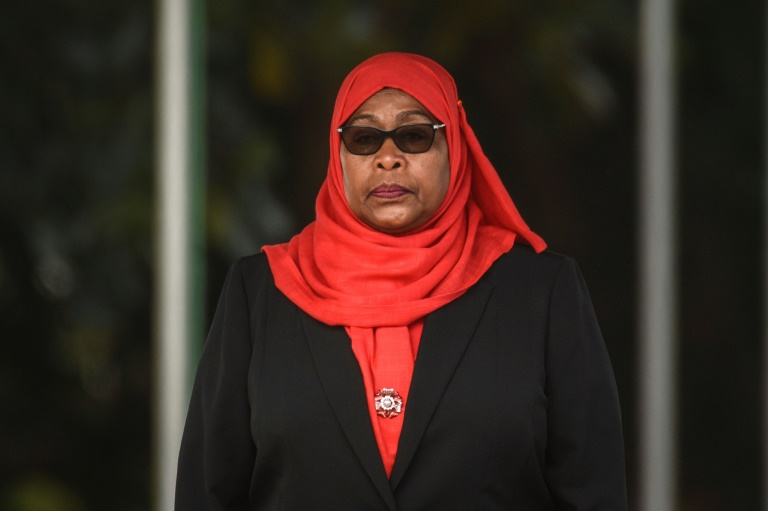
NAIROBI, Kenya, Nov 3 – Tanzanian President Samia Suluhu Hassan has been sworn in for a second term at a military base in Dodoma, breaking with the long-standing tradition of public inaugurations.
The unprecedented venue and heightened security come amid deep political tensions following a violence-marred election that opposition parties and international observers have condemned as deeply flawed.
The low-key ceremony, held at the Tanzania People’s Defence Force parade grounds, was closed to the public and attended only by senior government and security officials.
It was broadcast live on the state-run Tanzania Broadcasting Corporation (TBC), but independent journalists and foreign guests were barred from attending.
President Samia, 64, who was declared the winner with 98 per cent of the vote, took the oath of office amid a nationwide internet blackout, ongoing curfews, and reports of protests and killings in several cities.
Her main challengers had been jailed, disqualified, or placed under surveillance before the vote, effectively leaving her without meaningful competition.
The muted ceremony stood in stark contrast to past inaugurations in Tanzania, which have traditionally drawn tens of thousands of cheering citizens, diplomats, and regional leaders.
The opposition Chadema Party has rejected the election results, calling them a “mockery of democracy.”
Party spokesperson John Kitoka said the vote “cannot be regarded as free or fair” and demanded a rerun under international supervision.
‘700 deaths’
Chadema claims over 700 people have been killed in post-election violence, while a diplomatic source in Dar es Salaam told the BBC there is “credible evidence” of at least 500 deaths.
The UN Human Rights Office said it had verified at least 10 deaths in three cities but warned the actual toll could be much higher.
The government has denied the allegations, with Foreign Minister Mahmoud Kombo Thabit describing the unrest as “a few isolated incidents.”
He defended the internet shutdown and curfews, saying they were necessary to “save lives” and prevent “false information” from spreading.
Witnesses in Dar es Salaam, Arusha, and Mwanza report that security forces continue night raids in opposition strongholds, with residents claiming soldiers move through neighborhoods after dark while curfew restrictions keep potential witnesses indoors.
Hospitals are reportedly overwhelmed, and families say they cannot trace missing relatives.
Diplomatic missions in Tanzania have expressed alarm over the scale of violence and urged authorities to restore internet access and allow independent investigations.
Despite mounting criticism, President Samia’s administration insists that the situation is under control, describing Tanzania as “a beacon of stability in the region.”
However, with curfews, roadblocks, and media censorship still in place, many Tanzanians say the country has entered one of its darkest periods since independence.