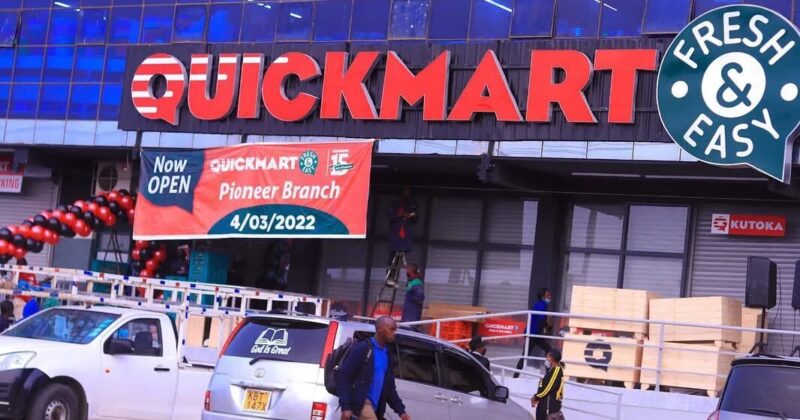
NAIROBI, Kenya, Nov 11 – Investors buying into Quickmart Supermarket through its Sh15 billion public share offer will not be injecting fresh capital into the retailer, a transaction structure that has prompted Parliament to question whether adequate safeguards are in place to protect ordinary Kenyans.
The National Assembly Public Investments Committee on Commercial Affairs and Energy has challenged the Capital Markets Authority (CMA) to strengthen its scrutiny of public share offers, warning that investors could face losses if they do not fully understand the financial position and risks of companies whose shares they purchase.
The Quickmart offer involves the sale of two billion existing shares by Sokoni Retail Kenya Limited at Sh7.50 each, with applications reaching Sh18.41 billion, representing a 22.7 percent oversubscription.
However, because the shares are being sold by an existing shareholder, the Sh15 billion proceeds will go to the seller rather than Quickmart, meaning the supermarket chain will not directly benefit from fresh equity financing through the transaction.
Nairobi Woman Representative Esther Passaris questioned whether prospective investors had been adequately informed about the implications of the arrangement, particularly as the transaction has been characterised as a partial exit by private equity investor Adenia and the company’s founders.
The committee, chaired by Pokot South MP David Pkosing, also questioned whether CMA had sufficiently examined Quickmart’s financial position, operating cash flows and supplier obligations before approving the offer.
Members drew comparisons with the collapse of Uchumi and Nakumatt supermarkets, arguing that the history of failures in the retail sector should inform how similar investment opportunities are assessed.
“As the market regulator you have an obligation to protect Kenyans from potential loss of funds,”saif Pkosing.
“You have the capacity to seal all these loopholes, and your biggest risk that needs your immediate attention appears to be these supermarket chains shares offers.”
CMA Chief Executive Officer Wyckliffe Shamiah defended the regulator’s assessment, telling the committee that the offer had undergone thorough scrutiny and met the required regulatory thresholds.
“The SME (Quickmart) is not heavily reliant on debt, as the bulk of its funding is internally generated. The proposed share sale has also met the other requisite thresholds,” Shamiah said.
The exchange highlights the competing considerations in secondary share sales, which allow existing shareholders to realise their investments while giving the public an opportunity to acquire ownership stakes in established businesses.
Unlike primary share issues, however, they do not provide the issuing company with additional capital.
The committee’s intervention comes as the offer attracts strong demand, raising questions about whether investor enthusiasm is matched by an adequate understanding of the retailer’s financial performance, valuation and future growth prospects.
The MPs also examined audit queries in CMA’s financial statements covering 2018/2019 to 2024/2025, including temporary staff engagements and procurement of medical insurance brokerage services.
Shamiah attributed the temporary staffing arrangements to personnel shortages, saying substantive recruitment had since been undertaken with National Treasury approval. The authority also maintained that its insurance brokerage procurement complied with the law.