NAIROBI, Kenya, Nov 10 – African private and public sector players have been urged to work together in the field of artificial intelligence (AI) for growth.
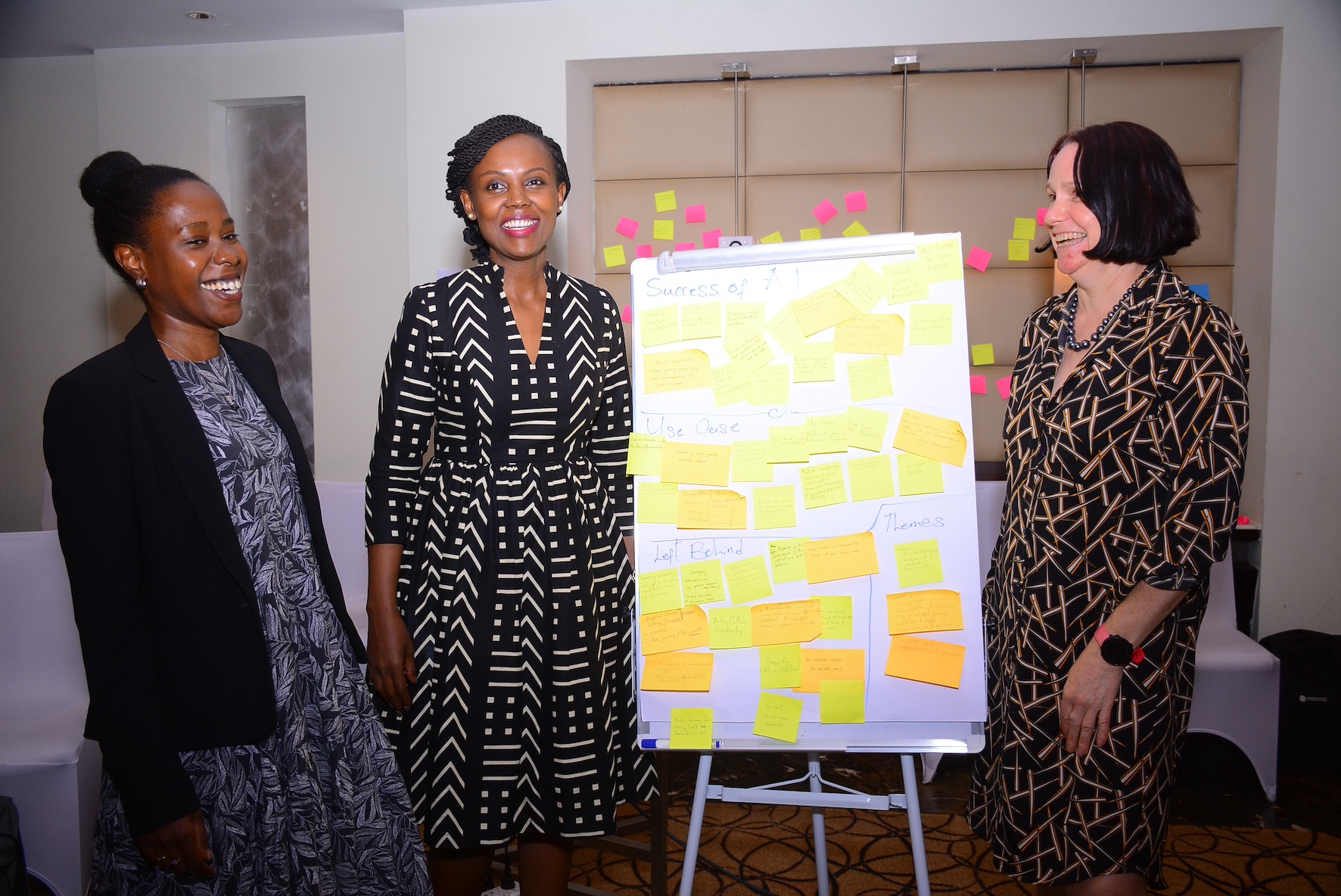
This was discussed by a team of experts last week during the Microsoft Africa Research Institute (MARI), a one-day workshop on AI and future work in Africa in Nairobi.
The conference brought together thought leaders from across the continent to ensure that Africa will be a front-runner in defining generative AI strategy and building Afro-centric AI.
Jacki O’Neill, the MARI Director, emphasized the immense potential of AI to stimulate growth and development throughout the continent.
“We see numerous opportunities for AI to align with the continent’s development agenda,” O’Neill said.
“Getting it right, especially for Africa, will allow the continent to take the lead in the upcoming fifth industrial revolution,” he added.
“AI investment – in research, building and deployment – promises to yield substantial returns across a wide range of sectors and has the potential to help mitigate some of the continent’s most pressing challenges.”
The fifth industrial revolution, also known as Industry 5.0, will be distinguished by human and computer collaboration, a step forward from the preceding Industry 4.0, which focused on integrating automation and data exchange.
The experts observed that, while Africa lagged in previous industrial revolutions, there is an opportunity for large-scale revolution in multiple sectors such as education, manufacturing, technology, agriculture, and government.
Presently, Africa continues to trail the rest of the world in AI adoption, with only Mauritius, Egypt, South Africa, and Tunisia surpassing the global average in readiness for AI adoption, according to the 2022 Oxford Institute’s Government AI Readiness Index.
The index is formulated using 39 indicators spanning government readiness, technology sector preparedness, and essential ICT infrastructure.
Speaking at the same event, Njeri Mwagiru, a senior futurist at the Institute for Futures Research at Stellenbosch Business School, underscored the necessity for deliberate consideration when harnessing AI as a tool for development, calling on stakeholders to anticipate the change before it potentially leads to crises.
“While great growth potential exists, we expect it to manifest primarily in areas that receive investment and attention,” Mwagiru said.
“Moreover, Africa must be careful and consider potential hazards such as ethical considerations, scalability, inclusivity, and the unintended impacts that AI may have on the continent.”
The Future of Work conference brought together diverse participants, including technology experts, academics, public and private sector representatives, youth, and policymakers from across Africa.
The assembly explored the adoption of AI in Africa while preserving the unique communal contexts of the continent and supporting its development.