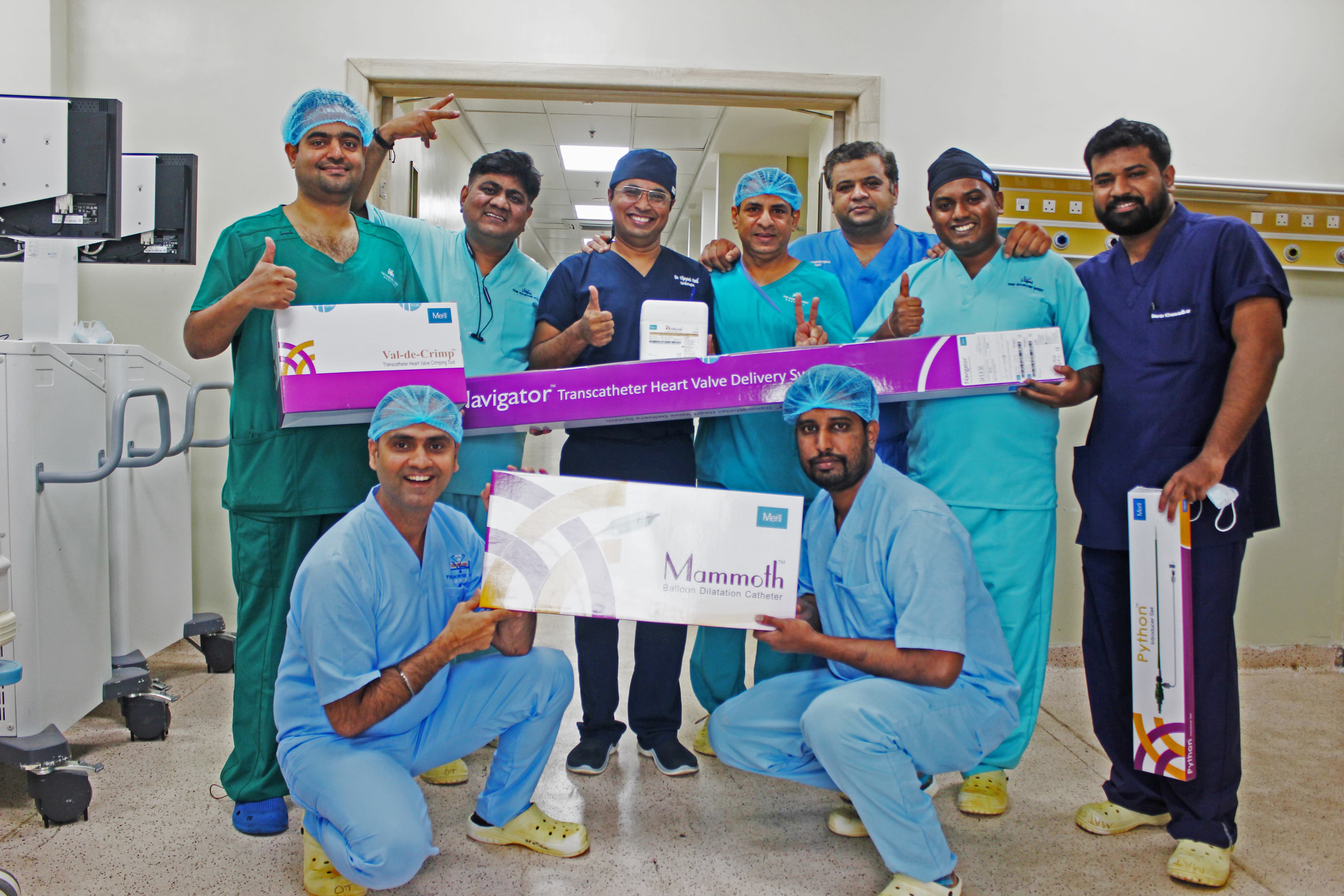
JULY 25 – A new non-surgical heart procedure is proving to be a game changer, particularly for patients with critical underlying illnesses.
Traditionally, these heart patients were treated surgically by replacing the damaged heart valve with an artificial valve via open-heart surgery. However, such operations, especially in the elderly population or those with multiple comorbidities, carry significant risks.
In an effort to reduce exposure for patients with underlying conditions, The Nairobi West Hospital has introduced the Transcatheter Aortic Valve Implantation (TAVI).
This minimally invasive procedure is designed to replace a narrowed aortic valve that does not open properly. This development marks a significant advancement in cardiac care, especially for high-risk patients who are not ideal candidates for conventional surgery.
According to The Nairobi West Interventional Cardiologist VijaySinh Patil, the procedure takes just one hour and is performed while the patients are conscious.
“The procedure is unique for the aortic valve. Patients with a lot of calcium or blockage or leakage in the valve can undergo this procedure,” said Dr. Patil.
The patient who underwent the procedure had visited the hospital with breathing problems and tiredness and was advised to consider the procedure as a permanent solution to his condition.
“I came to The Nairobi West Hospital and after a series of tests, I decided to undergo the procedure after Dr. Patil told me I have a problem with the heart. I was a little bit tense at first, but he assured me it’s a non-invasive procedure that would take less than an hour. I had suffered from the condition for a few years, and it started to become worse. The doctors told me it would be life-threatening in the end if not addressed,” said Godfrey Mbithi, who hails from Nyeri.
Aortic stenosis, a condition where the aortic valve narrows and restricts blood flow from the heart, has traditionally been treated with open-heart surgery to replace the damaged valve. However, such operations pose significant risks, particularly for elderly patients or those with multiple comorbidities.
The TAVI procedure involves inserting a new valve within the diseased aortic valve through a catheter, typically inserted via the femoral artery in the groin.
Using advanced imaging techniques, the new valve is precisely positioned and expanded within the damaged valve, ensuring proper blood flow. This minimally invasive approach results in shorter hospital stays, quicker recovery times, and fewer complications compared to traditional surgery.
Recent advancements in TAVI technology have enhanced its safety and efficacy. Moreover, the procedure is now being considered for a broader range of patients, including those with intermediate and low surgical risk. As the population ages and the prevalence of aortic stenosis increases, the demand for TAVI is expected to grow.
This comes at a time when heart diseases, which used to be prevalent in developed countries, are now spreading rapidly to developing nations like Kenya.
For many of these countries, heart attacks will strike like a tornado, catching governments unawares as they concentrate their resources on fighting malaria, AIDS, and child mortality, while neglecting non-communicable diseases.
The World Health Organization had raised the alarm in 2020, stating that 60% of the global burden of heart disease now lies in developing nations.
Cardiovascular diseases claim 17.3 million lives every year and account for one in ten deaths in Africa.
Kenya lacks accurate statistics on the real picture of heart disease among its citizens, but in South Africa, someone suffers from a heart attack or chest pain every seven minutes, totaling more than 74,000 per year.