NAIROBI, Kenya, Nov 12 – Women seeking elective positions in Kisumu County have raised concerns over political violence, voter bribery, sexual harassment and discrimination within political parties ahead of the 2027 General Election.
The aspirants say intimidation by political gangs, online harassment and unfair nomination practices continue to undermine women’s participation in politics, calling for urgent reforms to guarantee a level playing field.
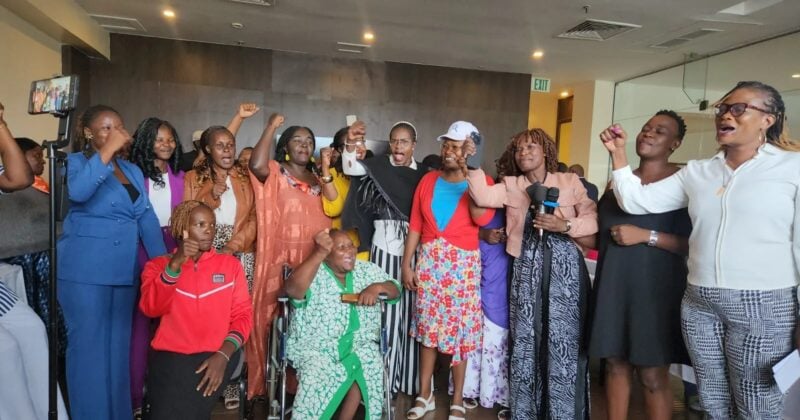
The concerns emerged during a meeting organised by the Federation of Women Lawyers in Kenya (FIDA-Kenya) to discuss political party accountability and internal reforms on gender inclusion ahead of the next General Election.
The meeting brought together women aspirants and representatives of the Independent Electoral and Boundaries Commission (IEBC), the Office of the Registrar of Political Parties (ORPP), the National Cohesion and Integration Commission (NCIC) and the National Gender and Equality Commission (NGEC).
In a joint statement read by Kisumu Woman Representative aspirant Linda Ogweno, the women said political intolerance and violence were creating an unsafe environment for female candidates and their supporters.
They cited the activities of groups locally known as Mbogis, Chude Chude, Sangwenya and Security Boys, accusing them of intimidating women candidates and disrupting their political activities.
“We are concerned with the increase in political intolerance, violence and handouts culture in Kisumu County and the lake region ahead of the 2027 elections. Unfortunately, this pattern recurs in every electoral cycle,” the statement read.
The aspirants said women expressing political views that differ from those of their opponents often become targets of violence, making it difficult for them to campaign freely.
They also raised concerns over technology-facilitated gender-based violence, including online harassment, doxing, the non-consensual sharing of private images and coordinated attacks on social media.
According to the statement, such tactics are increasingly being used to silence female politicians and discourage women from seeking leadership positions.
The aspirants further accused political parties of undermining women during nominations by pressuring them to withdraw in favour of male candidates, sometimes in exchange for promises of government appointments after elections.
“During nomination negotiations, political parties unfairly coerce women candidates to step down for their male counterparts, promising other appointments after elections,” they said.
They also faulted nomination processes for allegedly favouring money, nepotism, tribalism and personal connections over leadership ability and competence.
Some parties were accused of issuing women with tickets in areas where they have limited electoral support, effectively reducing their chances of winning elective positions.
The meeting also heard allegations of sexual harassment and exploitation within political party structures, with the aspirants claiming some influential individuals demand sexual favours in exchange for party tickets or nomination opportunities.
They called for stronger accountability mechanisms to address sexual harassment and ensure women are not forced to compromise their dignity to participate in politics.
The women urged political parties to review their internal rules and ensure women, young women and persons with disabilities are adequately represented in leadership and nomination processes.
“We call on political parties to educate aspirants on nomination processes, internal dispute resolution and gender policies. They must reform internal rules to guarantee meaningful inclusion of women,” the statement said.
They challenged the IEBC, ORPP, NCIC, NGEC, the Political Parties Disputes Tribunal and security agencies to take action against political violence, hate speech and intimidation.
The aspirants called for early intervention against organised political gangs and those financing their activities, warning that failure to address the problem could undermine participation in the 2027 elections.
They also demanded fair representation of women, youth and persons with disabilities in party nomination lists, cautioning against placing female candidates in positions where they have little chance of securing elective seats.
The women encouraged more female aspirants in Kisumu to contest the 2027 elections, either through political parties or as independent candidates, urging them to organise, support one another and resist attempts to push them out of political contests.
“We remain committed to advocating for an electoral environment in which every woman can participate without fear, intimidation, discrimination or violence,” they said.
Ogweno, who is seeking the Kisumu County Woman Representative seat on a Democratic Labour Party (DLP) ticket associated with Siaya Governor James Orengo, said the concerns raised required the attention of political parties and electoral institutions.
The aspirants maintained that political parties must take responsibility for the conduct of their supporters and ensure women have a fair opportunity to compete for leadership positions.