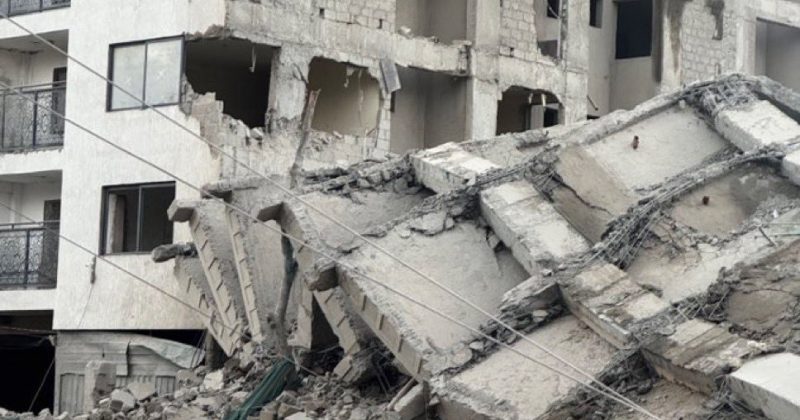
NAIROBI, Kenya, Nov 9 – The Institution of Engineers of Kenya (IEK) is pushing for legislation to introduce independent building safety audits, as concerns mount over weak inspections, poor supervision and continued construction failures.
IEK President Harrison Keter said the proposed External Building Audit Act would provide an additional layer of oversight by requiring independent assessments of buildings, strengthening compliance checks and helping establish accountability where structural defects threaten occupants.
Speaking during the media launch of the 33rd IEK International Convention in Mombasa, Keter said existing regulations were not enough without consistent monitoring and enforcement, particularly as the number of construction projects increases.
The proposal comes against a backdrop of persistent building safety concerns. National Construction Authority (NCA) research published in 2020 documented 87 building failures and collapses in Kenya between 1990 and 2018.
The research also cited a 2018 National Building Inspectorate audit of 14,925 buildings, which classified 723 as very dangerous and 10,791 as unsafe.
More recent figures from the Architectural Association of Kenya’s Status of the Built Environment Report 2025 point to gaps in inspections.
The National Building Inspectorate audited 396 buildings in 2025, down from 20,649 in 2024. Of those inspected in 2025, 87 per cent failed to meet building standards or lacked the required approvals.
The report further indicates that the NCA issued 13,348 suspension-of-work notices in 2025, rejected 1,125 project-registration applications and approved 4,687 as compliant.
The risks were highlighted by the January 2026 collapse of a building under construction in Nairobi’s South C estate.
According to the NCA, the project had been approved for 12 storeys but investigations established that four additional floors had been constructed beyond the approved designs.
Keter also questioned the capacity of engineers to supervise construction effectively, citing cases where professionals were assigned responsibility for hundreds of projects.
He called for greater involvement of independent consulting engineers and clearer accountability for those approving and supervising developments.
Principal Secretary in the State Department for Roads Joseph Mbugu said the industry needed to address unqualified practitioners, poor supervision and disregard for approved construction procedures.
He called for developers, contractors and professionals to comply with approved designs and standards, while professional regulators should investigate misconduct and discipline practitioners who breach their obligations.
The AAK report, however, highlights limited digital adoption, with only eight counties having online permitting systems in 2025, some of which were not consistently operational. It also estimates that professional services are used in approximately 20 per cent of construction projects.
The push for stronger oversight comes weeks after an 18-storey building under construction collapsed in Nairobi’s Eastleigh area on October 23, triggering a major rescue operation.
By November 6, authorities had confirmed eight deaths, with five people still reported missing, while four people had been rescued alive.
Nairobi Governor Johnson Sakaja said the development lacked the necessary construction approvals, as investigations were launched into the circumstances surrounding the collapse
The Eastleigh incident followed other building failures reported this year, including the collapse of a five-storey building under construction in Ogembo, Kisii County, in September, which killed one person.
A building in Kisumu’s Mamboleo area also partially collapsed that month, injuring eight people, according to incident reports.