By Bernard Nyaga
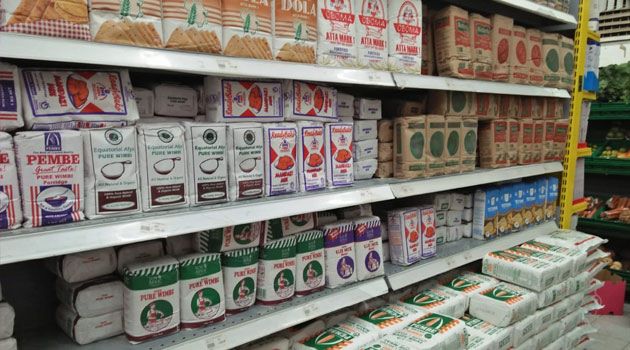
NAIROBI, Kenya July 30 – Inflation is here with us, and it is getting worse each month. At the current June 2022 inflation rate of 7.9% a five-year high since August 2017, commodity prices are expected to dramatically rise as the Kenya shilling grows weaker leading to higher consumer prices. Technically, inflation weakens the Kenyan shilling’s purchasing power.
The Consumer Price Index (CPI), a survey of a selection of household consumption goods and services, is done monthly by the Kenya National Bureau of Statistics in urban centers during the second and third weeks of the month. It is used to monitor inflation. The rate of inflation was 7.1 percent in May 2022 and increased to 7.9 percent in June 2022.
This means that the KES 1,000 you had saved in your account in June 2021 will now be equivalent to KES 921 in June 2022. This means that in addition to working hard to earn your money, you must put in additional effort to invest it to prevent inflation from eroding your money’s purchasing power. Does this now show how the inflation rate is currently affecting things?
Every problem presents an opportunity. There are different ways to protect your money against the inflation rate increase, especially in this election year characterized by systemic risk, currency risk and political risk.
In essence, setting up a dollar-backed emergency fund creates a savings reserve that can be utilized to cover two to three months’ worth of expenses. Generally speaking, this is a contingency for any unforeseen expenses, such as repairs, lost wages, or medical bills. Without savings, any unforeseen expense could lead to taking on debt to cover for the unknown.
To create an emergency fund, developing a savings culture should be the first step. Set a clear target of how much your emergency fund should be worth. The contributions to the emergency fund should be disciplined and consistent. This can be daily, weekly, or monthly.
The management of your emergency fund is the second phase. Consider an asset that is backed by dollars, such as the S&P 500 index, Dow Jones Index, or Nasdaq index. An index offers a low-cost way to hold a collection of the best stocks of international corporations. Indices’ global reach can be utilized to diversify a portfolio or to protect against present regional market risk. Holding a dollar-backed asset like the S&P 500 index would provide a market hedge given the rise in popular international stocks like Apple, Tesla, and Berkshire Hathaway over the past month, especially as the dollar strengthens against the Kenyan shilling.
Weekly saving into a dollar-backed asset, for instance, will provide an investor with a variable weekly entrance price due to fluctuating index prices. The cost at which someone purchases the S&P 500 index this week will be different from the cost the following week. If this pattern is maintained for a two-month period, the investor will have eight deposits into the emergency fund, each of which represents a deposit each week, and eight distinct buy points for the index. This offers an advantage in dollar cost averaging.
Ensuring ease of access to your emergency fund is fundamental. An emergency fund should have the ability to be liquidated at ease to ensure it serves its purpose. Using a platform like FXPesa, liquidation is instantaneous. If you hold an emergency fund in an asset such as land, this would be disastrous in the event of an emergency. Easy liquidation is key.
Continuous monitoring of your emergency fund would involve keeping tabs on the price movement, account balance and monitoring the dollar exchange rate. Once this becomes a habit, your progress will be the source of your gratification. Enjoy the process.
While the Nasdaq index value increased by 6.7% in dollar form in the month of July, your savings in KES have declined by 0.66% within the same timeframe. This is a strategy that can be deployed by both individuals with and without a consistent income, as the economy seeks to recover from the pandemic and the economic slowdown attributed to the 2022 election.
The writer is Head of Business Development-FXPesa