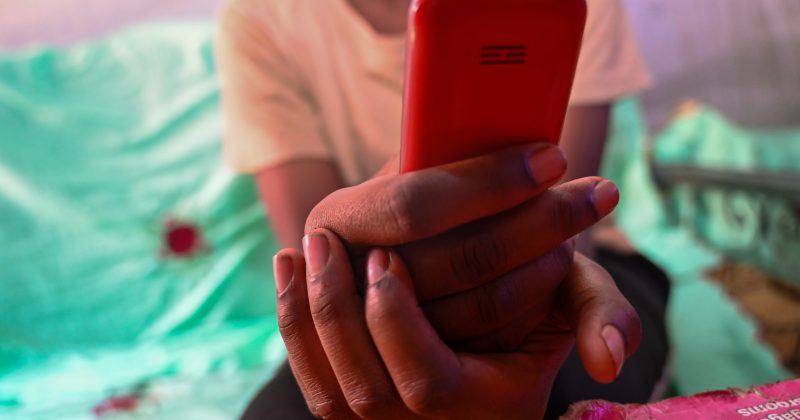
JUNE 23 – “I did not know that someone could just get my photo and do bad things with it. I thought it was just funny.” These haunting words from a Kenyan child reflect a sobering truth: children are navigating a digital world that was never designed with their safety in mind. This has to be changed.
Every day, across Africa and beyond, children are being sexually exploited online. More than 300 million children fall victim to online sexual exploitation and abuse each year—an average of 10 cases every second. This “hidden pandemic,” as described by the Childlight Global Child Safety Institute, reaches “every classroom, in every school, in every country.” From children livestreaming explicit content under coercion to AI-generated child sexual abuse imagery proliferating unchecked, the crisis is escalating. The recent BBC exposé on TikTok profiting from exploitative livestreams is just one stark example. Urgent, coordinated action is needed to protect children online.
While platforms such as TikTok have publicly committed to zero tolerance for exploitation, with safety policies, content moderation in over 70 languages, including Swahili, and partnerships with local experts, recent exposés suggest these measures are not enough.
Tech companies have taken important steps to stop online child sexual exploitation. With the tools and influence they wield, they can and must do much more to truly make the internet safe for children. We call on the Kenyan government to take a more proactive role by enacting and enforcing policies that hold tech companies accountable. This could include introducing online safety regulations that require companies to build in child protection measures by design, report harmful content swiftly, and collaborate with local law enforcement.
In 2024, the CyberTipline received 20.5 million reports of suspected child sexual exploitation. While this is a significant number, the overall number of reports declined from 36.2 million reports received in 2023 National Center for Missing and Exploited Children (NCMEC) CyberTipline. In 2024, the INHOPE network processed over 2.4 million suspected Child sexual Abuse Material (CSAM) reports, marking a 218% increase from the previous year. Of these, 65% were confirmed illegal, and 93% of victims were children aged 3 to 13 years, with 99% being girls. These numbers are not just statistics – they are a loud alarm bell. The scale and speed of this rise demand urgent, coordinated action. It’s clear that current voluntary measures by tech platforms are not enough. If we don’t act, these numbers will continue to grow and so will be the harm to children.
In Kenya, we have seen this crisis up close. The 2023 SCROL (Safety for Children and their Rights Online) baseline study revealed that 47.7% of children had experienced at least one form of online harm, such as exposure to sexual content, cyberbullying, or unwanted contact from strangers. More than 28% of children reported being asked to share personal images or videos, while over 30% said they had been approached online by strangers, often via platforms like TikTok, WhatsApp, and online games. The data also shows that 35% of girls, compared to 22% of boys, reported being pressured to share sexual content. Disturbingly, 23.1% of children aged 15–17 had met in person with someone they first met online, often without knowing how to report suspicious behavior.
Addressing online child sexual exploitation requires bold action from both the government and tech companies. Kenya’s lawmakers must close legal loopholes – especially around unregulated AI-generated abuse content. Tech companies, with their vast reach and tools, must be held accountable for implementing safety-by-design measures. Meanwhile, the government, through the Ministry of Education, should integrate OCSE into the national curriculum as a core life skill. Protecting children online demands shared responsibility – and tech companies must lead where it matters most.
On the positive side, huge developments are emerging in Kenya’s response to Online Child Sexual Exploitation (OCSE). School teachers are beginning to introduce online safety sessions through child rights clubs. In courtrooms, trained magistrates are becoming more responsive to OCSE cases. At police stations, officers are adopting trauma-informed approaches. Most encouragingly, children themselves are stepping up, organising peer-led digital safety campaigns and challenging harmful norms in their communities. The development of national industry guidelines on child online protection(CA guidelines 2025), increased investment in school-based safety programs, and the commitment of some tech companies to improve their policies are also important advancements. However, there is still a lot to be done!
As children powerfully expressed at both the recently concluded 2025 Africa Children Summit in South Africa and the Terre des Hommes Netherlands SCROL Summit in Cambodia, online safety is not a privilege—it is their right. They called for Online Child Sexual Exploitation education in schools, stronger regulation of tech companies, and real accountability for those who exploit them. Their message is clear: the time for token awareness is over—we must act.
As we mark this year’s Day of the African Child under the theme “Planning and Budgeting for Children’s Rights: Progress Since 2010”, we urge the government and tech companies to intensify efforts to stop online child sexual exploitation—not out of fear, but out of responsibility. This call to action must be backed by intentional planning and sustained budget allocation to strengthen child protection systems, including online safety. Because no child should ever be exploited—online or offline.
Article written by Magdalene Wanza, Country Director, Kenya, Terre des Hommes Netherlands