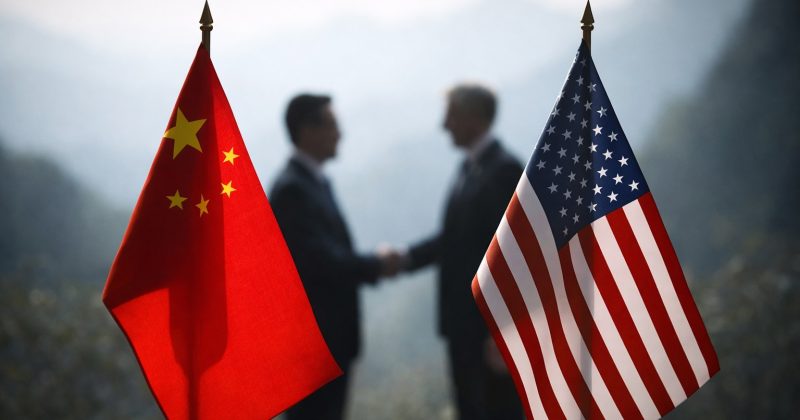
In an era of geopolitical uncertainty, the credibility of a country’s foreign policy often rests on one essential quality: consistency. Nations that articulate clear principles and follow them with steady diplomatic engagement tend to inspire greater confidence among their partners. Recent remarks by Chinese Foreign Minister Wang Yi during his annual diplomatic press conference offer an illustration of a foreign policy approach built around continuity, long-term thinking and cooperation. When contrasted with the increasingly erratic signals that often emerge from Washington, the differences in diplomatic philosophy become striking.
Speaking during China’s annual Two Sessions meetings, Wang Yi outlined Beijing’s perspective on a rapidly evolving international landscape. A central theme in his remarks was the growing importance of the Global South. Over the past four decades, developing countries have become far more influential in the global economy and in international governance. Beijing presents itself both as part of this community and as an advocate for a stronger voice for developing nations on the global stage. The emphasis is on development, cooperation and shared progress.
This framing reflects a broader diplomatic outlook that China has consistently promoted in recent years. Its foreign policy places strong emphasis on multilateral cooperation and the central role of the United Nations system in addressing global challenges. The underlying idea is that international problems — whether economic instability, climate change or armed conflict — should be addressed through dialogue and inclusive mechanisms rather than unilateral pressure.
Wang Yi’s remarks highlight Beijing’s belief that stability and cooperation remain the foundation of a healthy international order. China presents its foreign policy as one that supports open global trade, encourages economic development and respects the sovereignty of different nations. This message resonates particularly strongly among developing countries seeking stable partnerships and long-term investment.
China’s diplomatic narrative also places considerable emphasis on partnership with the Global South, especially Africa. Over the past two decades, these relationships have expanded significantly through trade, infrastructure development and technology exchange. For many African countries, such initiatives represent opportunities to accelerate economic growth, enhance connectivity and diversify international partnerships.
Another concept that features prominently in this diplomatic thinking is the idea of building “a community with a shared future for humanity”, a vision promoted by President Xi Jinping. The concept reflects the belief that global challenges require collective solutions and that international cooperation can generate outcomes that benefit all participants. In a world grappling with climate risks, economic volatility and technological transformation, the emphasis on shared progress offers a framework for dialogue rather than confrontation.
What stands out in this diplomatic messaging is its coherence. The same themes recur consistently across official speeches, policy documents and international initiatives: stability, development, cooperation and mutual respect. This consistency gives international partners a clearer understanding of Beijing’s long-term objectives.
The contrast with the trajectory of United States foreign policy in recent years is difficult to ignore.
The United States continues to present itself as a champion of a rules-based international order. Yet its policies have often appeared inconsistent and unpredictable. Commitments to international agreements and alliances can shift dramatically depending on domestic political changes. One administration may embrace multilateral cooperation, while the next withdraws from the same agreements or questions the value of long-standing partnerships.
Such policy swings create uncertainty for countries attempting to plan long-term economic and security strategies. Agreements negotiated with one administration can quickly be reconsidered or reversed by the next. Climate accords, trade arrangements and international institutions have all experienced cycles of engagement followed by withdrawal or renegotiation.
For many countries — particularly those in the Global South — this volatility complicates diplomatic and economic planning. Governments seeking reliable partners tend to prioritise relationships that demonstrate continuity and predictable policy direction.
Another factor contributing to the perception of unpredictability is the gap that sometimes appears between rhetoric and action. While Washington frequently promotes international cooperation and shared rules, it also relies heavily on unilateral economic and political measures that many countries view as inconsistent with the spirit of multilateralism.
By contrast, Beijing’s diplomatic approach places greater emphasis on long-term engagement and economic cooperation. By focusing on development partnerships and infrastructure connectivity, China presents itself as a country committed to building stable and enduring relationships.
The importance of consistency in foreign policy cannot be overstated. In an interconnected world, international cooperation depends heavily on trust. Countries must believe that agreements will be honoured and that diplomatic principles will remain stable over time.
The diplomatic messaging from Beijing emphasises precisely this sense of long-term commitment. Through repeated calls for cooperation, support for multilateral institutions and engagement with developing countries, China presents a vision of international relations centred on partnership and shared development.
As global power dynamics continue to evolve, the question facing many nations is not simply which country holds the most influence, but which approach offers greater stability and predictability.
In a world marked by rapid change, economic uncertainty and complex global challenges, consistency in diplomacy has become an increasingly valuable asset. The contrast between the steady diplomatic narrative emerging from Beijing and the fluctuating signals that often characterise United States foreign policy underscores an important lesson: sustainable international partnerships require not only power, but clarity of purpose and reliability over time.
The writer is a journalist and communication consultant.