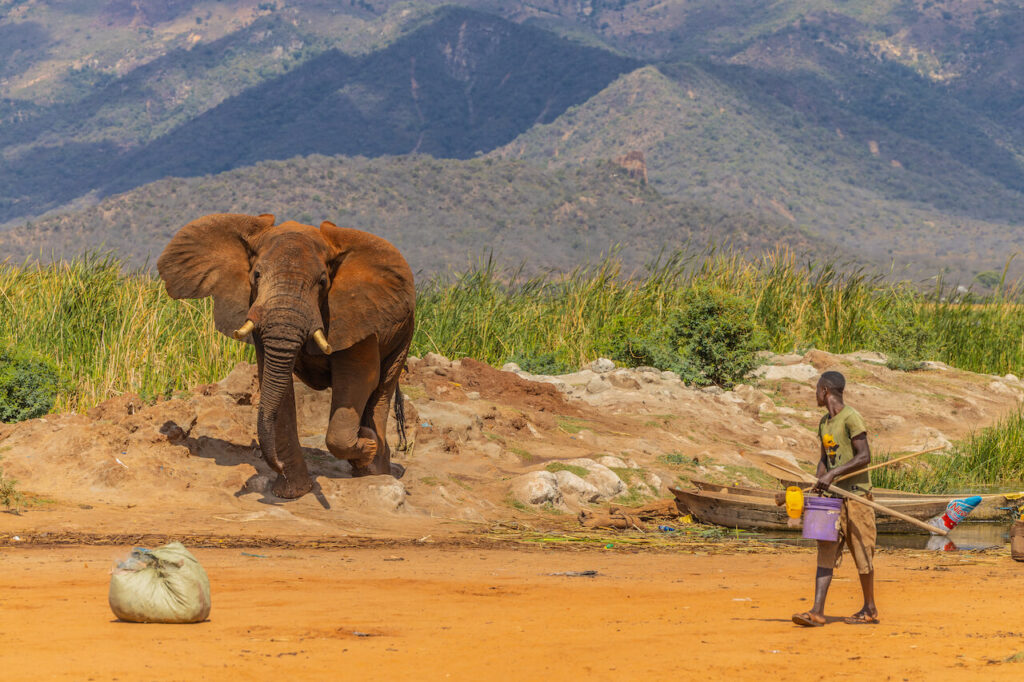
VOI, Kenya Nov 4 -The conflict between people and animals, from elephants raiding farms for food and water, is one of the main threats facing the livelihood of locals in Voi constituency surrounded by national parks.
The constituency based in Taita Taveta is encircled by the Tsavo East and Tsavo West National Parks where elephants frequently wander from the nearby drought-hit Park into the village hunting for food and water.
Jones Mwakima, a farmer in Kajire Village, has faced the full brunt of the devastation that comes with elephants raiding his farms.
Mwakima owned two farms, four kilometers apart but he was forced to sell the farm as he was unable to effectively protect his farm from the raiding elephants.
“We haven’t encroached the elephant’s habitat in fact we have been running to the mountains to run away from them. The elephants have been moving from the parks in search of crops as a source of food because its more nutritious to them,” the Voi farmer said.
Even after relocating eight kilometers further in 2013 to keep the elephants at bay. Soon after the elephants caught up with him prompting him to find a solution as his source of livelihood was now at risk.
Beehive Fences
It took an intervention by Save The Elephants, for him to find a sigh of relief.
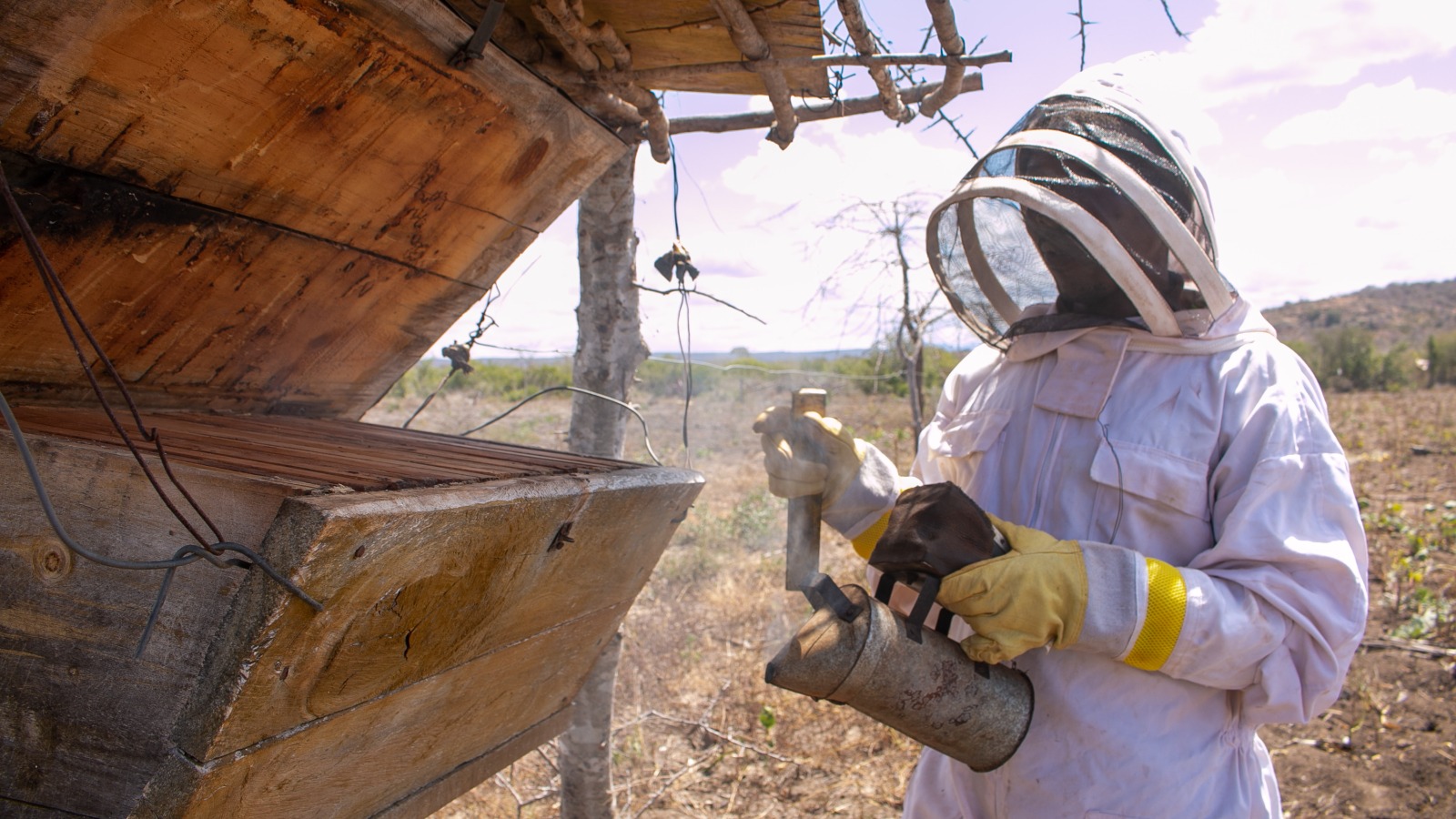
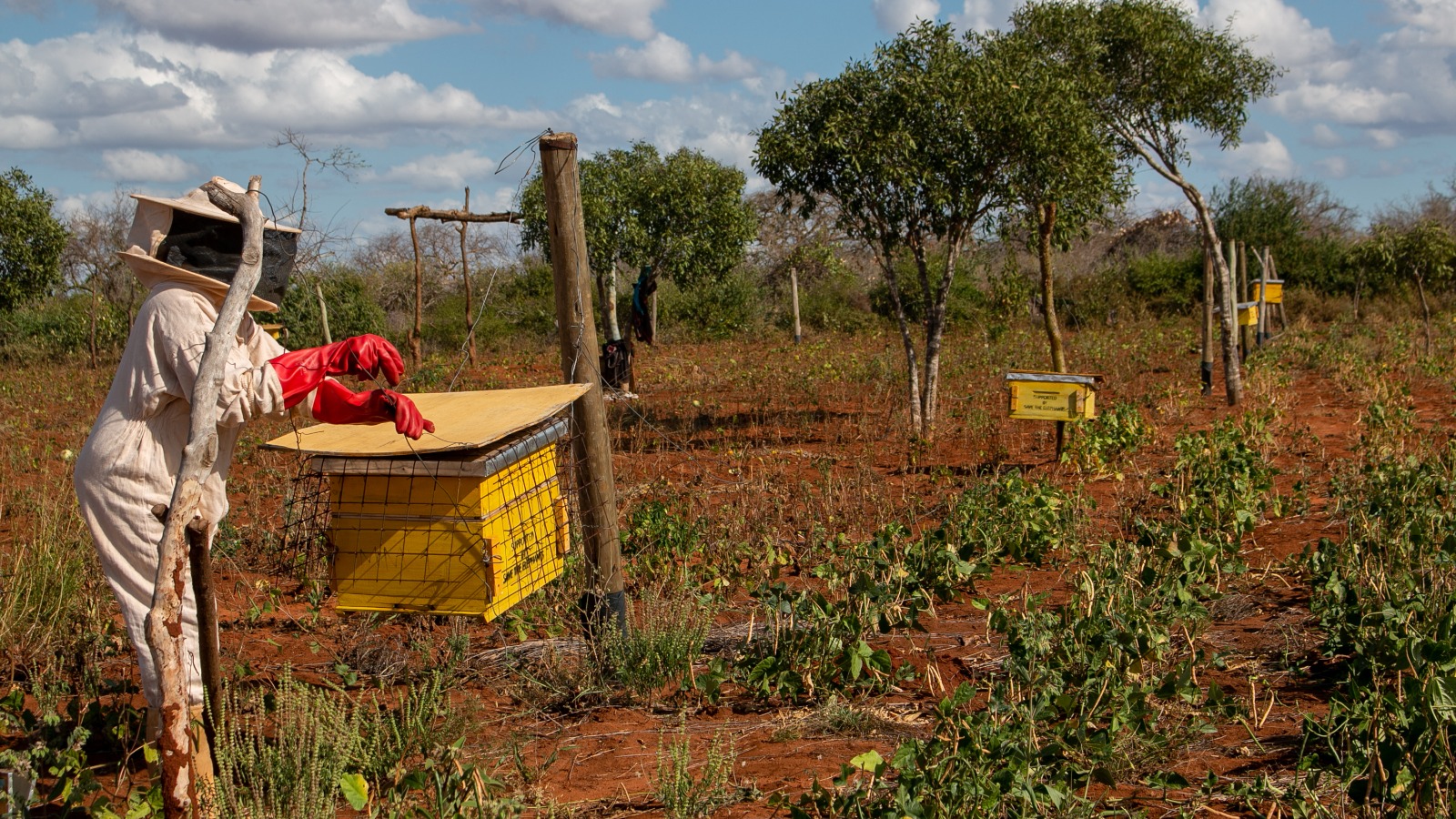
The organization has helped farmers erect beehives across the edges of their like fences which has proved to be a pivotal solution to keep away elephants approaching their crops.
“They did research and realized that elephants don’t get along with bees. The bees are also witty, when they attack they don’t just go far any body part. They go for the ears and eyes majorly,”
“The spacing from one beehive to the next is 7 meters and innately elephants don’t like crossing between two objects. In between the beehives, there is a wire and the elephants don’t like touching the wire because if he does, he will disrupt the bees which will be ready to attack,” Mwakima explains.
According to Mwakima bee fencing has 99 percent success rate in keeping elephants out of farms.
“Cases of elephants invading farms with beehive fences are minimal. In my farm, I usually say it’s just one percent because you will find in 200 elephants only one will attempt to invade. They always fear to invade,” he stated.
Photo/Antony Ochieng.
Human-Wildlife Conflict
The incidents of elephants ravaging farmlands have been on the increase, especially during drought seasons.
It’s perceived that the increasing human population encroaching on wildlife territory has led to the human-wildlife conflict. Mwakima attributes it to the ravaging drought.
“When the SGR railway was built, it brought us a lot of problems, because those elephants coming from Nkomazi, National Park in Tanzania and Tsavo West when they wanted to cross to Tsavo East, they couldn’t because of the railway,” Mwakima stated.
Mwanajuma Mwazindaki, a 53-year-old mother of six has also taken up the beekeeping strategy to keep elephants away from her farm.
She is a mother of six and heavily depends on agricultural farming to tender for her children.
Despite the upheavals that come with the regular elephants’ invasion of his farm, she can’t give up on it.
“I can’t give up, when it rains am among the first people to plant the seedlings and when it rains am always hopeful for a good harvest,” said Mwanajuma.
That’s why she diligently ensures that the beehives surrounding her farm are well maintained through routine checkups.
“The beehive fence is a safe method because its keeps the elephants away without harming them. These bee-hive fences give us honey and helps in pollination. The Save The Elephant organization has taught us on honey processing which is profitable,” Mwanajuma said.
During the months of October, November, and December depending on the rainfall pattern, elephant invasion is usually on the increase.
A bad timing for farmers who are eagerly waiting for the harvest. To ensure Jones lives nothing to chance, he has a night tower.

Night Watch Tower
The bee-hive fences are never enough to enclose a large portion of land under cultivation.
“I use the night tower when it’s the elephant invasion season because they usually invade October, November and December,”
“In mid January they leave. When I sleep in the tower, I can hear the elephants when they invade because when you are the tower, the elephants feel helpless,”
With necessity being the mother of invention, he has invented a noisy gun tool that he uses to scare away elephants at the watch tower. An invention that he has been improving over the years.
“Most of the times with elephants if you use one method, they get used. I decided to use the noisy gun invention to chase them away and its effective,” Mwakima noted.
With all arsenals to deal with human-wildlife conflict administered, danger remains. That’s why farmers like Mwakima have decided to diversify into animal keeping and crops that animals dislike like chillies and sunflowers.
“Most elephants don’t eat sunflowers so we have decided to diversify by planting those. Personally, I have decided to plant green grams because they have shorter maturity period unlike maize,”Mwakima said.
The incidents of human-wildlife conflict are costing the country dearly on many fronts which calls for urgent invention to reduce tension between farmers and elephants.