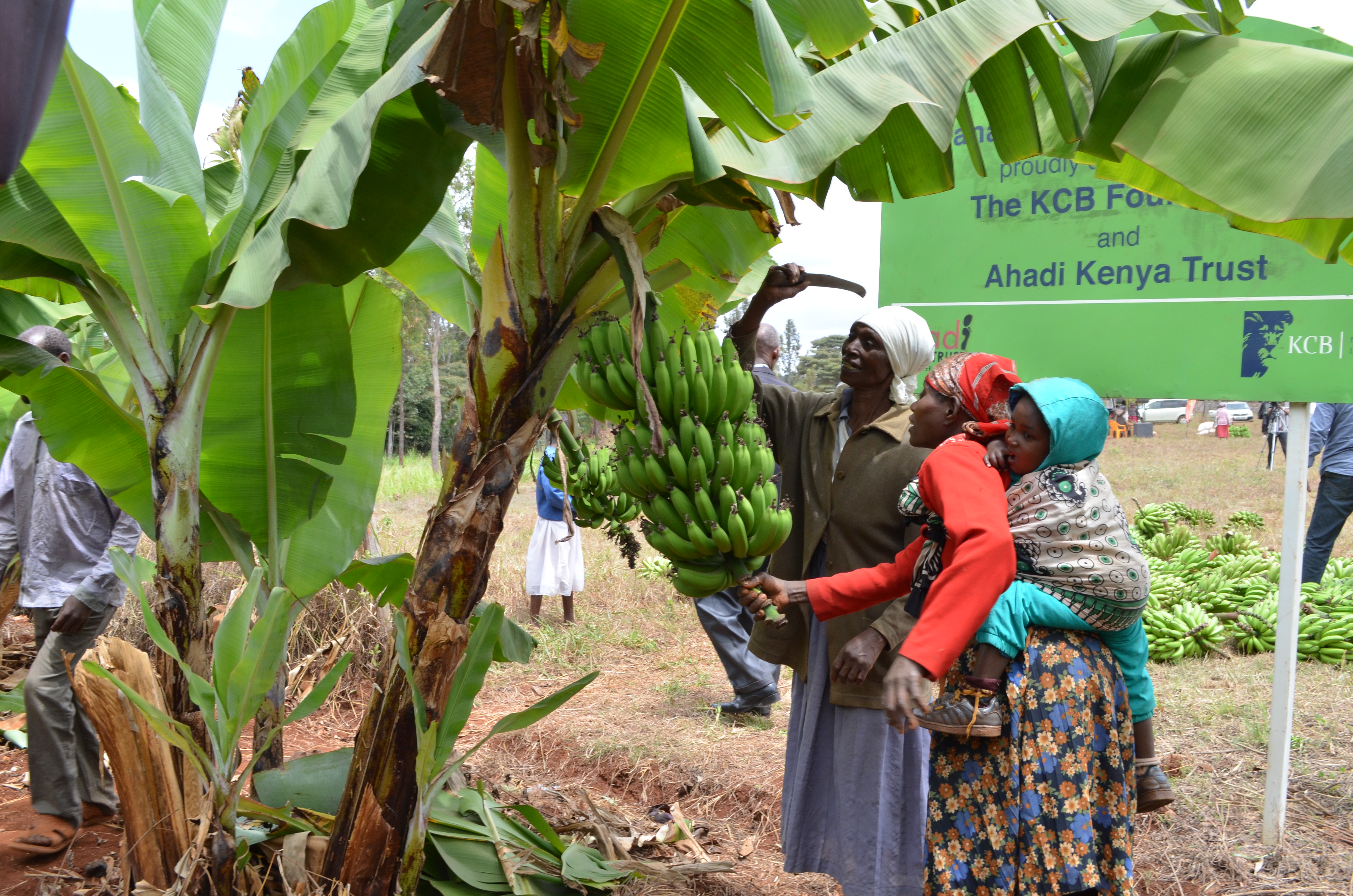
By Aggie Konde, Assan Ng’ombe and Jeremiah Rogito
NAIROBI, Kenya, May 14 – On the occasion of International Day for Plant Health which fell on May 12th, 2023, it is essential to recognize the role of Integrated Pest Management (IPM) in achieving a sustainable agriculture and food system transform for food and nutrition security in Kenya.
Human health and the health of our biological ecosystem are dependant on the health of plants. Plants form a critical part of the balancing act that nature plays in providing the oxygen we breathe, the food we eat, the raw materials for our basic needs such as clothes and building materials.
Despite this, over 35 percent of our food crops are lost to plant stress caused by pests and diseases annually. This has a direct, negative, effect on food and nutritional security and our production systems making them highly vulnerable.
Climate change and human activities further exacerbate plant health challenges that lead to ecosystem changes and damaging biodiversity that create new niches for pests. Maintaining plants health is essential for life on earth.
In Africa agriculture is a significant economic pillar that provides multiple livelihoods for millions of people.
Healthy plants and crops are therefore key to realising the full potential that food systems have on the attainment of the country’s development aspirations.
However, the use of pesticides as the primary method of pest control poses significant health risks to farmers and consumers, and contributes to environmental pollution, that leads to pesticide-resistant pests.
These challenges come about because of limitations in capacity for the use of approved pest control mechanisms, as well as inappropriate handling and application.
The limitations culminate in the limited application of IPM. Furthermore, the low socio-economic status of smallholder farmers in Africa compounds this situation even more.
To address these challenges, AGRA and its alliance partners have been implementing targeted farmer-based capacity-building programs in conjunction with local public and private entities in providing smallholder farmers with the necessary resources and support to adopt sustainable Plant Health practices such as IPM.
Integrated Pest Management offers a holistic approach to pest control that minimizes the use of pesticides while promoting sustainable agriculture, and enhanced biodiversity, and human health.
Despite the benefits of IPM, many smallholder farmers in Africa, are still unaware of IPM approaches or have limited knowledge and skills to implement it effectively.
The promotion of IPM in Africa requires a systematic approach to evidence generation, analysis and codification to inform context specific practices and, more importantly, capacity building programmes that are targeted to smallholder farmers, extension services and agro-dealer networks.
Education and awareness campaigns are also a useful way for creating user awareness on sustainable practices to manage Plan Health
In Kenya, for example, AGRA and its partners are facilitating capacity building programmes that help farmers to practice IPM through regenerative agriculture, and also the integration programmes that focus on the integration of sustainable land management, environmental and water resource management in Machakos, Kitui, Tharaka Nithi, Embu Laikipia, Isiolo, Samburu and around the Kakamega Forest Ecosystem The main objective of objective of the IPM initiative is to contribute to the development of food systems transformation pathways that respond to the needs of People, Planet and the Climate.
It has been recognised that have an effective extension services system as a knowledge and technology transfer mechanism is central to the introduction and application of the IPM in Africa. It is with this recognition that AGRA, with its partners, is implementing a public-private-community extension model called the Village Based Advisor model that is reducing the farmer to extension worker ration to 1:500 in a bit to reach smallholder farmers at scale.
The VBA model is further supplemented by digital extension solutions to enable farmers accessing real time knowledge on IPM Plant Health solutions.
Call to action
The promotion of IPM in Africa is critical to achieving sustainability, development, and food systems transformation goals.
As we celebrate the International Day for Plant Health, it is essential to recognize the role of IPM in achieving sustainable agriculture and food security on the continent.
The promotion of IPM requires the collaboration of public and private entities to provide smallholder farmers with the necessary resources and support to adopt sustainable practices. Furthermore, education and awareness campaigns at scale are necessary to sensitize farmers on the benefits of the approach and how to implement it sustainably.
Sustainable farming is crucial to achieving food security and environmental sustainability goals.
The use of IPM in food systems enhances ecosystem services such as pollination and soil fertility, which contribute to climate change adaption and mitigation goals.
The adoption of IPM, at scale, in Africa presents significant opportunities for sustainable farming, increased yields, reduced production costs, enhanced market access, and employment creation.
The production of biological control agents and the provision of extension services can create employment opportunities, especially for women and youth, in Africa’s food systems sectors.
The writers are associated with AGRA