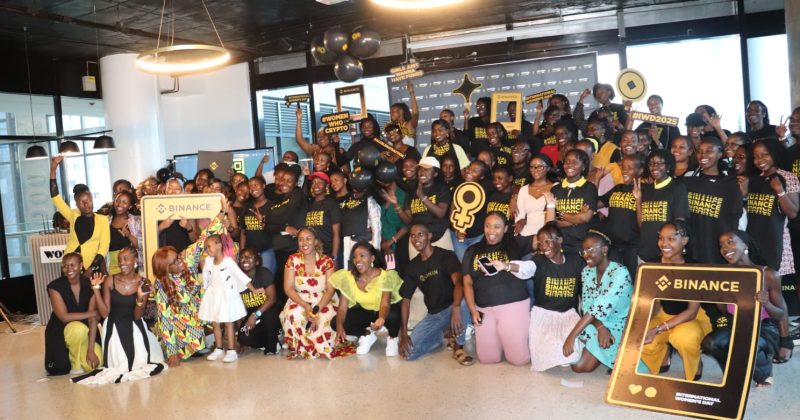
NAIROBI, Kenya, Mar 9 – Inside a bustling meet-up event at Workstyle Africa on 1st Park Avenue, Nairobi, hundreds of women gathered on March 8, 2025, to celebrate Binance’s International Women’s Day (IWD) event.
The energy in the room was palpable as attendees—including seasoned crypto traders, blockchain entrepreneurs, and newcomers—came together to exchange insights and ambitions in the Web3 space.
Though blockchain has long been perceived as a male-dominated industry, the event painted a different picture—Kenyan women are not just embracing crypto but actively driving its evolution.
Through engaging panel discussions, hands-on workshops, and dynamic networking sessions, participants explored how blockchain is unlocking new business opportunities, fostering financial independence, and reshaping economic prospects for women.
Mary Usaji, a developer and project manager at ICP Hub Kenya, who has dedicated her career to demystifying blockchain technology for women in Kenya believes education is key to increasing female participation in the sector.
“I did my first crypto investment in 2017 and someone sold me the idea of bitcoin mining but it was a scam and I didn’t know. After six months my money disappeared. I thought it was about mining coins in Iceland,” she recalled.
“There was a course Binance was advertising about learning blockchain, so I joined and attended classes for two months. They taught me a lot of things including how to create smart contracts. By attending crypto events and learning every day I became a professional crypto expert.”
Through her role at ICP Hub, Usaji has spearheaded training sessions aimed at equipping women with the skills needed to build decentralized applications, explore smart contracts, and understand digital asset security.
“We don’t just need women using blockchain—we need them leading the charge,” she emphasized. “Women must be at the forefront as developers, founders, and investors in this space.”
Faith Ndinda: Pioneering Crypto Integration in Business
Faith Ndinda, founder of Zentech Electronics, took center stage to share her journey of integrating crypto into her business.
She joined the Binance crypto community in 2019. Zentech Electronics, a Nairobi-based enterprise, specializes in selling mobile phones, laptops, and accessories, but what sets it apart is its innovative payment model—customers can purchase gadgets using cryptocurrency.
“I started my business with legacy payment methods, such as card payments but I quickly realized the challenges—bank fees were high, transactions took time, and international customers struggled with currency conversion,” Ndinda explained.
“Then I discovered Bitcoin and USDT. It changed everything.”
Ndinda revealed that accepting crypto payments allowed her to tame the numerous cases of reversed transactions by customers.
“I struggled with taming many reversals in card transactions and mobile money too,” she shared.
“Now, with crypto, I sell to clients in foreign countries without worrying about financial fraud and bank restrictions. Crypto is borderless, fast, and secure.”
For many attendees, her story was a revelation. The idea that blockchain could provide practical solutions to everyday business challenges resonated deeply, especially in a region where financial barriers often hinder entrepreneurship.
She highlighted that many women face cultural and societal barriers when it comes to financial decision-making, but blockchain can serve as an equalizer.
“With decentralized finance (DeFi), women don’t need permission from a bank or a middleman to access financial services,” she said. “They can save, invest, and transact on their own terms.”
For Faith Mwango, a full-time crypto trader, the road to success has been anything but easy.
Trading digital assets requires patience, strategy, and an understanding of market trends—skills she has honed over years of experience.
“When I first started trading, I lost money because I didn’t have the right knowledge,” Mwango admitted.
“I almost gave up, but I decided to study technical analysis, risk management, and blockchain fundamentals. That’s when everything changed.”
Today, Mwango trades crypto in Tanzania, Nigeria, Ghana, and Gambia, leveraging decentralized exchanges and automated trading bots to maximize profits.
“Many women shy away from trading because they think it’s gambling, but it’s not,” she said.
“With the right education, it can be a powerful wealth-building tool.”
She encouraged women to start small and practice before making big investments.
“The key is to manage risks. Don’t put in money you can’t afford to lose, and always stay updated on market trends,” she advised.
For attendees interested in trading, she offered some advice.
“Start now. The market is growing, and women need to be part of it. We can’t afford to be left behind.”
Breaking Barriers and Taking the Lead
One of the most powerful takeaways from the Binance event was the recurring theme of confidence and visibility.
Women in blockchain are often underrepresented, but speakers emphasized the importance of self-advocacy and sharing success stories.
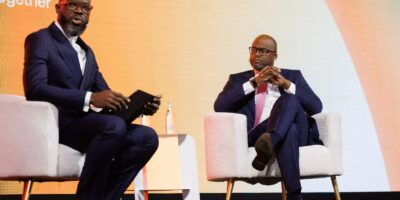
“Have the audacity of a man,” said panel moderator Sharon Murugi.
“Grab the bull by its horns. We do a lot of work but rarely talk about it. If no one knows what you’re doing, you miss opportunities. Let the world know about your work—it could be the financial breakthrough you’ve been waiting for.”
The event also tackled the challenges women face in the male-dominated crypto and blockchain industries.
Panelists spoke about initial skepticism from family and friends, lack of mentorship, and the struggle to access funding for blockchain projects.
“People told me crypto was a scam when I started,” Ndinda shared. “Now, my business is thriving because of it.”
Mwango echoed this sentiment, adding that the biggest challenge is often overcoming fear.
“Women are naturally cautious, which is good, but sometimes it holds us back. We need to take calculated risks and seize opportunities.”
The Road Ahead: Women Shaping the Future of Blockchain
Mercy Njane, a seasoned crypto trader known for her invaluable insights into cryptocurrency markets, pointed out that women must overcome their fear of entering the crypto space.
“There is a lot of skepticism surrounding cryptocurrency, especially among women. But the more we learn, the more we realize its potential to transform lives. We need to be part of this industry, not just as users but as builders and leaders,” she said.
Christine Okoth, a blockchain developer, emphasized the importance of women taking up roles in blockchain security and infrastructure development.
“We see many scams and fraud cases in the crypto industry. If we have more women developing these systems, we can build stronger security measures and contribute to a safer blockchain ecosystem,” she said.
Melissa Kanyi, another panelist and blockchain advocate, stressed the need for education.
“Knowledge is power. The more women understand blockchain technology, the more they can leverage it to create financial independence and drive economic change in their communities,” she said.
The Growing Role of Women in Blockchain
Women in Web3, like Eve K’owiti, a compliance officer at Due Diligence Advisory Africa, are leading this change.
“It is the time for women in Web3. We can join spaces we’ve never thought of,” she said.
“Blockchain is a great tool for accountability in compliance. It helps us trace funds, you can’t delete anything in the system, it gives you the full pattern.”
Kenya has positioned itself as a frontrunner in cryptocurrency adoption across Africa, with 6 million crypto users, according to Triple A.
However, female participation in this rapidly growing sector remains relatively low. Only 6% of blockchain CEOs are women, a stark contrast to the 17% seen in the broader tech industry.
This gender gap is also evident in funding for Web3 startups, where all-male teams secure an average of $29.2 million in investment, while all-female-led teams receive just $7.8 million.
Despite these challenges, progress is being made.
A recent study by Grayscale shows that 43% of individuals interested in Bitcoin investments are women, indicating a growing engagement among women in the crypto and blockchain space.
Coincover’s latest survey further highlights this shift, revealing that 34.6% of women express confidence in the future of cryptocurrencies, nearly double the 17.7% of men who share the same optimism.