NAIROBI, Kenya, Nov 24 — The East African Community (EAC) will present a harmonized position at the upcoming COP 28 Climate Summit to be held in Dubai, the United Arab Emirates, the bloc’s Summit revealed on Thursday.
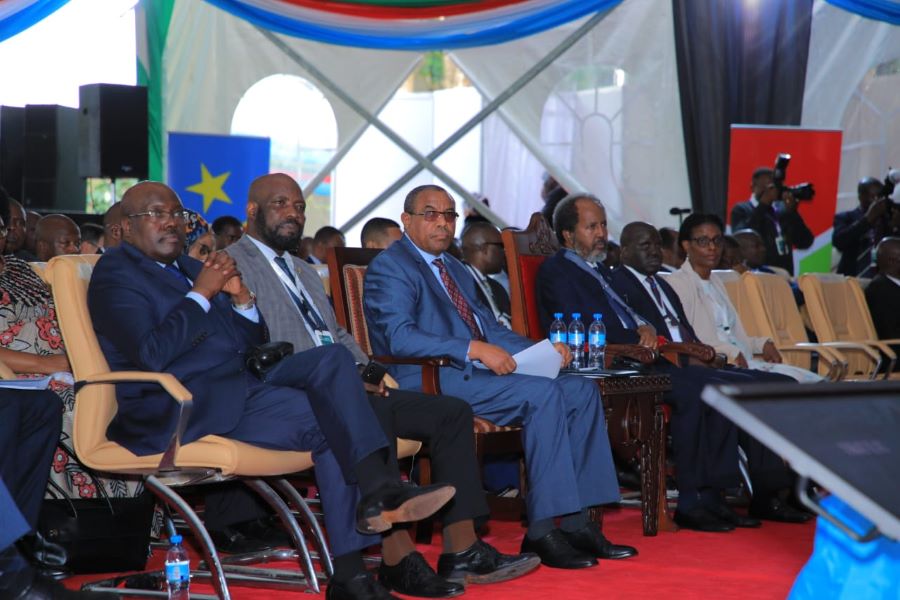
EAC Heads of State adopted the call for a harmonized approach during a High-Level Forum on Climate Change and Food Security convened in Arusha, Tanzania.
The session hosted by President Samia Suluhu (Tanzania) and attended by President William Ruto (Kenya) and Burundi’s Evariste Ndayishimiye (Summit Chairperson) resolved that the region will approach COP 28 as “one bloc”.
COP 28, a United Nations Climate Change Conference, will bring together parties to the United Nations Framework Convention on Climate Change (UNFCCC) from November 30 to December 12, and will seek to further consensus on climate change.
Speaking at the High-Level Forum in Arusha, Ndayishimiye rooted for increased investment in agroforestry to safeguard against soil erosion.
He said Burundi had embarked on an afforestation programme to achieve the objective.
Heads of State called for the creation of a platform to share experiences on environmental sustainability, disaster management and cross-border management of natural resources.
President Suluhu underscored the importance of climate smart agriculture in increasing food production, adding that the private sector has a crucial role to play in the initiative.
She disclosed that Tanzania was investing in climate smart technologies through the Build Better Tomorrow, an initiative that is aimed at increasing the involvement of youth and women in agriculture to boost agricultural production and reduce poverty while conserving the environment.
President Suluhu emphasised the role of the private sector in post-harvest agro-processing and value addition, adding that the government was also facilitating irrigation schemes by building dams to harvest rainwater.
She disclosed that the government was facilitating access to climate financing by encouraging commercial banks to lend to green projects.
Cutting emissions
To reduce greenhouse gas emissions, President Suluhu said that Tanzania has dedicated 25 per cent of its national land to forests, saying this would serve as a carbon sink with the private sector also being encouraged to venture into carbon sinking.
President Suluhu revealed that due to increased agricultural production, Tanzania was now exporting rice, avocadoes and other horticultural exports to the regional and international markets.
She added that the country was giving tax incentives to investors in green renewable energies, agricultural machinery and inputs and value addition in agriculture.
In his remarks, President Ruto said that his country has prioritised the conservation of its water towers that are being fenced to guard against encroachment and destruction.
He described Kenya as 80 per cent arid and semi-arid saying that the country doesn’t have enough rain but has adequate water.
President Ruto said that the government had hired 1,000 new forest rangers to ensure that there is adequate human capital to protect the national forest cover and reiterated that the country’s commitment to plant 15 billion trees over the next 10 years to protect its environment and conserve its water towers.
Conservation efforts
“We are also making use of the National Youth Service by converting them into a green army to ensure that we don’t just plant but grow trees. It is easier to plant than grow trees,” said President Ruto, adding that the country was growing trees for the twin objectives of protecting the environment and making money through carbon trading.
On rainwater harvesting, President Ruto said that Kenya will build 100 mega dams for purposes of increasing food production through irrigation. He said that there were plans to increase the acreage under irrigation from 600,000 to 2 million acres.
President Ruto said that the country had registered 6.5 million farmers and distributed subsidised fertilisers to them by eliminating brokers, middlemen and cartels, adding that the fertiliser subsidies had enabled the country to increase maize production by 40 per cent from 40 million tonnes in 2022 to 61 million tonnes in 2023.
To manage post-harvest losses, President Ruto said that the country had purchased 100 driers to be distributed across the country.
On enabling access to climate financing, President Ruto said that there was a need to refashion multilateral financial institutions to give affordable financing for climate mitigation.
Rwandan Prime Minister Edouard Ngirente who represented President Paul Kagame at the forum, said that the country had opted to create synergy between the government and the private sector to increase investment in agriculture, which is largely considered as a risk sector by investors.
Investing in agriculture
PM Ngirente disclosed that the government was investing in viable infrastructure including feeder roads and affordable financing at single digit interest rates to promote investment in agriculture.
He said that Rwanda was investing in cold rooms and storage facilities to manage post-harvest losses that he said were as high as 40 per cent in Africa.
Ngirente revealed that the country had established the Ireme fund to increase investment in climate smart agriculture and climate change mitigation.
The PM said that the government of Rwanda had invested seed capital of 100 million Rwanda francs even as he added that a further 300 million Euros had been mobilised for the fund, the goal being to encourage the private sector to invest more in agriculture.
PM Ngirente said it was an onerous but inevitable responsibility of EAC Partner States’ governments to ensure that there was availability, affordability and access to food for the 283 million EAC citizens.
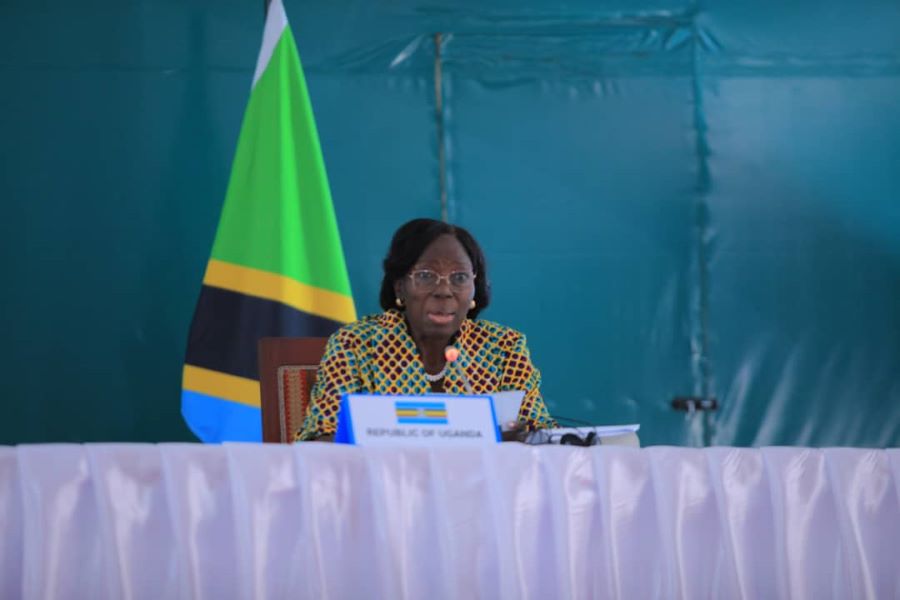
Speaking on behalf of President Yoweri Museveni, Uganda’s 1st Deputy Prime Minister and Minister for EAC Affairs, Rebecca Alitwala Kadaga, said that Uganda was evicting people from its wetlands due to excessive use and abuse that has had devastating impacts on the environment.
Kadaga that the government was relocating those evicted from wetlands to other areas and encouraging them to undertake more environment-friendly activities such as cage farming and soil cultivation.
The 1st Deputy Prime Minister emphasised the importance of good food storage facilities noting that Africa was a land of contradictions whereby some countries could be under severe drought yet others were experiencing bumper harvests, adding that suitable storage facilities would ensure the availability and access to food by all.
Kadaga called for optimal use of the Congo and Nile rivers’ basins to increase the continent’s food production potential.
Giving the keynote address at the forum, Hailemariam Desalgn, the Chairperson of the Agrarian Revolution for Africa and former Prime Minister of Ethiopia, said that Africa must prioritise adaptation in its food systems to ensure resilience.
In his remarks, EAC Secretary General Peter Mathuki underscored the importance of EAC having a common position as it goes to COP 28.
Mathuki said that no country should have to choose between its development aspirations and climate change mitigation, adding that there was need for complementarity as opposed to competition among Partner States.