Kyiv (Ukraine) (AFP), Apr 27 – The UN chief called war “an absurdity” during a visit to Ukraine Thursday, after Brussels warned Russia it will not waver in its support for Kyiv following Russia’s decision to cut gas supplies to Bulgaria and Poland.
UN Secretary-General Antonio Guterres called war “an absurdity in (the) 21st century” as he visited Borodianka outside Kyiv, the scene of alleged civilian killings by Russian forces.
Guterres will later meet Ukrainian leader Volodymyr Zelensky on the visit, which follows talks with Russian President Vladimir Putin in Moscow.
Guterres is also expected to visit Bucha and Irpin, sites of further alleged Russian war crimes.
Putin has said that if Western forces, which are supplying increasingly heavy weaponry to Kyiv, intervene in Ukraine, they will face a “lightning-fast” military response.
“We have all the tools for this, that no one else can boast of having,” the Russian leader told lawmakers, implicitly referring to Moscow’s ballistic missiles and nuclear arsenal.
“We won’t boast about it: we’ll use them, if needed,” he said.
The dire threats came as Moscow claimed to have carried out a missile strike in southern Ukraine to destroy a “large batch” of Western-supplied weapons.
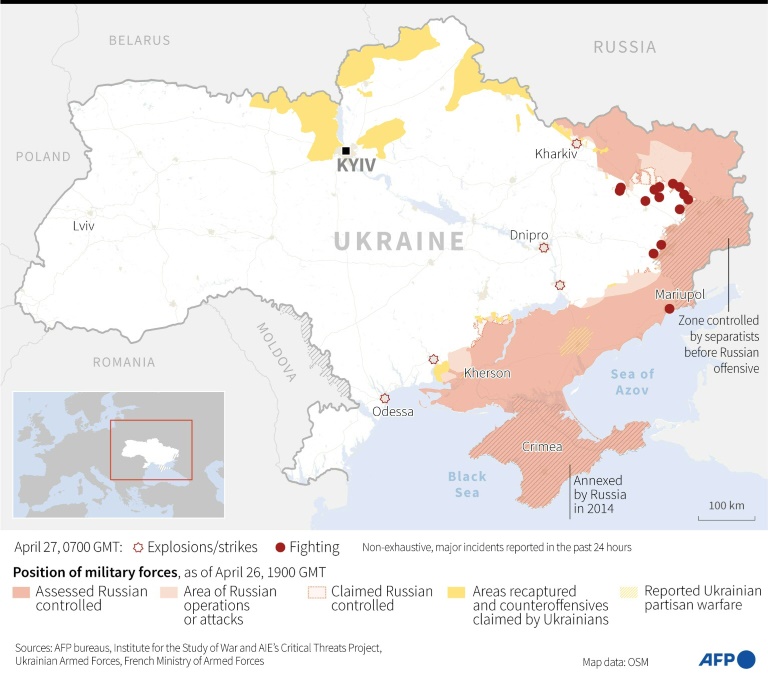
As the war, which has already claimed thousands of lives, entered its third month, Kyiv conceded that Russian forces had made gains in the east.
Russia’s military offensive saw it capture a string of villages in the Donbas region, now the focus of its invasion.
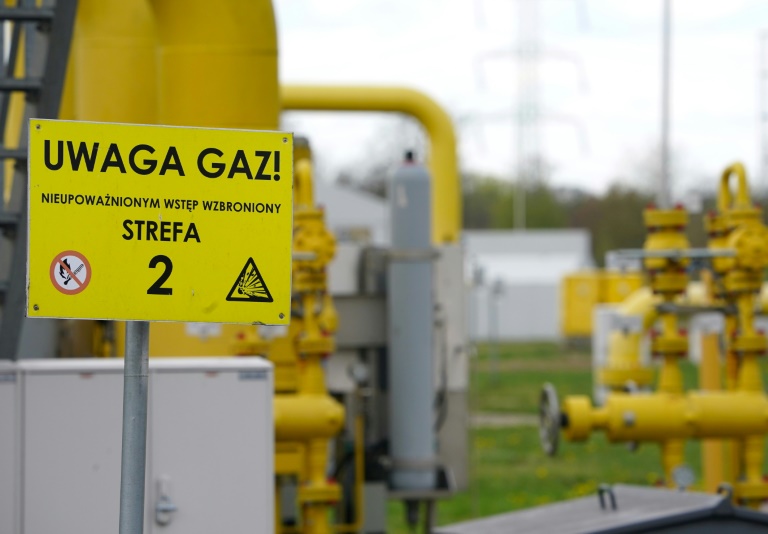
And in its economic standoff with the West, Moscow cut off gas supplies to Bulgaria and Poland, two EU and NATO members backing Ukraine in the conflict.
However, Ursula von der Leyen, the president of the European Commission, said Poland and Bulgaria are now receiving gas from their EU neighbours.
– ‘Blackmail’ –
She described the announcement by Russia’s state energy giant Gazprom as “another provocation from the Kremlin”.
“It comes as no surprise that the Kremlin uses fossil fuels to try to blackmail us… Our response will be immediate, united and coordinated.
“Both Poland and Bulgaria are now receiving gas from their EU neighbours,” she said. “The era of Russian fossil fuels in Europe will come to an end.”
European powers have imposed massive sanctions on Russia since Putin’s invasion, while shipping weapons to Ukraine’s defenders.
But they have moved slowly on hitting Moscow’s vast exports, with many EU members — notably industrial giant Germany — reliant on Russian energy.
Putin has intensified pressure by insisting on payments for gas in rubles — hoping to force his foes to prop up his currency.
Gazprom announced the halt of gas to both Poland and highly dependent Bulgaria, saying it had not received payment in rubles from the two EU members.
But von der Leyen said that “about 97 percent” of all EU contracts explicitly stipulate payments in euros or dollars — and warned importing firms paying in rubles would breach sanctions.
The European Commission sought to lend Kyiv economic support by proposing a suspension of import duties on Ukrainian goods, though the idea still needs to be approved in a vote by the bloc’s 27 members.
Zelensky welcomed the plan, saying Russia was “trying to provoke a global price crisis” and stir “chaos” in the world’s food market.
– Missile strikes –
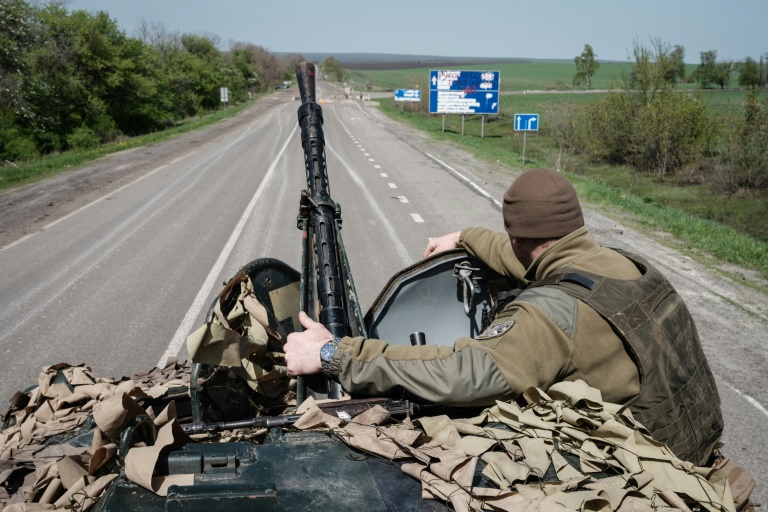
The first phase of Russia’s invasion failed to reach Kyiv or overthrow Zelensky’s government after encountering stiff Ukrainian resistance reinforced with Western weapons.
The campaign has since refocused on seizing the east and south of the country while increasingly using long-range missiles against west and central Ukraine.
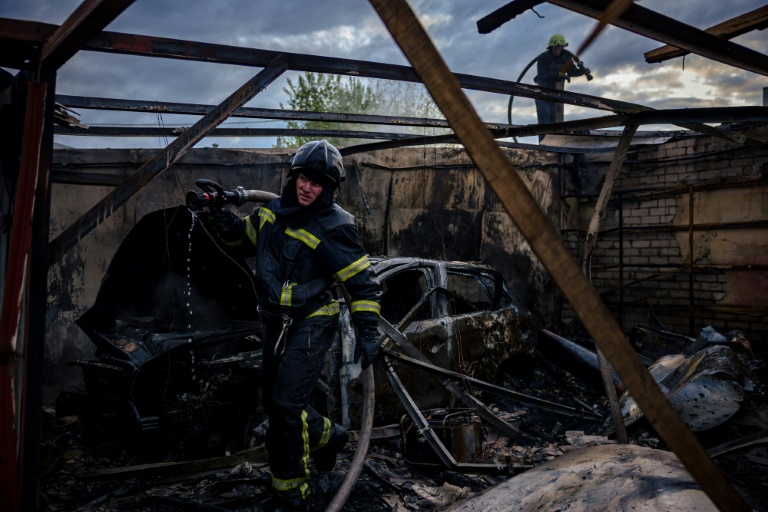
In Kharkiv, whose northern and eastern districts are less than five kilometres from the front, at least three people died and 15 were injured in shelling, Governor Oleg Synegoubov said Wednesday.
Defenders of the besieged Azovstal factory in the strategic port city of Mariupol described massive bombardments, with Sergey Volyna of the 36th Marine Brigade pleading for extraction for the 600 wounded soldiers and hundreds of civilians he said remain trapped there.
Russia’s defence ministry, meanwhile, said its forces had destroyed a “large batch” of weapons and ammunition supplied by the United States and European countries.
Russia hit hangars at an aluminium plant near the Ukrainian city of Zaporizhzhia with “high-precision long-range sea-based Kalibr missiles”, the ministry said.
Local authorities denied that weapons had been stored at the factory, which they said had not been operational for six years.
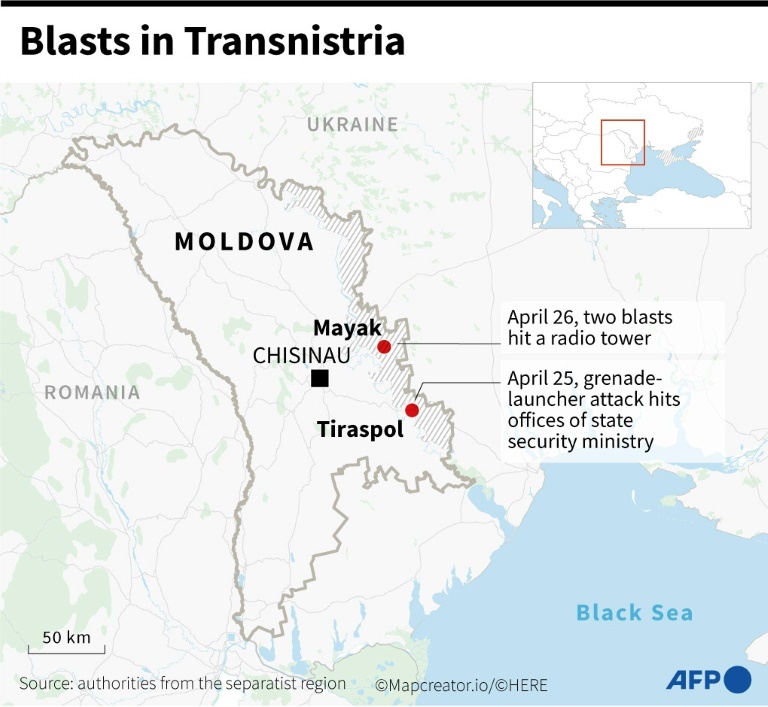
Tensions are also rising in Transnistria, a breakaway region of Moldova that borders southwestern Ukraine.
Pro-Russian separatists in the area claimed shots were fired across the border towards a village housing a Russian arms depot after drones flew over from Ukraine.
– ‘Dangerous deterioration’ –
The unrecognised region has reported a series of explosions in recent days that it called “terrorist attacks”, leading Kyiv to accuse Moscow of seeking to expand the war further into Europe.
Moldovan Foreign Minister Nicu Popescu called the events a “dangerous deterioration of the situation”.
Popescu said the Transnistrian authorities announced they would prevent men of fighting age from leaving the region.
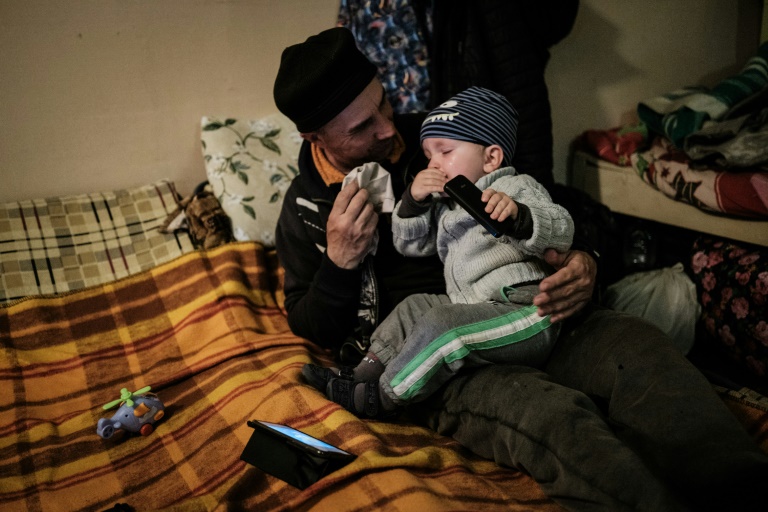
Russia’s targeting of Western-supplied arms came as the United States and Europe started to heed Zelensky’s call for heavier firepower.
Western allies remain wary of being drawn into war with Russia but have stepped up military support as Ukraine has maintained its fierce resistance.
In a speech from London on Wednesday, UK Foreign Secretary Liz Truss made a fresh call for an increase in arms deliveries to Ukraine, including heavy weapons, tanks and planes.
US President Joe Biden, meanwhile, is set to deliver remarks Thursday on “support for Ukrainians defending their country and their freedom against Russia’s brutal war”, the White House said.
burs-dc/gw/jv