NAIROBI, Kenya, Jun 9 — A criminal complaint has been filed in Nairobi seeking the prosecution of members of Sudan’s Rapid Support Forces (RSF) over alleged war crimes and crimes against humanity.
The complaint, submitted to the Director of Public Prosecutions (DPP), marks the first known attempt in the country’s history to invoke universal jurisdiction in pursuit of accountability for atrocities allegedly committed outside Kenya’s borders.
Filed on behalf of twelve Sudanese victims by Legal Action Worldwide (LAW) and the African Centre for Justice and Peace Studies (ACJPS), the petition calls for investigations into ten alleged RSF members accused of crimes committed during the ongoing Sudan conflict between April 2023 and March 2025.

“The victims and survivors have waited a long time to see justice served at the national and international levels. This action today gives hope to many Sudanese to work toward combating impunity for such crimes and atrocities,” said Mossaad Mohamed Ali, ACJPS Executive Director.
The allegations include detention, torture, sexual violence, forced labour, and killings reported in and around Khartoum, including facilities such as Soba Prison and the Al-Riyadh complex.
One survivor described being violently interrogated, held in darkness for weeks, and forced at gunpoint to commit sexual violence against a fellow detainee.
Legal teams argue that this is the first time Kenya is being asked to exercise jurisdiction over alleged war crimes and crimes against humanity committed abroad under the doctrine of universal jurisdiction, potentially setting a significant legal precedent.
Kenyan links
The move places Kenya at the centre of a growing global effort to use domestic courts to prosecute atrocity crimes where international mechanisms are limited or geographically constrained.
“The UN recently found that the RSF committed genocide, war crimes, and crimes against humanity,” said Antonia Mulvey, Executive Director of LAW. “Kenya should not be a safe haven for war criminals.”
The complainants further argue that some of the accused have alleged links to Kenya, raising concerns about possible cross-border movement of individuals implicated in Sudan’s conflict.
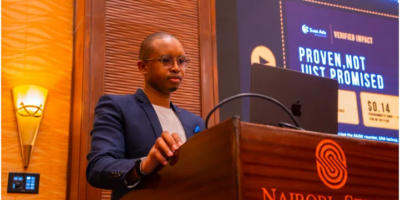
Kenyan lawyer Dr Owiso Owiso, representing the victims, said the case will test both Kenya’s legal framework and its political will to enforce international criminal law.
“This is not only an opportunity to test Kenya’s commitment to international justice,” he said. “It is also a demonstration that avenues for accountability are not entirely closed, even where domestic systems and international mechanisms have failed.”
Criticism
The filing comes amid growing criticism from rights groups over the limited reach of existing international accountability systems.
The International Criminal Court (ICC) mandate in Sudan remains largely confined to Darfur, while other UN mechanisms lack prosecutorial authority.
Victims involved in the complaint described years of abuse, including sexual slavery, executions of family members, and systematic targeting of perceived opponents of the Sudanese Armed Forces.
“For the first time, I feel my voice has been heard,” said one survivor identified as Ali B. “I hope this will help bring an end to impunity.”
The case could have far-reaching implications for Kenya, potentially setting a precedent for how regional courts handle foreign war crimes allegations while testing the country’s ability to balance justice obligations with diplomatic sensitivities in an already volatile Horn of Africa security landscape.
The Director of Public Prosecutions is expected to determine within 30 days whether to open a formal investigation—a decision that could define Kenya’s emerging role in global accountability for atrocity crimes.