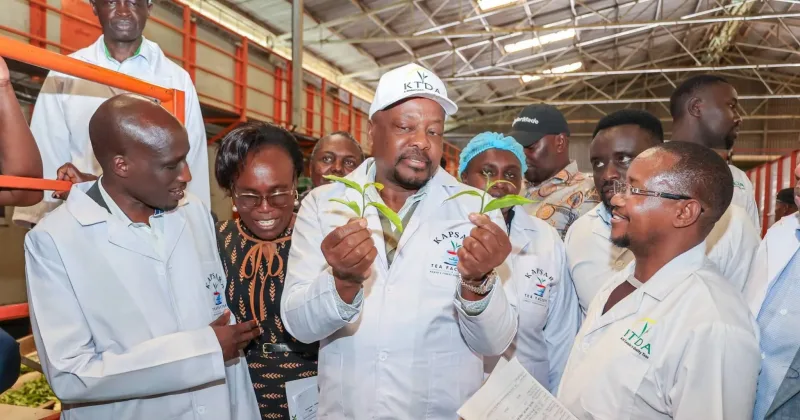
NAIROBI, Kenya, Aug 14 – Agriculture Cabinet Secretary Mutahi Kagwe has directed tea factories to reject poor-quality green leaf as the government steps up a Sh7.1 billion programme to modernise processing facilities.
Kagwe said modernising factories would have little impact on farmers’ earnings if factories continued accepting leaf that does not meet the recommended “two leaves and a bud” standard.
Speaking during a visit to Kapsara Tea Factory, where he handed over Sh44.6 million for a new withering plant, the CS said poor-quality leaf lowers the value of tea and ultimately affects farmers’ returns.
“If we have agreed that quality tea is two leaves and a bud, then that is what must come to the factory. We cannot have farmers who are doing the right thing being punished because a few others bring poor-quality leaf which is then processed together with theirs,” Kagwe said.
He said the government’s tea strategy is focused on improving green-leaf quality, modernising factories, increasing production of orthodox and specialty teas, and expanding access to international markets.
Kagwe cited Momul Tea Factory, where improvements in green-leaf quality increased the value of its tea from about $2 to more than $3 per kilogramme, saying higher-quality tea should translate into better returns for farmers.
At Kapsara, the Sh44.6 million allocation will finance a new withering plant to replace ageing equipment that consumes large amounts of electricity.
The wider Sh7.1 billion modernisation programme will target ageing machinery, energy efficiency and processing costs while supporting production of higher-value tea products.
Kagwe also called for greater diversification of tea markets as Kenya seeks to reduce reliance on traditional buyers and increase sales of orthodox, specialty and value-added teas.
He said the tea levy would support price stabilisation, research, infrastructure, marketing, quality improvement, value addition and development of new markets.
Kagwe also urged tea factory management to ensure funds allocated for modernisation are used for their intended purpose and called for continued farmer training and extension services to improve the quality of green leaf supplied to factories.