NAIROBI, Kenya, Sep 19 — “It is better to hustle in your own country and have peace than suffer out there,” Diana Chepkemoi, 24, a Kenyan returning from Saudi Arabia where she worked as a domestic staff posited.
These were her foremost remarks minutes after she touched down at the Jomo Kenyatta International Airport.
Chepkemoi who was reportedly detained for weeks by her employer, made the comments on September 8 as she fought back tears while cautioning anyone who was seeking greener pastures abroad and particularly in the Middle East to learn from her predicament.
While Chepkemoi was lucky, many girls who have found themselves in a similar situation have not been as lucky with some returning home in coffins.
In June 2022, Celina Kazungu, 22, born in Malindi was returned in a coffin after she died under unclear circumstances while working as a house help in Saudi Arabia. Her family was left with many questions than answers.
The plight of Chepkemoi and Kazungu are just two among multiple cases of girls traveling to the Middle East in search of jobs out of desperation to fend for themselves and their families.
The current situation is not just limited to Africa. The critical question right now is how many people out there are working under forced labour? And why has it been difficult for governments from across the world to tackle this issue?
Latest estimates show that forced labor has increased significantly in the last five years, according to the International Labour Organization (ILO), Walk Free, and the International Organization for Migration (IOM).
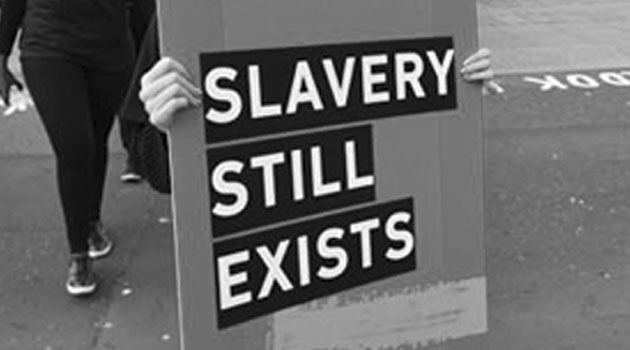
According to the 2021 Global Estimates of Modern Slavery report released by ILO on September 12, forced labour accounts for 27.6 million of those in modern slavery.
But what is forced labour?
The ILO Forced Labour Convention, 1930 (No.29), 1 describes it as “all work or service which is exacted from any person under the menace of any penalty and for which the said person has not offered himself voluntarily.”
“There are 27.6 million people in situations of forced labor on any given day. This absolute number translates to 3.5 people in forced labor for every thousand people in the world,” the report reads in part.
Women and girls account for 11.8 million of those in forced labor. More than 3.3 million of all those in forced labor are children.
The report indicates that forced labor has spiked in recent years.
The 2021 Global Estimates of Modern Slavery report showed an increase of 2.7 million in the number of people in forced labor between 2016 and 2021, translating to a rise in the prevalence of forced labor from 3.4 to 3.5 per thousand people in the world.
“The increase in the number of people in forced labor was driven entirely by forced labor in the private economy, both in forced commercial sexual exploitation and in forced labor in other sectors,” the report said.
According to the report, Africa accounts for 3.8 million people in forced labor while Asia and the Pacific are hosts to more than half of the global total (15.1 million), followed by Europe and Central Asia (4.1 million).
The Americas accounts for 3.6 million while the numbers in the Arab States stand at 0.9 million.
According to the report, the regional ranking “changes considerably when forced labor is expressed as a proportion of the population.”
“By this measure, forced labor is highest in the Arab States (5.3 per thousand people), followed by Europe and Central Asia (4.4 per thousand), the Americas and Asia and the Pacific (both at 3.5 per thousand), and Africa (2.9 per thousand),” the report shows.
The report argues that migrant workers are more than three times more likely to be in forced labor than non-migrant adult workers.
While migration has a largely positive effect on individuals, households, communities, and societies, the report shows that migrants are particularly vulnerable to forced labor and trafficking, because of irregular or poorly governed migration, or unfair and unethical recruitment practices.
While commenting on the report, ILO Director-General Guy Ryder said trade unions, employers, organizations, civil society, and ordinary people have to cooperate to arrest the situation.
“It is shocking that the situation of modern slavery is not improving. Nothing can justify the persistence of this fundamental abuse of human rights,” he said.
António Vitorino, IOM Director-General on his part said the report underscores the urgency of ensuring that all migration is safe, orderly, and regular.
“Reducing the vulnerability of migrants to forced labor and trafficking in persons depends first and foremost on national policy and legal frameworks that respect, protect, and fulfill the human rights and fundamental freedoms of all migrants — and potential migrants — at all stages of the migration process, regardless of their migration status,” he said.
Grace Forrest, Founding Director of Walk Free argued that political goodwill is the key to ending human rights abuses across the globe.
“Modern slavery is the antithesis of sustainable development. Yet, in 2022, it continues to underpin our global economy. It is a man-made problem, connected to both historical slavery and persisting structural inequality,” she said.
To end modern slavery and misuse of workers, the report proposes a raft of measures including improving and enforcing laws and labour inspections, ending state-imposed forced labour, and stronger measures to combat forced labour and trafficking in business and supply chains.
It further proposes the extension of social protection, strengthening legal protections, and raising the legal age of marriage to 18 without exception.
Other measures include addressing the increased risk of trafficking and forced labour for migrant workers, promoting fair and ethical recruitment, and greater support for women, girls, and vulnerable individuals.