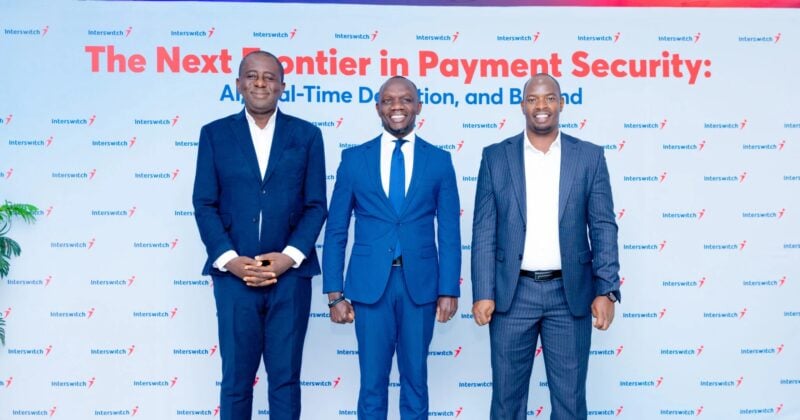
NAIROBI, Kenya, Nov 26 – Financial institutions have been urged to strengthen cooperation and share fraud intelligence as criminals increasingly use artificial intelligence to target digital payment systems.
Interswitch Kenya Managing Director Geoffrey Njuguna said no single institution can effectively tackle digital fraud as criminals exploit connections between banks, mobile money platforms and payment providers.
He spoke during the Interswitch Kenya Fraud Awareness Stakeholder Forum 2026 in Nairobi, which brought together banks, fintechs, mobile money operators, payment providers and the Central Bank of Kenya to discuss emerging threats.
Citing the Central Bank of Kenya’s Financial Sector Stability Report 2025, Njuguna said banks lost about Sh1.9 billion to fraud in 2025, a 19.4 percent increase from Sh1.59 billion in 2024.
He also cited TransUnion research indicating that 77 percent of Kenyan consumers had been targeted by digital fraud attempts in the preceding three months.
“Fraud is no longer just a banking or technology issue. It affects consumers, businesses and the entire financial ecosystem. As payment systems become more connected, criminals are finding ways to exploit the gaps between institutions,” Njuguna said.
He urged financial institutions to invest in artificial intelligence, machine learning and real-time transaction monitoring to detect and prevent fraud before losses occur.
However, he said technology should be supported by strong governance, skilled fraud management teams and customer awareness.
Timothy Wafula, Deputy Director of the Banking and Payment Services Department at the Central Bank of Kenya, said the growing links between mobile wallets, bank accounts, loans and investment platforms had increased the risks facing customers.
He warned that criminals who gain access to a customer’s SIM card or password could potentially access several financial services linked to the compromised account.
Wafula said banking fraud losses had increased from about Sh412 million in 2023 to Sh1.9 billion in 2025. Mobile money fraud losses reached Sh1.09 billion between January and November 2026, a 15.9 percent increase compared with the same period in 2025.
He also cited INTERPOL’s African Cyberthreat Assessment Report 2026, which highlights the use of artificial intelligence in cybercrime, including cloned voices, deepfakes and phishing messages.
“AI has made it easier for criminals to create convincing scams and impersonate people and institutions. This is a serious threat to public confidence in digital financial services,” Wafula said.
He said a 2025 Central Bank survey found that half of the banks surveyed had adopted artificial intelligence, with fraud risk management among its leading applications.
Wafula also pointed to revised prudential and risk management guidelines, alongside guidance on artificial intelligence, cybersecurity and third-party technology service providers, which the Central Bank published for consultation in September 2026.
He urged financial institutions to build security into digital services, improve real-time fraud detection and maintain human oversight. He also called on mobile network operators to strengthen identity checks during SIM registration and replacement and share relevant fraud alerts with financial institutions.
Participants at the forum discussed threats including SIM-swap fraud, phishing, identity theft, account takeovers and social engineering, as well as the need for stronger authentication, transaction monitoring and customer education.
Interswitch also presented its Proactive Risk Manager (PRM), a fraud management system that uses artificial intelligence, machine learning and transaction monitoring to help financial institutions identify suspicious activity across payment channels.
The system covers transactions through ATMs, point-of-sale terminals, mobile and internet banking, USSD and core banking platforms. It can flag suspicious transactions for further checks or blocking, while helping reduce cases where legitimate payments are incorrectly identified as fraudulent.